
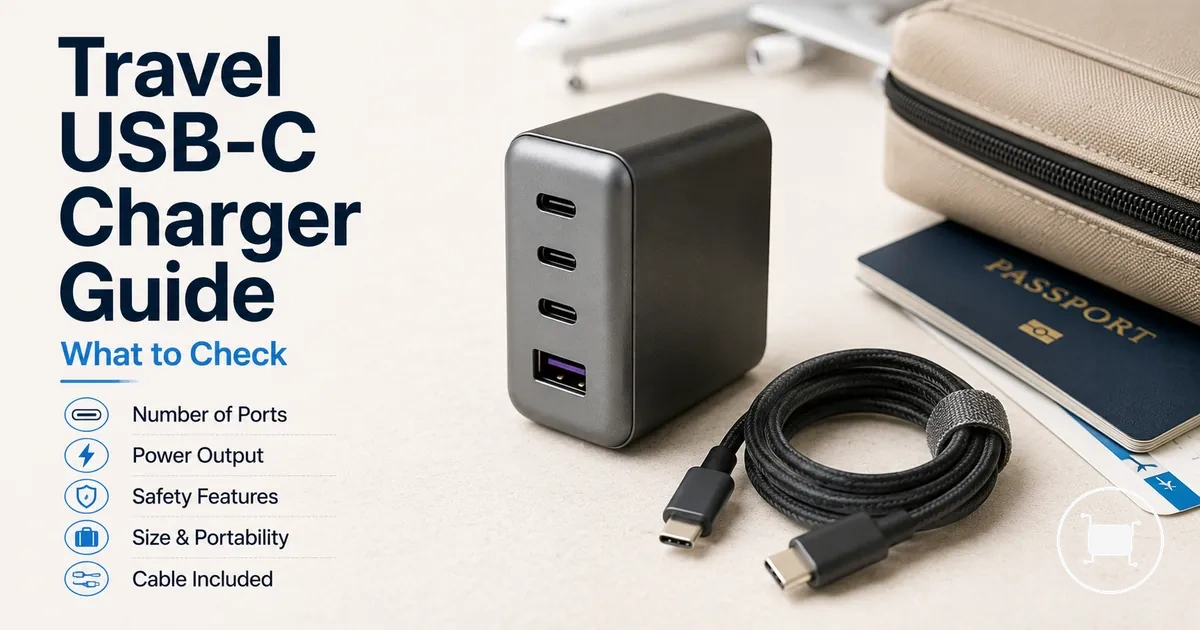
Travel Multiport USB-C Chargers for Multiple Devices
Travel multiport USB-C chargers for multiple devices depend on device mix, required output, port configuration, plug compatibility, and packing constraints when selecting a single charger for travel use. They are typically evaluated separately from travel wall chargers that provide fixed AC charging, plug adapters that only adjust outlet shape, and power banks that supply stored energy without requiring a wall outlet.
Selection changes when a trip includes laptops versus only phones and tablets, because wattage distribution and simultaneous charging behavior vary with usage conditions. For a clearer baseline, the decision often starts by separating charging capability from physical travel accessories such as plug adapters and power banks, then narrowing the charger choice based on device load and outlet availability, and it connects back to the multiport USB-C charger hub as the central reference for understanding multi-device charging setups.
What Makes a Multiport USB-C Charger Travel-Ready
A travel-ready multiport USB-C charger is a compact wall charger chosen for portability, device mix, outlet context, and packed weight, and it is typically assessed against travel constraints rather than general home charging use.
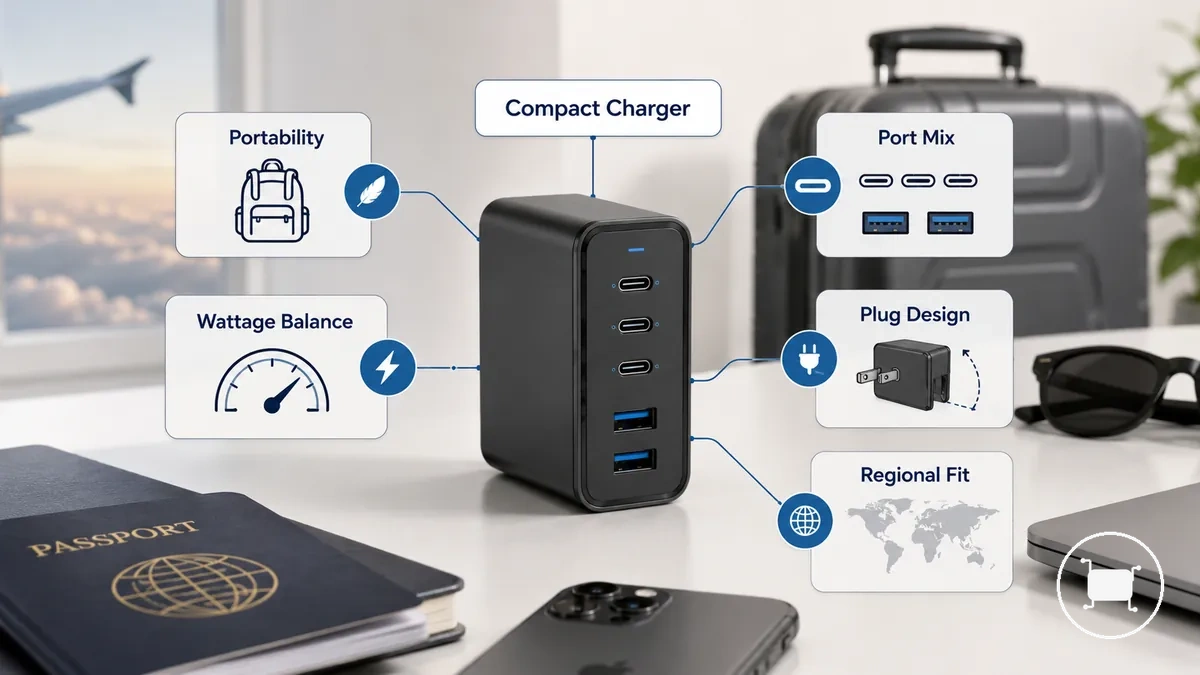
Travel readiness depends on a structured set of criteria that determines whether one charger can support multiple devices under different travel conditions.
- Portability: size, weight, and how easily the charger fits into luggage space
- Wattage: total output and how it behaves when multiple devices are connected
- Port mix: balance between USB-C and USB-A based on device requirements
- Plug design: foldable or fixed prongs and impact on packing and wall compatibility
- Regional fit: outlet compatibility and when a plug adapter may be required
These criteria vary depending on trip type, especially when laptops are included, when multiple devices charge simultaneously, or when destination outlet standards differ, which can change what qualifies as travel-ready in practical use.
Travel Wall Charger, Plug Adapter, and Power Bank Boundaries
A travel wall charger, plug adapter, and power bank differ by function: a wall charger converts AC power for device charging, a plug adapter only changes outlet shape, and a power bank stores energy for charging without a wall outlet.
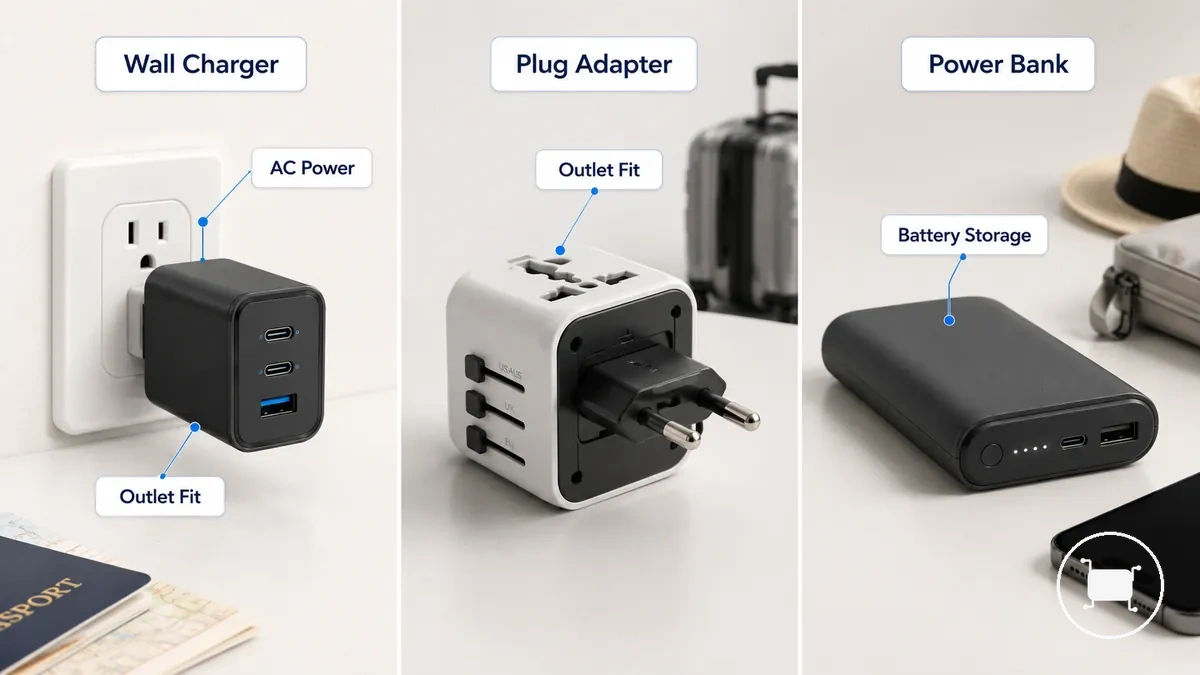
These three tools solve different travel power needs, and separating their roles helps prevent incorrect assumptions about how each device functions in real travel conditions.
| Type | Primary Role | Travel Function |
|---|---|---|
| Wall Charger | AC power conversion | Charges devices from outlet power |
| Plug Adapter | Outlet shape match | Enables physical plug compatibility |
| Power Bank | Energy storage | Charges devices without wall access |
A typical travel setup may require both a wall charger and a plug adapter when outlet standards differ, while a power bank is used separately when charging is needed during transit or away from fixed power sources.
When a USB-C wall charger still needs a plug adapter
A USB-C wall charger still needs a plug adapter when its prongs do not match the destination outlet shape. In this case, the charger may support the correct voltage, but it cannot physically connect to the wall without an adapter that fits the local socket design. :contentReference[oaicite:0]{index=0}
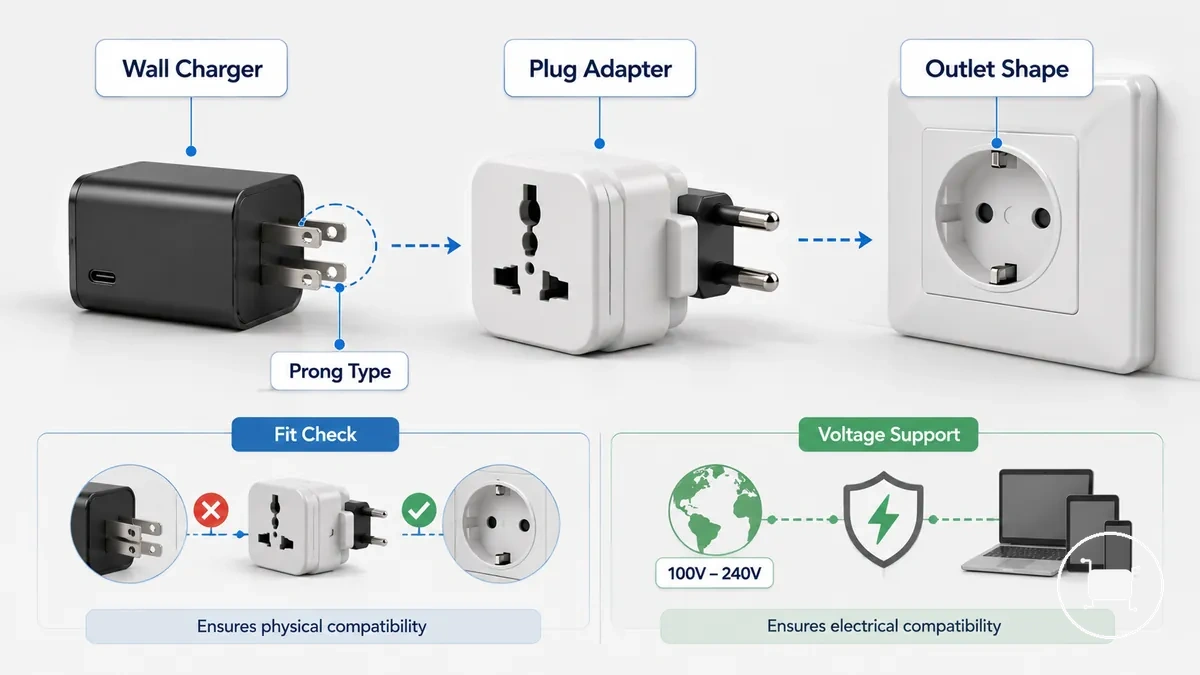
Plug compatibility is determined by physical prong type rather than charging capability, so a USB-C wall charger can function normally once the correct adapter bridges the outlet connection. Voltage support remains a separate factor and depends on the charger’s specifications rather than the plug shape.
A simple contrast is that the wall charger handles power conversion, while the plug adapter only resolves the physical connection to the outlet, without changing charging performance or speed conditions.
When a power bank solves a different travel charging need
A power bank solves off-outlet charging rather than repeated wall charging by storing electrical energy in a battery so devices can be powered when no wall socket is available.
Stored battery power becomes relevant in travel situations where access to fixed outlets is limited or intermittent, and charging must continue during movement or waiting periods.
- Extended transit periods where wall access is unavailable
- Situations where multiple devices need staged charging based on available capacity
- Use cases where USB-C output is required without relying on a wall connection
- Cases where device runtime depends on stored battery capacity and load demand
- Travel conditions where carry-on rules and battery rating limits may affect transport suitability depending on airline and destination rules
A power bank differs from a wall charger because it does not depend on an outlet during use, but its usefulness varies based on stored capacity, device power demand, and travel regulations that may apply to battery transport.
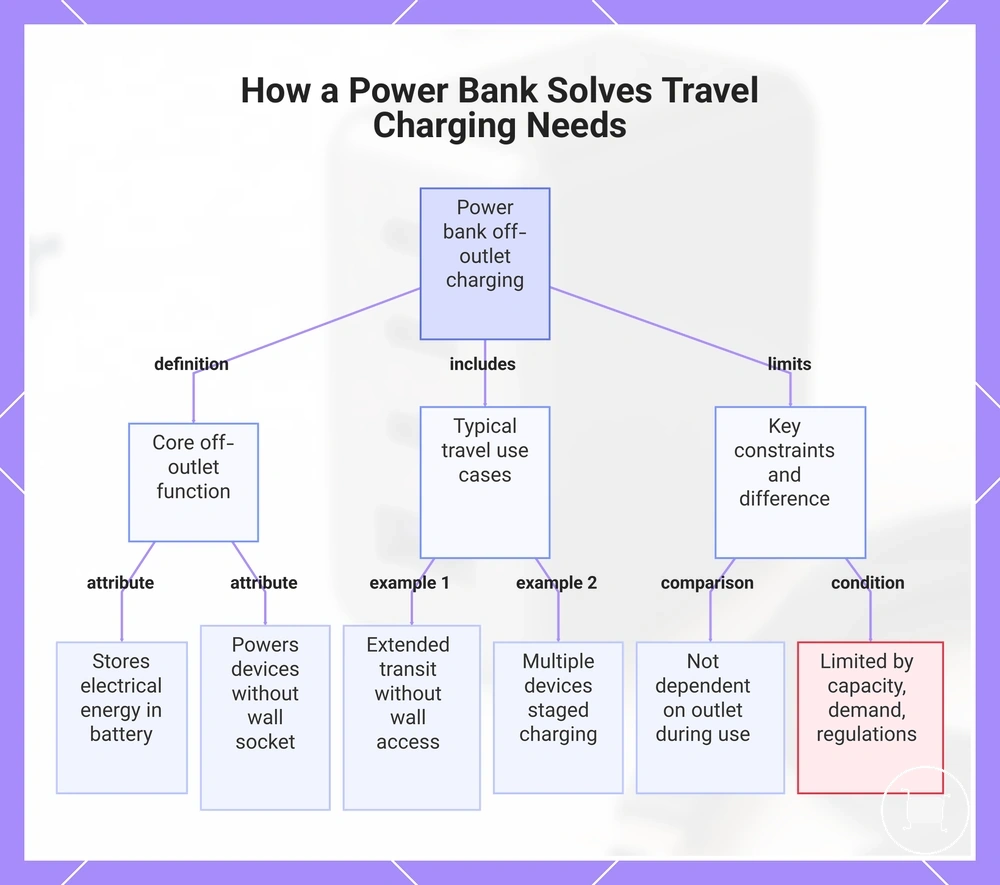
This chart explains how a power bank provides off-outlet charging, common travel use cases, and key constraints compared to wall chargers.
Compact Form Factor and Plug Design
Physical design of a USB-C travel charger affects travel suitability by determining how efficiently it fits into luggage and how reliably it connects in real outlet environments. The charger’s body size, plug structure, and overall layout influence packing behavior and stability before specific electrical features are considered.
Charger dimensions, weight, foldable prongs, GaN-based internal layouts, and cable integration all shape how the device behaves in backpack storage, carry-on organization, and crowded outlet setups, where space and socket access are limited or shared.
The table below organizes body size, prong design, cable arrangement, and wall clearance to show how each physical attribute influences travel usability.
| Attribute | Design element | Travel impact |
|---|---|---|
| Body size | Charger dimensions and weight | Influences packing efficiency and pocket space |
| Prong design | Fixed or foldable plug structure | Affects outlet fit and reduces snag risk in transit |
| Cable arrangement | Integrated or separate cable setup | Impacts cable management and packing clutter |
| Wall clearance | Charger protrusion from socket | Determines stability in tight or crowded outlets |
Compared with wall charger form factors, compact plug design focuses on reducing bulk and improving outlet clearance, which can become more relevant in shared or space-limited charging environments.
Foldable prongs and slim wall fit
Foldable prongs reduce protrusion from the charger body and help improve packed fit by limiting snagging inside bags, while a slim wall fit supports closer contact with the outlet surface for more stable placement in tight charging spaces.
Foldable and fixed plug designs create different trade-offs when evaluated in real travel use, especially under constrained luggage space or crowded outlet conditions.
Foldable prongs vs fixed plug considerations:
- Folded depth: reduced profile improves storage in backpacks and carry-on compartments
- Wall stability: depends on plug design, charger weight, and outlet condition
- Durability concern: moving parts in foldable designs may vary in long-term resilience by use case
- Bag storage effect: lower snag risk and cleaner packing layout
Foldable prongs can improve packing convenience, while slim wall fit can help reduce outlet obstruction, but neither design is a strict requirement for travel use and performance depends on overall charger build and usage context.
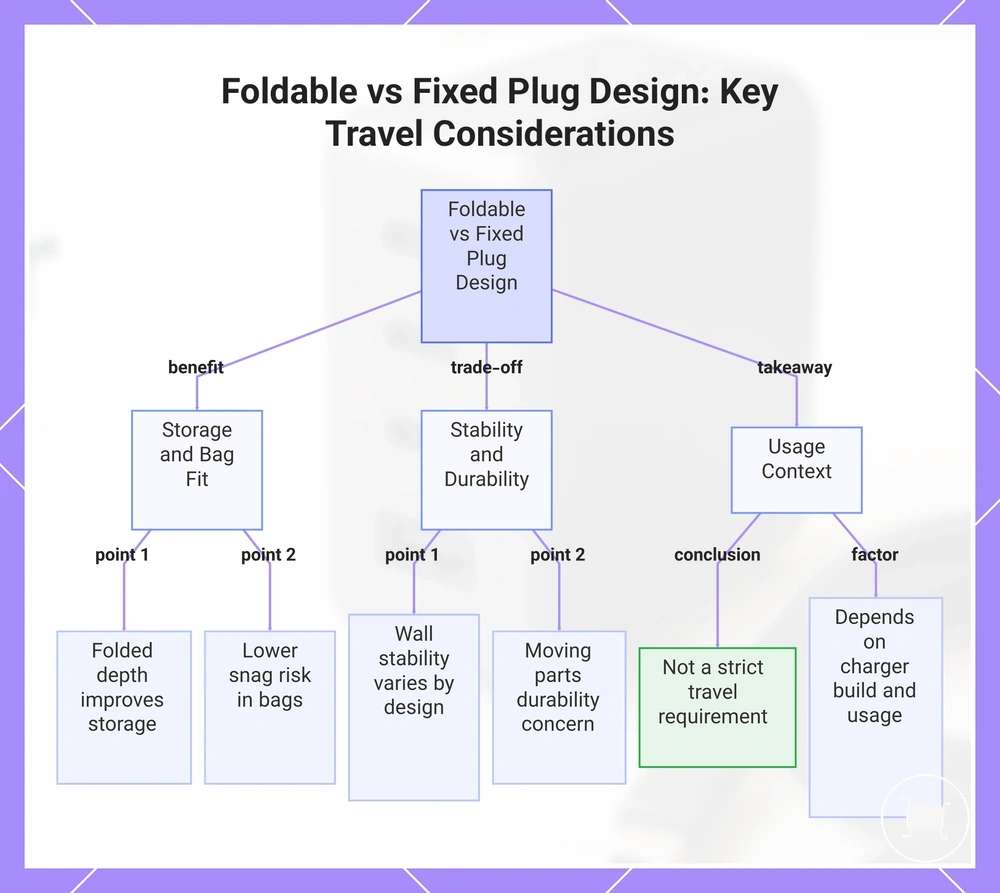
This chart compares foldable prongs and fixed plug designs for travel chargers, highlighting key benefits, trade-offs, and usage context.
GaN size advantages for higher-output travel chargers
GaN design refers to a charger technology that supports higher-output charging in a more compact form factor, allowing travel chargers to reduce physical size while still handling different output classes depending on overall design.
In practical travel use, GaN-based chargers can influence body size, heat behavior, and packing efficiency, especially in higher-output models where traditional designs may require larger housings. Heat output and stability still depend on charger engineering, load level, and enclosure design rather than GaN alone.
For example, a higher-watt travel charger using GaN components may be designed in a smaller body compared to a non-GaN version, which can improve packing space efficiency, although real-world heat and performance characteristics vary based on usage conditions and connected devices.
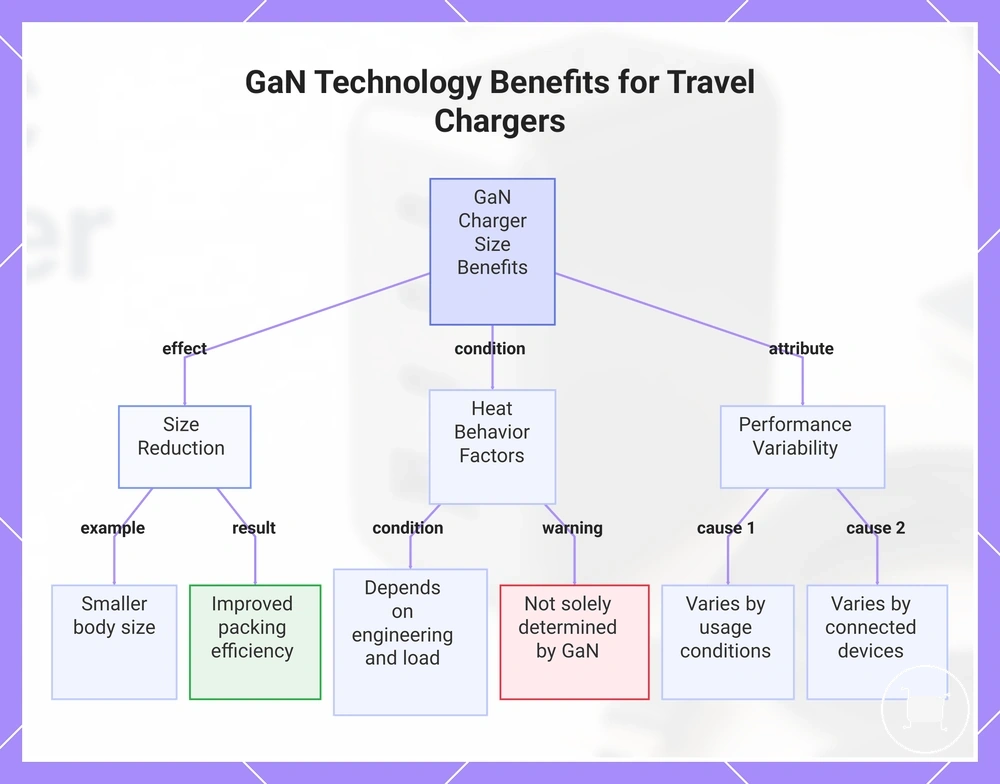
This chart shows how GaN design enables compact high-output travel chargers, while noting that heat behavior and performance depend on engineering, load, and usage conditions.
Built-in cables versus separate travel cables
Cable configuration in travel chargers refers to whether a cable is integrated into the charger body or carried separately, and this changes how packing space, compatibility, and replacement options behave during travel use.
Cable arrangement affects connector type, flexibility, and how many backup options are needed when charging multiple devices in different travel situations.
- Cable arrangement: built-in cable reduces loose items, while separate cables add flexibility
- Connector type: fixed cable limits variation, separate cables support multiple formats
- Replacement flexibility: separate cables can be swapped if damaged or incompatible
- Device support: depends on cable type and charger port configuration
- Luggage outcome: built-in cables reduce clutter, separate cables increase modularity
The trade-off is between packing simplicity and adaptability, especially when considering travel cable compatibility across different devices and charging setups.
Travel Wattage Needs by Device Mix
Travel wattage needs depend on device mix rather than maximum advertised output, since phones, tablets, and laptops place different combined demands on shared charging power in real use.
This makes device combination more important than headline charger ratings, especially when multiple devices charge at the same time and power is distributed across ports.
The table below summarizes how device mix affects expected charging behavior and selection decisions.
| Device mix | Wattage need (relative) | Charger total output | Per-port output behavior | Power sharing → charging outcome |
|---|---|---|---|---|
| Phone only | Low | Lower output is usually sufficient | Stable single-port delivery | Minimal sharing → consistent charging |
| Tablet + phone | Moderate | Mid-range output is typically required | Split output across ports | Shared power → reduced per-device rate |
| Laptop + phone | High | Higher output preferred depending on load | Dynamic allocation across ports | Active sharing → variable performance based on priority |
Selection depends on device mix, total output, per-port allocation, and power sharing behavior, which is why travel wattage needs are better evaluated through usage scenarios rather than maximum ratings alone.
30W to 45W for phone, tablet, and light-device trips
30W to 45W output can suit lighter travel setups when the device mix is limited to phones, earbuds, and small tablets, since overall charging demand stays relatively low in these use cases. :contentReference[oaicite:0]{index=0}
Use the device-mix check below to evaluate whether this range fits your travel scenario:
- Phone use → typically fits within this range when charging one device at a time
- Earbuds and accessories → low-demand devices generally require minimal sustained output
- Small tablet use → may be supported depending on charging load and cable capability
- Simultaneous charging → shared output can reduce per-device charging speed depending on port usage
- Device combination → suitability depends on whether charging happens one-by-one or together
This range is generally more suitable for light-device travel setups where charging demand is not distributed across multiple higher-power devices at the same time.
65W and above for laptop and multi-device trips
65W and above becomes relevant when a laptop or several devices must charge from a single compact wall charger, since total power demand increases beyond phone-level usage.
This output range is typically used when a laptop is part of the setup or when multiple devices charge at the same time, because power distribution across ports becomes a key constraint rather than single-device output.
Use the decision view below to understand how total wattage, per-port output, and power sharing affect travel charging behavior:
| Setup type | Total wattage | Per-port output behavior | Power sharing rule | Charging-speed effect |
|---|---|---|---|---|
| Laptop-focused travel | Higher total output required | One port may receive priority allocation | Reduced sharing under single high-load device | More stable laptop charging |
| Laptop + phone setup | Split demand across devices | Dynamic distribution across ports | Active sharing reduces per-device output | Balanced but variable speeds |
| Multi-device charging trip | Higher aggregate demand | Power distributed across all active ports | Load-based allocation affects output | Speed varies depending on simultaneous use |
Higher wattage is not automatically required for every travel setup, since actual performance depends on device mix, port behavior, and how power is shared during simultaneous charging.
Port Mix for Charging Several Travel Devices
Port mix depends on the devices and cables you pack, because USB-C ports, USB-A support, and total port count determine how easily multiple devices can charge from one travel charger. :contentReference[oaicite:0]{index=0}
The checklist below helps organize port selection around device count, connector type, and simultaneous charging needs rather than treating port count as a measure of charger quality.
- Two-device travel setup: Two USB-C ports may be sufficient when both devices and cables use USB-C connections
- Three-device travel setup: A higher port count can reduce the need to rotate devices during simultaneous charging
- USB-A support: May help when existing accessories or charging cables still use USB-A connectors
- USB-C ports: Can simplify packing when most travel devices share the same connector type
- Simultaneous charging: Charging speed and compatibility may vary by cable capability, device requirements, charging protocol, and power-sharing behavior
After establishing the required port count, portable port configurations can help match charger layout to the devices carried during the trip.
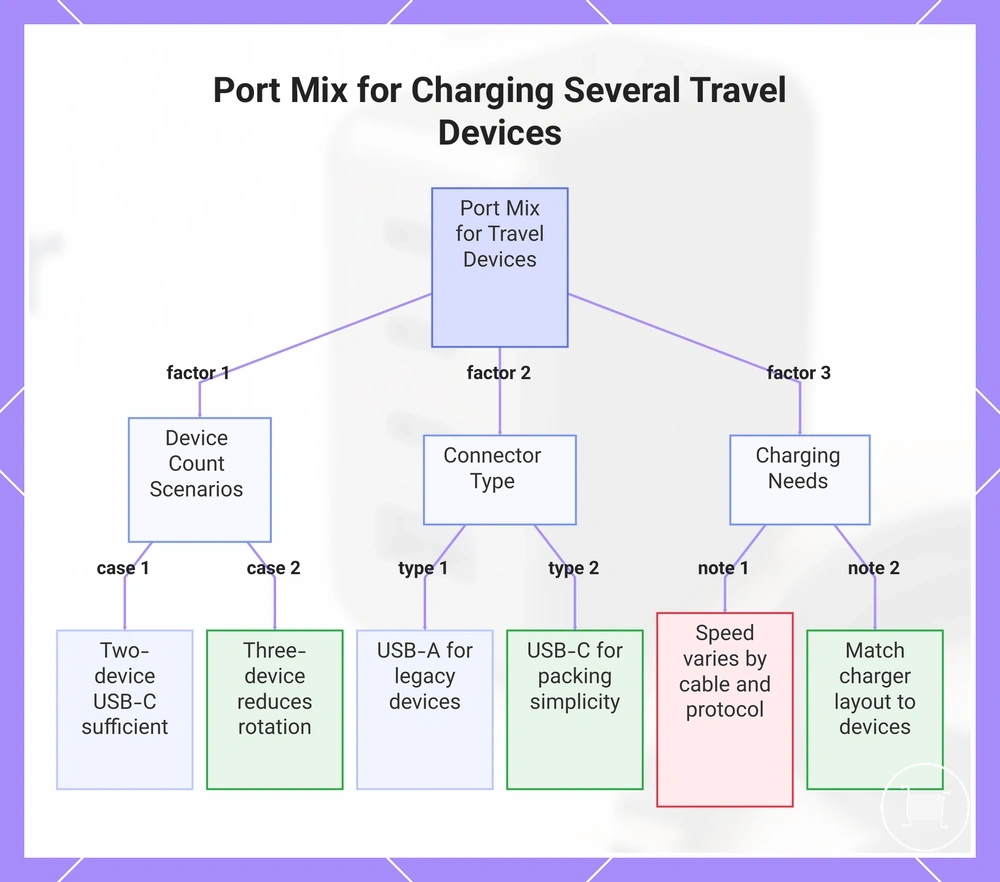
This chart shows how to select the right port mix based on device count, connector type, and simultaneous charging needs.
USB-C-only layouts versus USB-C and USB-A support
Port-type compatibility depends on the devices and cables you carry, making the choice between a USB-C-only layout and a charger with both USB-C and USB-A support primarily a cable-fit and device-fit decision. :contentReference[oaicite:0]{index=0}
| USB-C-only layout | USB-C and USB-A support |
|---|---|
| Typically suits travel setups built around USB-C devices and cables | May support a mix of USB-C devices and older USB-A accessories |
| Can reduce the number of cable types carried during travel | Can allow continued use of existing USB-A cables |
| Fast-charging compatibility depends on device requirements, cable capability, charger protocol, and port allocation | Fast-charging compatibility depends on device requirements, cable capability, charger protocol, and port behavior |
| May simplify packing when most devices use the same connector type | May improve flexibility when device connector types vary |
The more suitable option depends on cable availability, accessory age, connected devices, and how charging is distributed across active ports.
Two-port and three-port setups for lighter packing
Port count depends on how many devices need charging at the same time, making active charging needs a more useful selection criterion than the total number of devices carried. :contentReference[oaicite:0]{index=0}
- Two-port setup: May be enough when only one or two devices typically charge simultaneously or when charging sessions can be rotated
- Three-port setup: Can provide added convenience when three devices often require charging at the same time
- Simultaneous charging need: Sufficiency depends on device mix, cable count, power-sharing behavior, and charging habits
- Charger size: Lower port counts may allow a more compact charger footprint, depending on overall design
- Wall clearance effect: Smaller chargers can be easier to position in limited outlet space, although outlet layout and charger shape also influence the result
A two-port setup can suit luggage-light travel when charging demand remains modest, while a three-port setup may be more practical when simultaneous charging occurs more frequently.
Regional Outlet Fit and International Travel Use
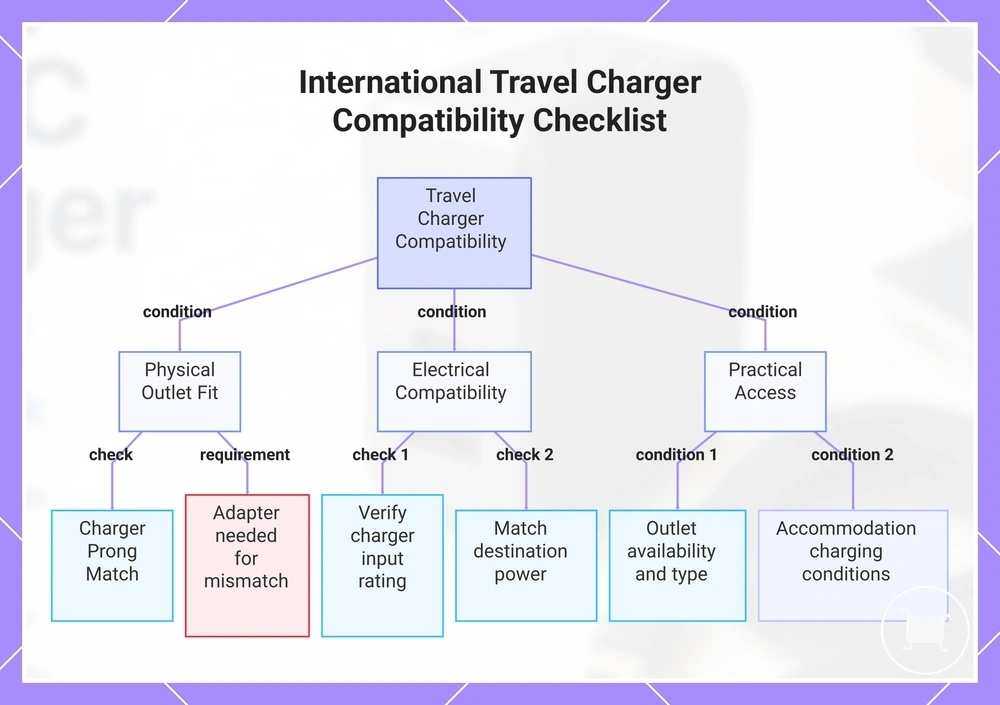
Regional outlet fit depends on whether the charger prong type matches the available outlet and whether the charger's input voltage support aligns with the destination power environment. A charger may be usable directly, require a plug adapter, or require additional compatibility checks based on these conditions. :contentReference[oaicite:0]{index=0}
The checklist below separates physical outlet fit from charging capability so outlet access can be evaluated before broader international-use considerations.
- Charger prong type: Direct use depends on whether the charger prongs fit the available outlet shape
- Input voltage support: Compatibility should be verified using the charger label and destination power conditions
- Plug adapter need: An adapter may be required when outlet shape and charger prongs do not match
- Outlet access: Practical use can depend on the type and availability of outlets in accommodation, transit areas, or shared charging spaces
- Accommodation charging context: Charging suitability may vary by outlet location, room layout, and destination-specific access conditions
A plug adapter changes physical fit between the charger and outlet, but it does not automatically change charging output, voltage compatibility, or safety characteristics. These factors depend on the charger label, adapter type, outlet conditions, and destination context.
This chart shows the three main conditions for using a charger internationally: physical outlet fit, electrical compatibility, and practical access.
Selection Trade-Offs for Travel Charging Setups
Travel charging setup selection depends on balancing compactness, output headroom, port count, wall clearance, cable planning, and destination fit within the same decision framework. The most suitable setup usually depends on trip scenario, device mix, and how charging is expected to occur during travel. :contentReference[oaicite:0]{index=0}
Selection trade-offs become clearer when charging needs are evaluated together rather than individually. A compact charger may improve portability, while additional output headroom or port capacity may be more useful when multiple devices are charged under shared travel conditions.
| Decision variable | Selection trade-off |
|---|---|
| Compactness | Smaller size may improve packing efficiency but can involve different charging priorities |
| Output headroom | Additional capacity may help with higher-demand device mixes but can affect charger size |
| Port count | More ports are most useful when simultaneous charging is expected |
| Wall clearance | Outlet space and charger shape can influence placement flexibility |
| Cable plan | Cable quantity and connector requirements affect packing and charging convenience |
| Destination fit | Outlet compatibility and charging access conditions can influence practical use |
Selection outcomes usually depend on how these criteria interact. A luggage-light trip may place greater value on compactness and cable simplicity, while a device-heavy trip may place more emphasis on output headroom, port availability, and destination charging conditions. For a final verification step, the charger buying checklist can help confirm that the selected setup aligns with the intended travel scenario.
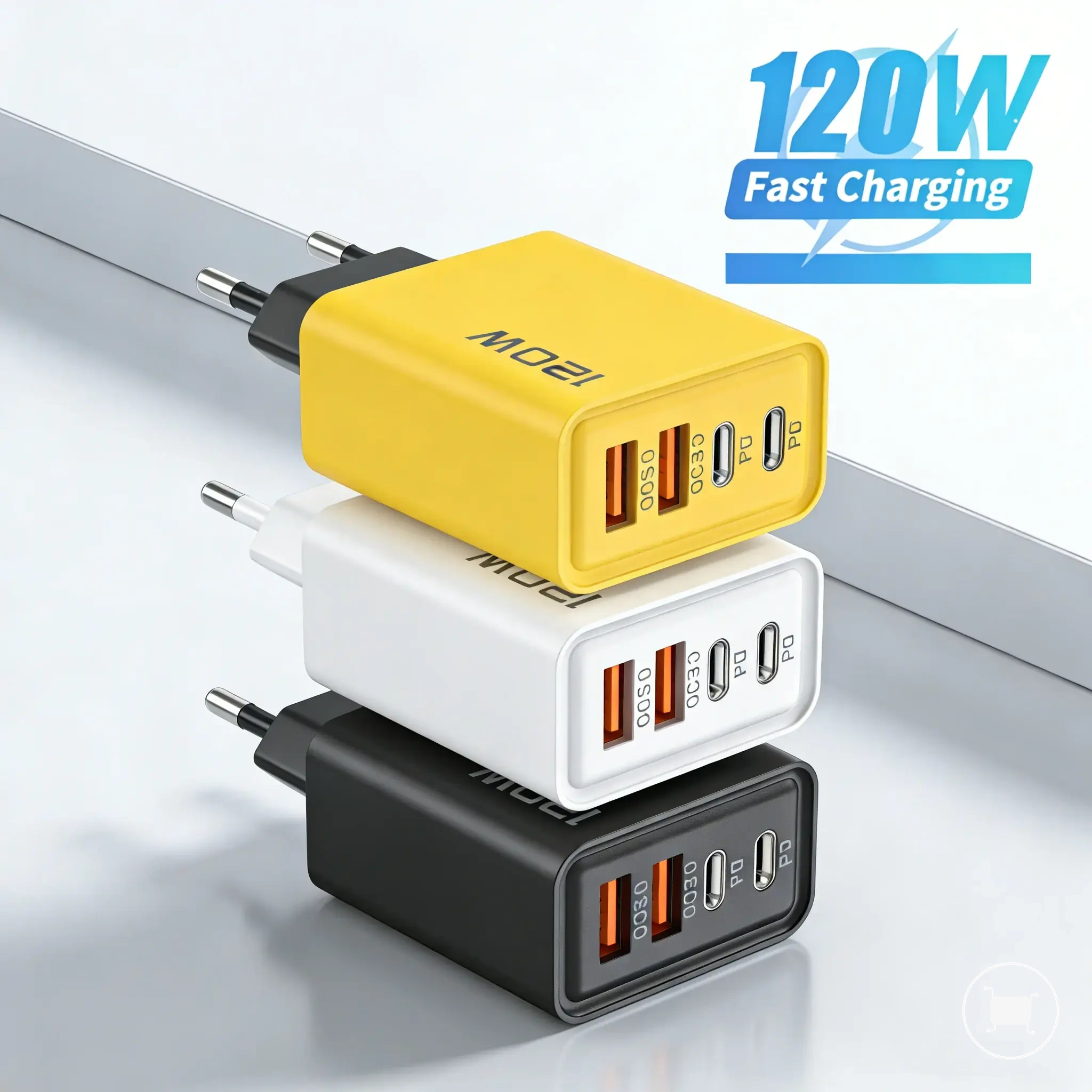
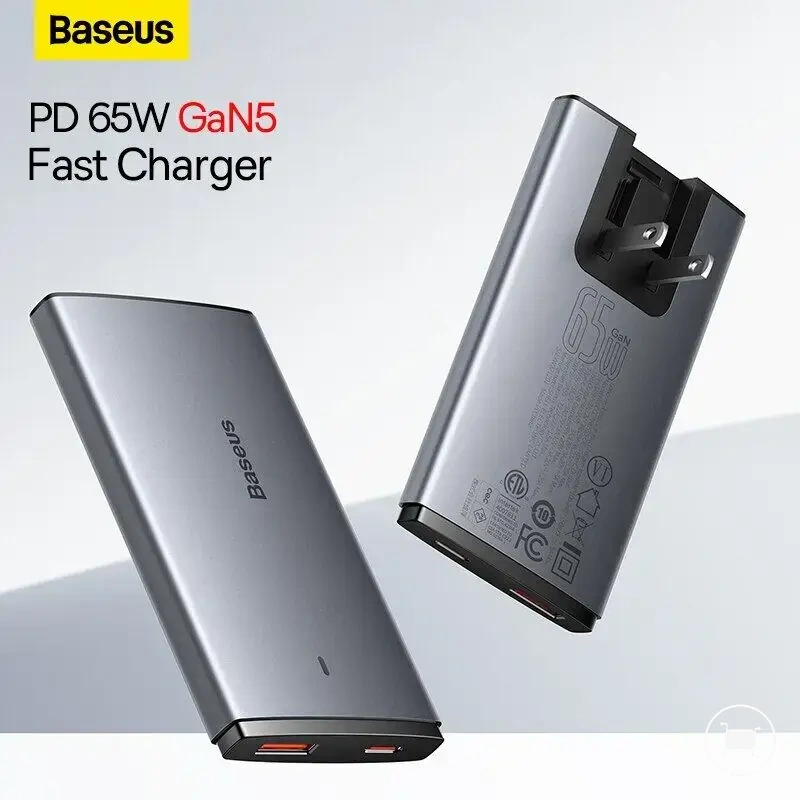
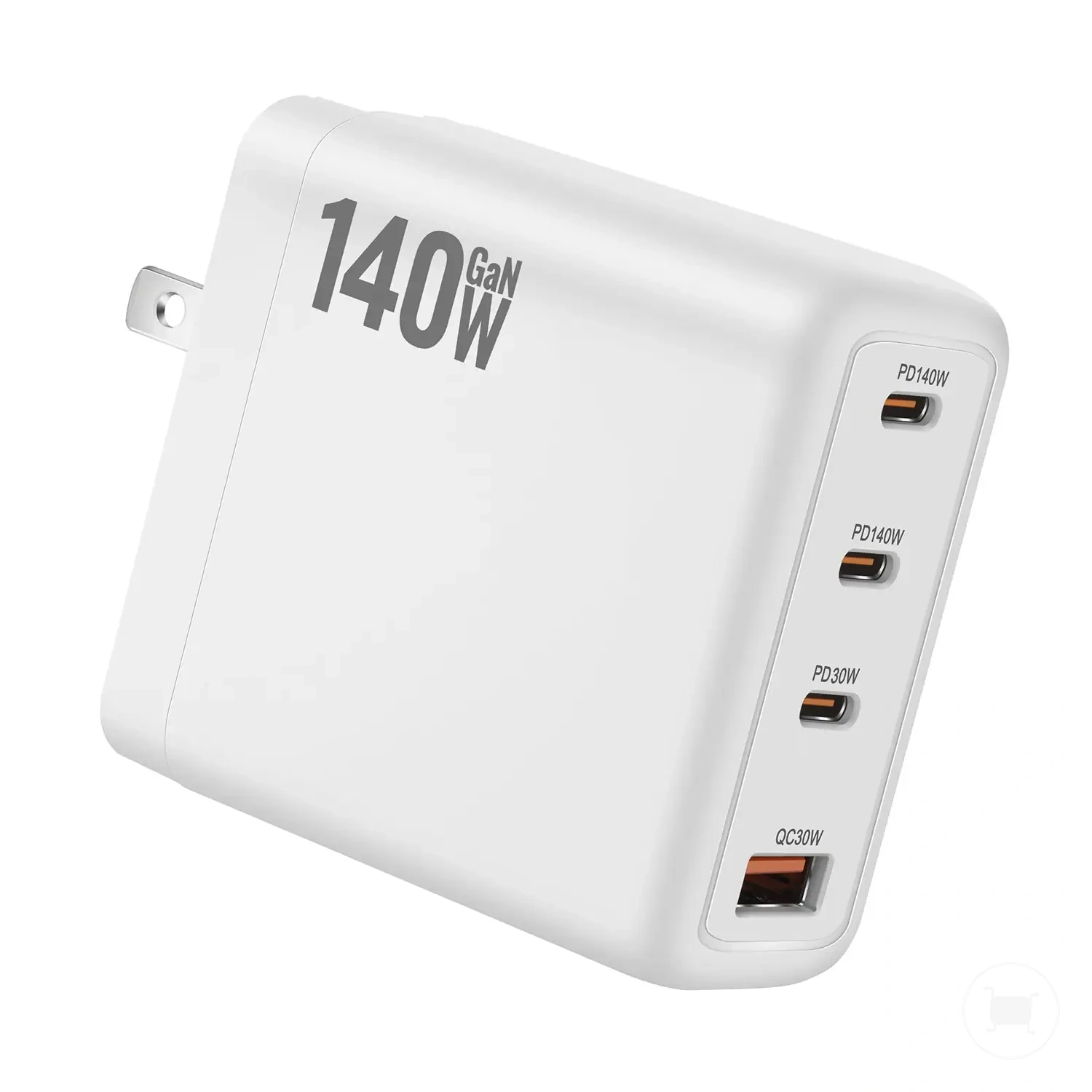
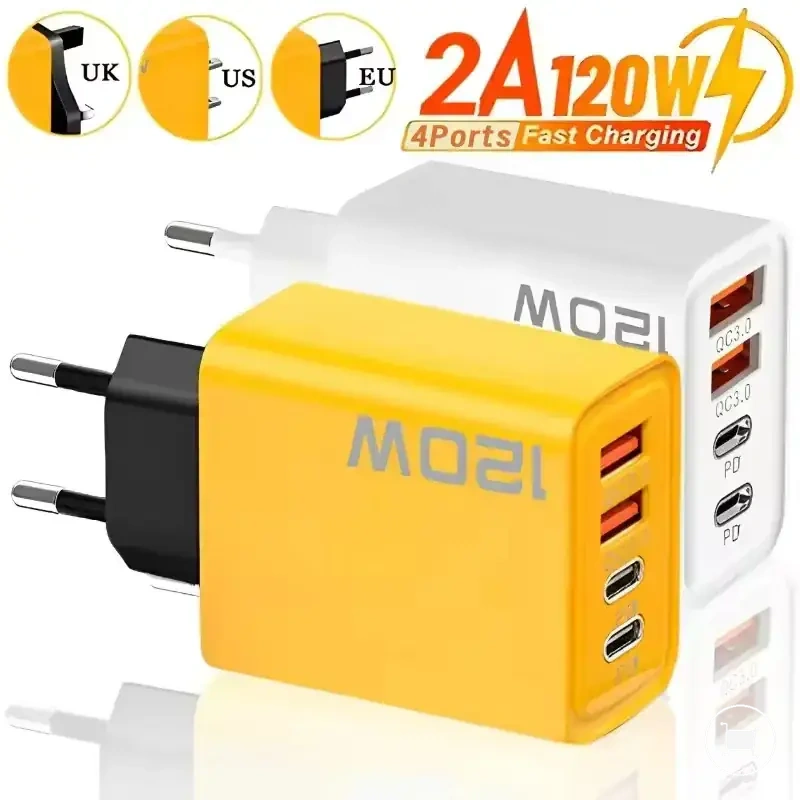
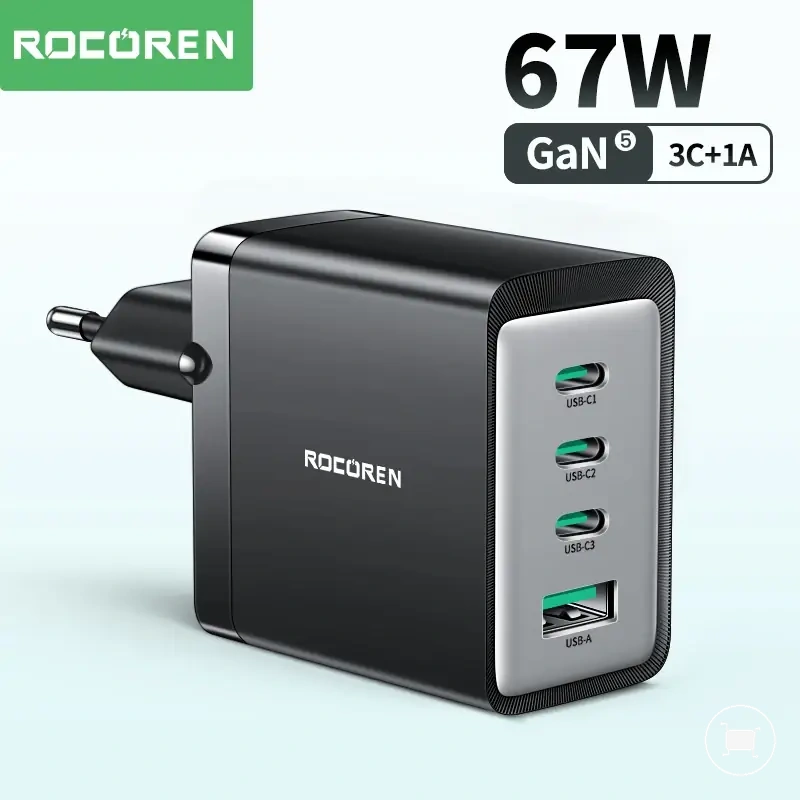
Here are product examples that may make comparison easier. Before buying, always review the compatibility criteria, essential features, and product details.
Compactness versus output headroom
Compactness versus output headroom depends on whether portability or charging flexibility carries more value for the travel charging setup. The more suitable choice usually changes according to device requirements, simultaneous charging needs, and available packing space. :contentReference[oaicite:0]{index=0}
| Compactness | Output headroom |
|---|---|
| May reduce packed weight and luggage space usage | May provide greater flexibility for higher-demand device combinations |
| Can improve wall fit where outlet space is limited | Can help support charging speed when multiple devices share available power |
| Often suits lighter travel setups with fewer charging demands | Often suits travel setups with changing or simultaneous charging requirements |
Compactness may provide greater carrying value when charging needs are modest and outlet access is limited. Output headroom may provide greater practical value when device requirements vary or when more than one device is expected to charge at the same time.
Neither option is universally superior because the better trade-off depends on charger size preferences, device flexibility needs, charging behavior, and the overall travel scenario.
Port count versus wall clearance and packed weight
Port count depends on simultaneous charging needs because additional charging convenience can also increase charger bulk, wall clearance requirements, and cable friction around the outlet area. The more suitable balance usually depends on how many devices need power at the same time. :contentReference[oaicite:0]{index=0}
- Port count: Additional ports may reduce charging rotation when multiple devices are charged simultaneously
- Charger body width: More ports can contribute to a larger charger body depending on the overall design
- Outlet blockage: Larger chargers may occupy more outlet space and can be less convenient in confined charging areas
- Packed weight: Increased charger size may add carrying weight compared with more compact alternatives
- Power sharing effect: Charging behavior can vary when multiple devices draw power from active ports at the same time
- Cable friction: More connected cables may increase outlet-area clutter and packing complexity
Extra ports may provide greater value when simultaneous charging is a frequent requirement. When outlet space is limited, packing efficiency is important, or charging demand is lower, reduced charger bulk and fewer cable-management demands may carry greater value.