
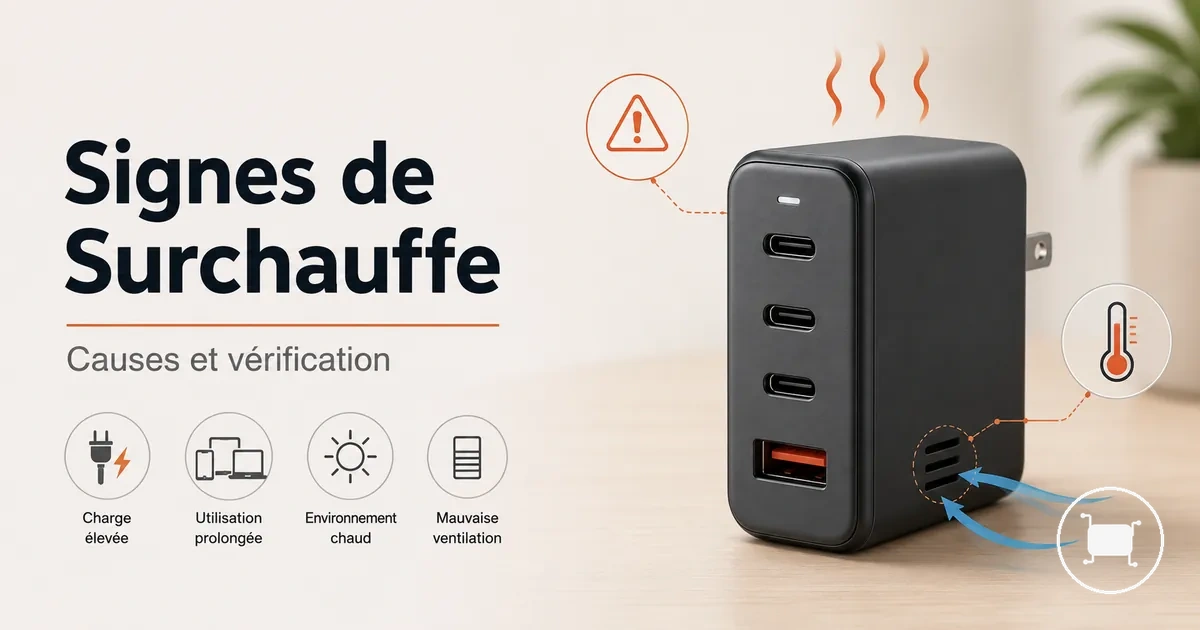
Multiport USB-C charger protocol compatibility for fast charging
Multiport USB-C charger protocol compatibility depends on the protocol the charger supports, the protocol the device can request, the cable’s capability, and the port being used. A USB-C connector alone does not confirm fast charging, because protocols such as USB-C Power Delivery, PPS, or Quick Charge participate in the power negotiation that determines whether a device can use a higher charging mode.
This page explains protocol compatibility as a device-and-charger matching problem, not as a product ranking or repair checklist. For the broader selection context around ports, wattage, cables, and multi-device use, use the multiport USB-C charger guide before narrowing the decision to protocol support.
A compatible protocol can allow faster charging when the charger, device, cable, and active port conditions all support the same charging mode. If one condition is missing, the same charger may still charge the device, but it may use a lower or fallback mode rather than the fastest mode shown on a charger label.
What charging protocols control on a multiport USB-C charger
A charging protocol is the rule set that a charger and a connected device use to agree on safe power delivery conditions, including how voltage and current are negotiated. The protocol controls the charging mode that may be available, while the USB-C connector identifies the physical connection rather than guaranteeing a particular charging speed or capability.
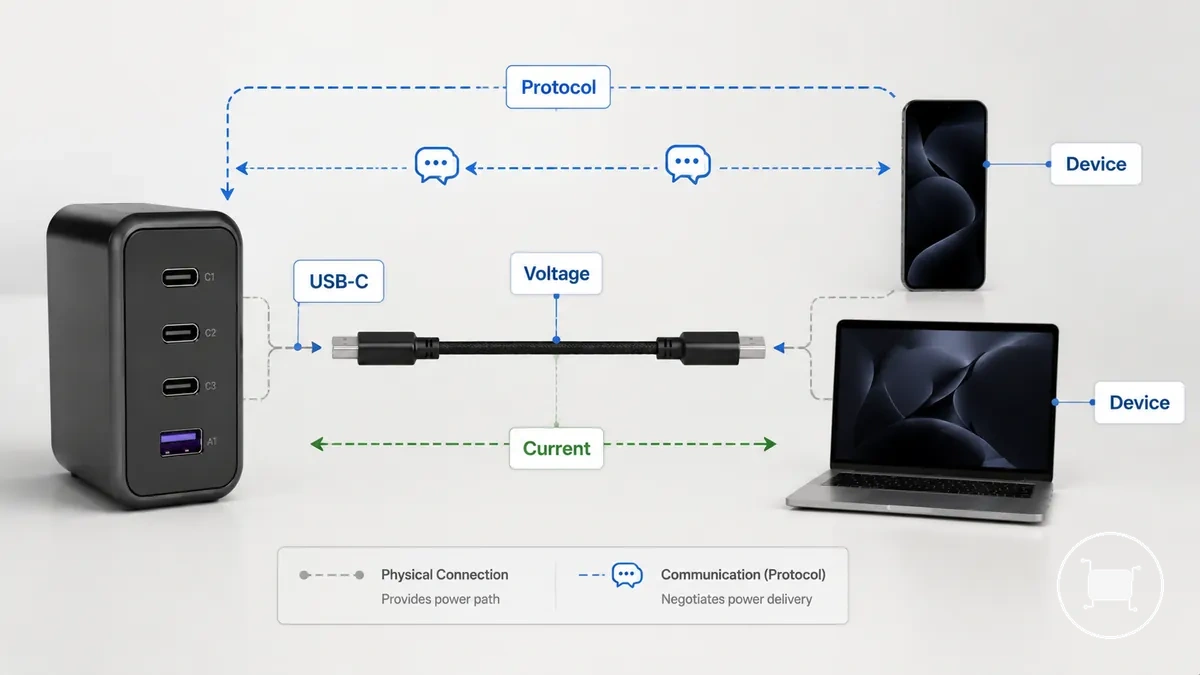
The image distinguishes the physical USB-C connection from the protocol layer that manages communication between the charger and the device. During this process, the charger, device, cable, voltage, and current work together as part of the negotiated charging conditions, so supported charging modes may vary when one part of the connection does not support the requested protocol.
Understanding the control function of a charging protocol helps explain why devices connected through similar USB-C ports can behave differently. Protocol support determines how compatible charging modes are selected, while cable capability and available power remain related conditions that can influence the final charging outcome.
Main USB-C fast-charging protocol families
Main USB-C fast-charging protocol families help identify how a multiport USB-C charger communicates with compatible devices. USB Power Delivery (PD), Programmable Power Supply (PPS), and Quick Charge (QC) are the protocol families most commonly found on charger labels, while supported charging modes and fallback behaviour may vary depending on whether the connected device supports the same protocol.
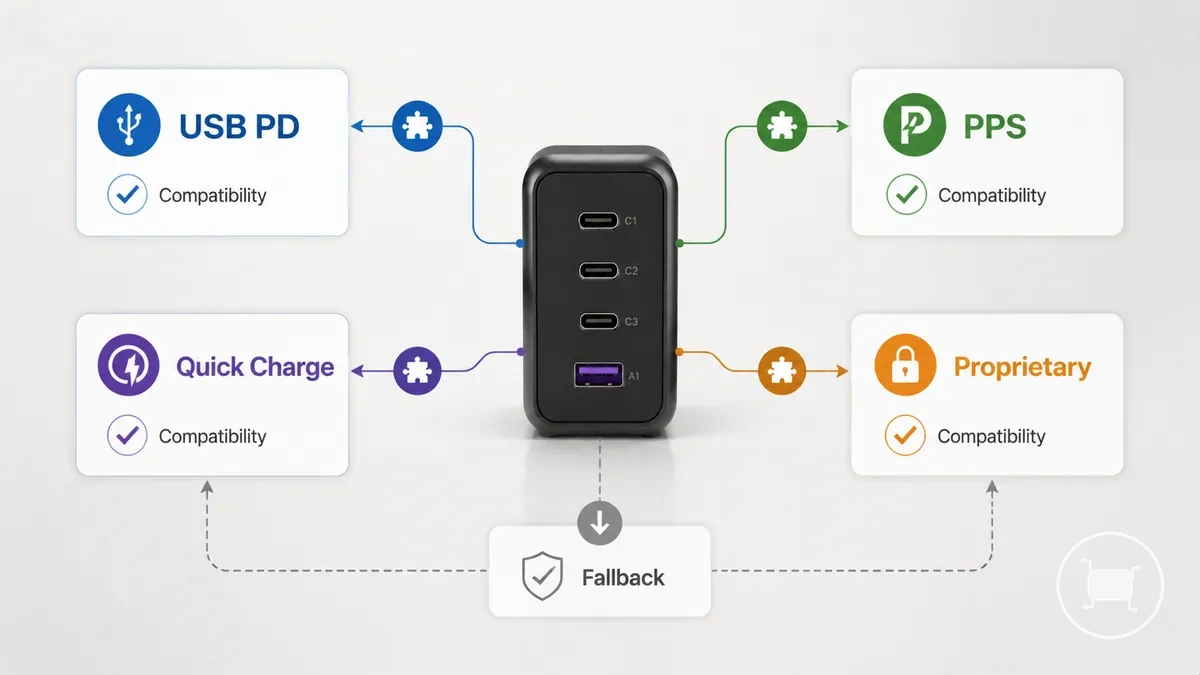
The image organizes the protocol families by their role and compatibility, making charger labels easier to interpret. It distinguishes the primary protocol families from manufacturer-specific alternatives without presenting them as product rankings.
| Protocol family | Primary role | Compatibility implication |
|---|---|---|
| USB Power Delivery (PD) | General USB-C power negotiation | Common across many USB-C devices, although available charging modes depend on device support. |
| Programmable Power Supply (PPS) | Adjusts power dynamically during supported charging sessions | May be available only when both the charger and the connected device support PPS. |
| Quick Charge (QC) | Fast-charging protocol family for compatible devices | May use another supported charging mode when Quick Charge is not available. |
| Proprietary protocols | Manufacturer-specific charging methods | Compatibility varies by charger and device, so protocol-specific features depend on matching support. |
USB-C Power Delivery and fixed power profiles
USB-C Power Delivery (PD) is the baseline USB-C fast-charging protocol used by many compatible phones, tablets, laptops, and accessories. Within PD, fixed power profiles define negotiated power levels that a charger can offer, while the connected device requests a compatible profile based on its charging requirements. Profile availability depends on charger support, cable capability, and device compatibility.
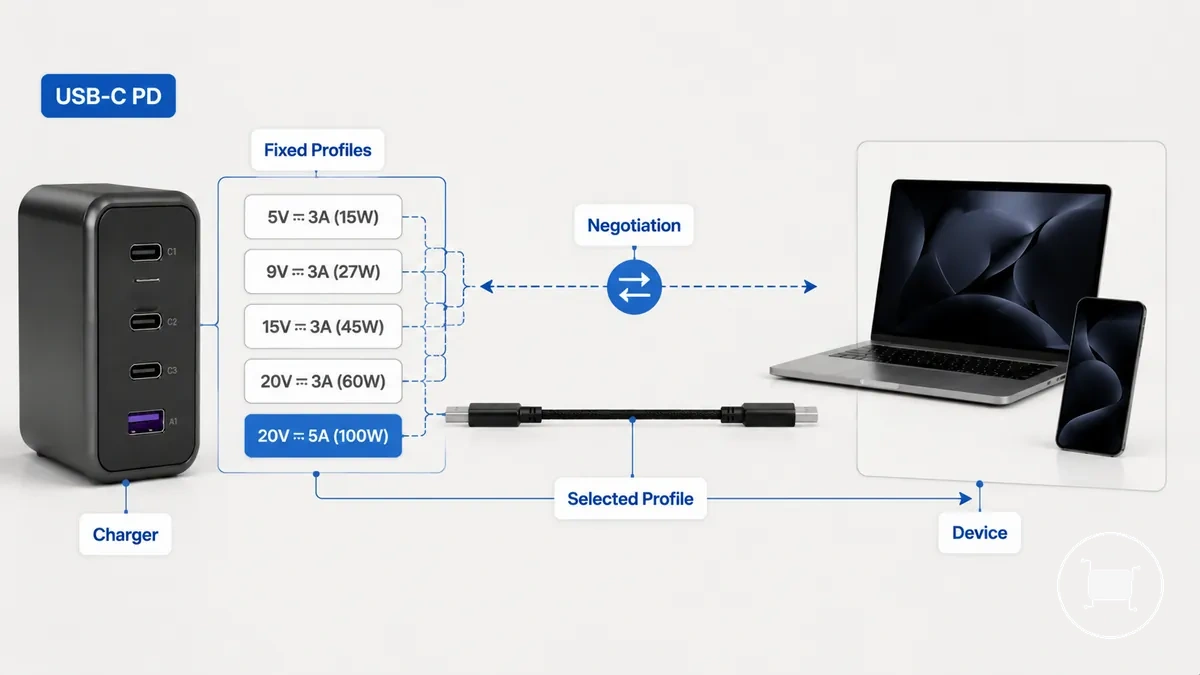
The image illustrates how fixed profile selection works within USB-C Power Delivery rather than general USB-C charging. During negotiation, the charger advertises its supported fixed profiles and the connected device requests a compatible option. If the preferred profile is unavailable, charging may fall back to another supported profile so the connection can continue using a mutually supported charging mode.
PPS and adjustable voltage-current control
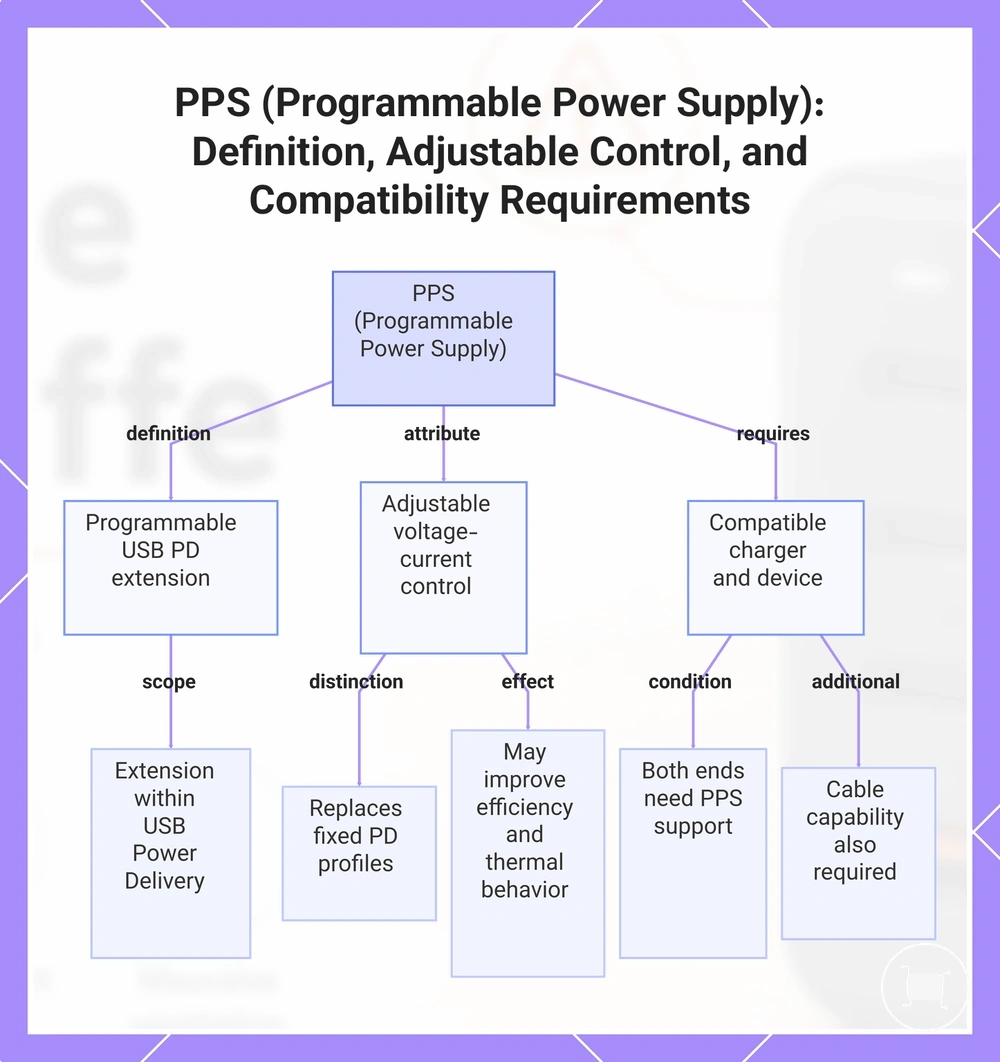
Programmable Power Supply (PPS) is a programmable extension within USB Power Delivery that allows voltage and current to be adjusted more precisely during a charging session. Unlike fixed Power Delivery profiles, PPS enables finer power adjustment, but its availability depends on compatible support from both the charger and the connected device.
PPS emphasizes adjustable voltage-current control instead of fixed profile selection. A compatible device can request changing power levels as charging conditions evolve, and a compatible charger can respond with corresponding adjustments. This programmable control may improve charging efficiency or thermal behaviour in supported charging sessions, although the result depends on charger support, cable capability, and device compatibility rather than PPS alone.
This chart explains what PPS is, its key feature of adjustable voltage-current control, and the compatibility requirements for it to work.
Quick Charge and proprietary phone charging protocols
Quick Charge is a phone-oriented fast-charging protocol family that may coexist with USB-C Power Delivery support on compatible chargers and devices. Whether a phone uses Quick Charge depends on charger compatibility, device support, firmware, and the charging protocol negotiated during connection rather than the USB-C connector alone.
Quick Charge focuses on proprietary phone-protocol support rather than broader USB-C Power Delivery compatibility. If a charger or phone does not support the required Quick Charge mode, charging may fall back to another supported protocol because a shared charging method must be available for negotiation. Charger labels can indicate supported protocols, while the charging mode ultimately depends on the compatible features provided by both the charger and the connected device.
Protocol differences that affect charger compatibility
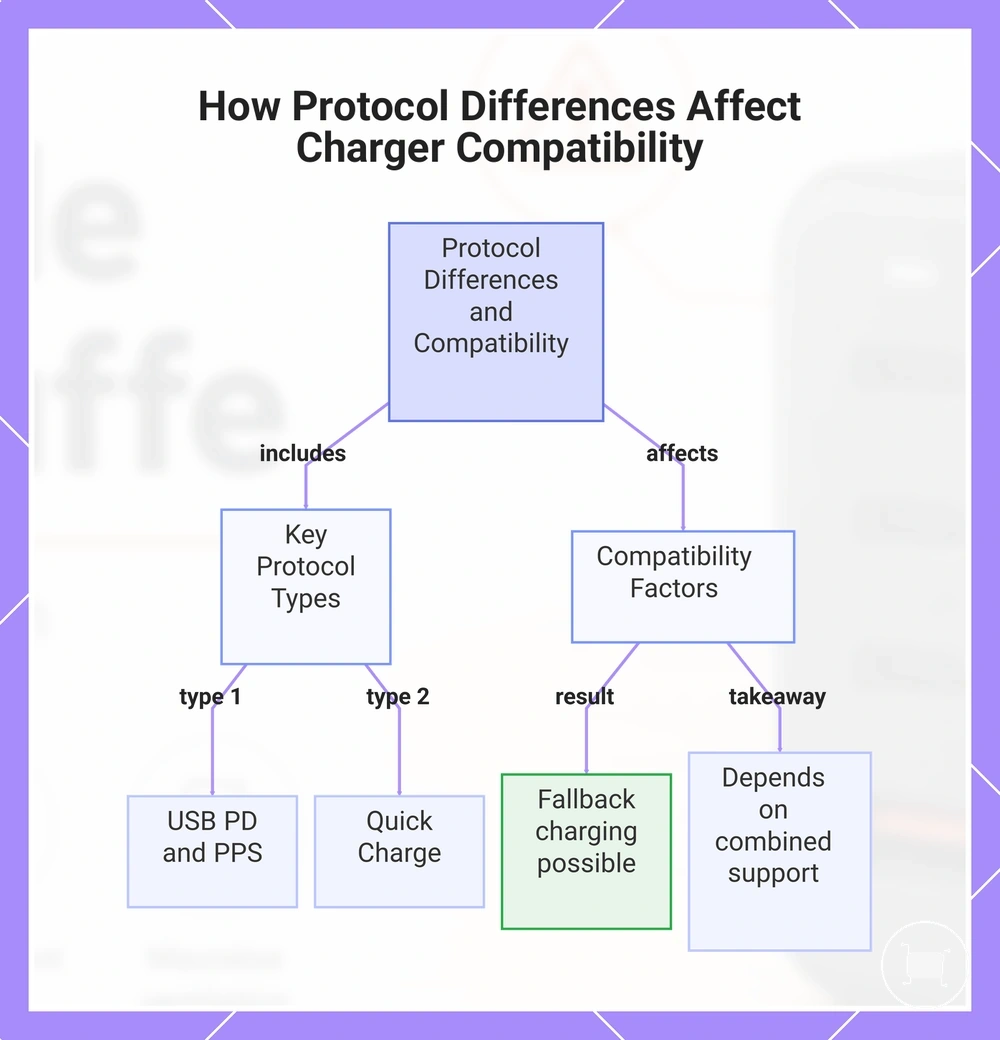
Protocol differences affect charger compatibility only when they change how a charger and a connected device negotiate power. USB Power Delivery (PD), Programmable Power Supply (PPS), and Quick Charge use different protocol capabilities, so compatibility depends on which protocols both devices support and whether a compatible fallback mode is available.
PD provides broad USB-C charging compatibility, PPS extends PD with more adjustable voltage and current control, and Quick Charge focuses on compatible phone charging protocols. These differences matter when selecting a charging mode or determining device compatibility rather than indicating that one protocol is universally preferable.
Fallback behaviour is another practical comparison criterion. If a charger or device does not support the preferred protocol, charging may continue through another mutually supported protocol when one is available. The final charging mode depends on the supported features of the charger, device, cable, and negotiated connection instead of the USB-C connector alone.
This chart explains how protocol differences, fallback behavior, and combined device features determine USB charger compatibility.
PD vs PPS for fixed and programmable power
PD and PPS differ in how they manage power negotiation during charging. USB Power Delivery (PD) uses fixed power profiles, while Programmable Power Supply (PPS) allows compatible devices to request more finely adjustable voltage and current. This distinction applies only when both the charger and the connected device support PPS.
PD follows fixed profile selection, whereas PPS can adjust power dynamically in response to compatible device requests. If a device does not request PPS or the charger does not support it, charging can continue using standard PD. In that case, PPS-compatible hardware behaves like regular USB Power Delivery, so any benefit from programmable control depends on successful PPS negotiation rather than the protocol alone.
USB-C PD vs Quick Charge for device support
Device support depends on whether both the charger and the connected device accept the same charging protocol. USB-C Power Delivery (PD) is used by compatible PD devices, while Quick Charge is available only on compatible Quick Charge devices. If both sides do not support the same protocol, charging may use another mutually supported mode instead.
USB-C PD and Quick Charge differ in their supported protocol paths rather than the USB-C connector itself. A compatible device negotiates with the protocol it supports, and fallback behaviour depends on whether the charger and device share an alternative charging method. As a result, device acceptance is the primary compatibility limiter instead of the protocol name shown on the charger.
How charging negotiation selects voltage, current, and wattage
Charging negotiation determines the output that a multiport USB-C charger supplies by matching the charger's offered power profiles with the connected device's requested profile. The agreed voltage, current, and resulting wattage depend on charger capability, device support, cable limits, and the active charging conditions.
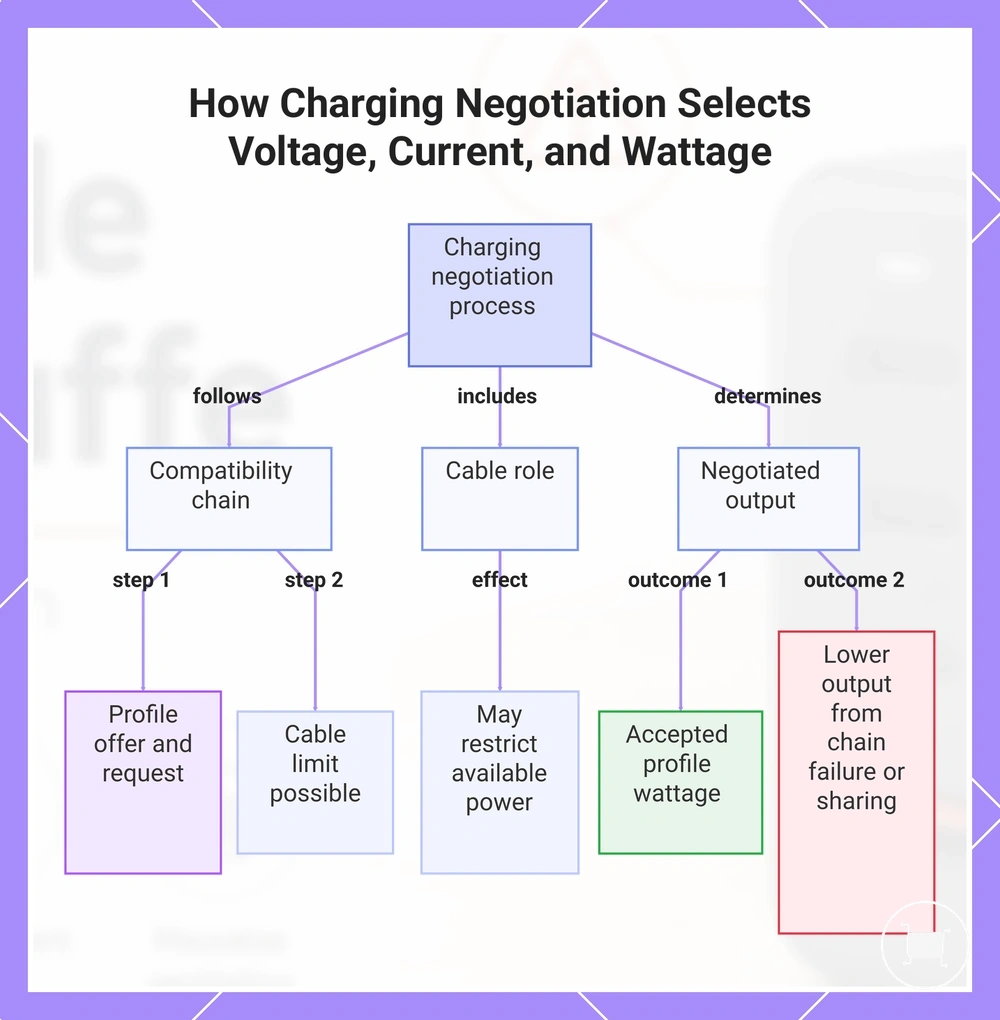
Charging negotiation follows a compatibility chain rather than a fixed output. The charger offers supported power profiles, the connected device requests a compatible profile, the cable may limit the available power, and both sides agree on a mutually supported profile. If any part of this chain cannot support the preferred mode, negotiation may select a lower compatible profile instead.
The negotiated wattage reflects the accepted profile rather than the charger's maximum output. When multiple devices share the charger or the cable limits available power, the negotiated output may be lower for those reasons. For more information about available output allocation, see charger wattage and output.
This chart shows how charging negotiation determines output through a compatibility chain among charger, device, and cable, and how the agreed wattage may be lower when the chain is broken or due to external factors.
Charger offers, device requests, and cable limits
Higher output is possible only when the charger offer, device request, and cable limit agree on a compatible charging profile. The charger may advertise available power options, the connected device may request a supported mode, and the cable can constrain the current that is safely available for that connection.
Each part can reduce the final output under different conditions. A charger offer cannot be used if the device does not request that mode, a device request cannot be accepted if the charger does not support it, and a cable limit may prevent a higher profile when the cable does not support that current level. For a deeper adjacent check on cable capability, see compatible USB-C cables.
The negotiated result should be read as a three-part match rather than a single-factor outcome. Reduced output may come from charger capability, device requirements, cable limits, or the accepted profile, so the cable is not automatically the cause when a device charges below the expected mode.
Fixed profiles, adjustable modes, and fallback output
Output mode can exist in different states within the same charger-device connection. A connection may use a fixed power profile, an adjustable mode, or a fallback output, depending on the supported profile that both the charger and the connected device can use under the current charging conditions.
Each output state serves a different role. Fixed profiles use predefined charging states, adjustable modes allow compatible devices to request supported power changes during charging, and fallback output may be selected when the preferred profile is unavailable or another connection condition limits that mode. Fallback is a normal compatibility outcome rather than an indication of a fault.
| Output state | Selection method | Typical condition |
|---|---|---|
| Fixed profile | Uses a supported predefined profile | Selected when the device requests a compatible fixed mode. |
| Adjustable mode | Uses supported dynamic power adjustment | Available when both the charger and the device support the adjustable mode. |
| Fallback output | Uses another compatible charging state | Selected when the preferred profile is unavailable or another connection condition limits that profile. |
Protocol support across multiple charger ports
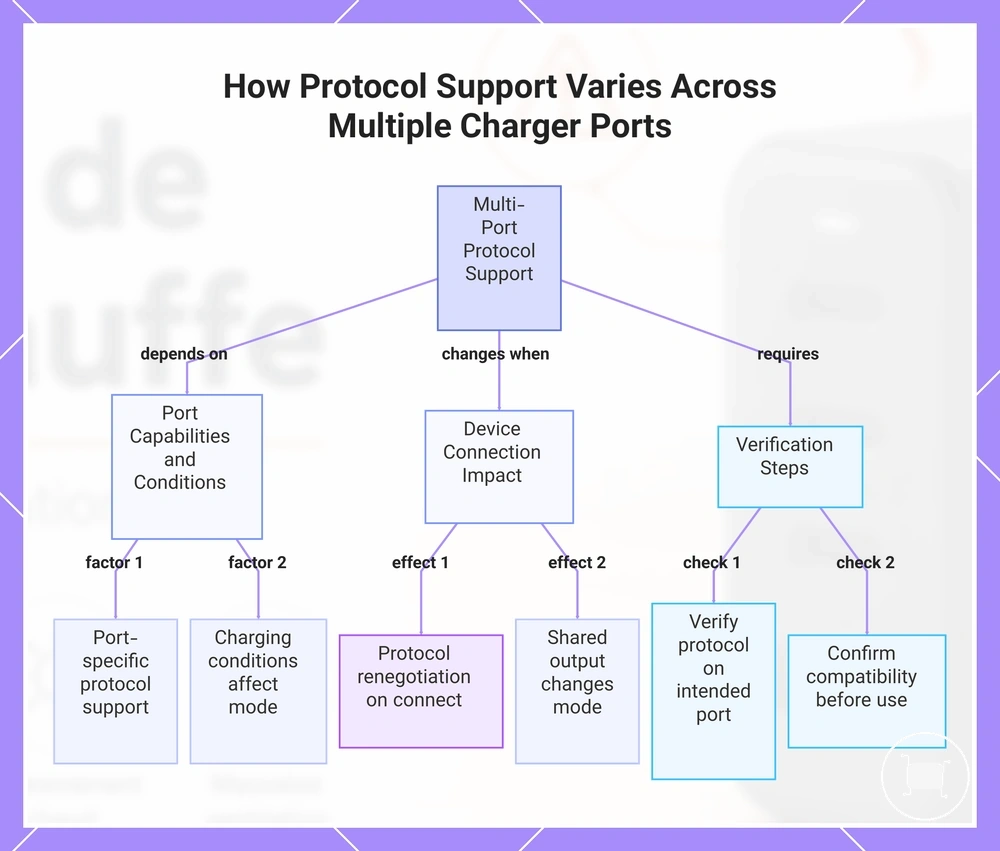
Protocol support across multiple charger ports depends on the capabilities assigned to each port and the charging conditions at the time of use. A multiport charger can provide different protocol support on different ports, so the available charging mode may vary depending on the selected port and whether other devices are connected.
A multiport charger may change the available protocol or charging state when additional devices are connected. One port may continue to support a preferred protocol while another may use a different compatible mode, or the charger may renegotiate the available output across active ports. If a laptop and a phone are connected at the same time, the resulting protocol availability can depend on the charger's design rather than the connector type alone.
Shared output can also influence which protocol or charging mode remains available after another device is connected. This behavior depends on how the charger distributes its available power across active ports and should not be assumed to be identical on every model. For more detail about this related topic, see power sharing behavior.
- Verify protocol support for the intended charging port.
- Check whether connecting additional devices may change the available charging mode.
- Confirm compatibility between the charger, selected port, and connected device before expecting a higher charging profile.
This chart shows the factors that influence protocol support on a multiport charger, including port capabilities, device connection effects, and essential verification steps.
Per-port protocol support and port behavior
Each port may not expose the same protocol support, output capability, or priority behavior. Port labels and charger design can indicate that one port supports different charging modes or output limits than another, so the charging result depends on the selected port and the connected device.
Each port can behave differently under different connection conditions. One port may support a preferred charging mode, another may apply a different output limit, and a port may change its available behavior when its operating mode or connection conditions change. USB-A and USB-C ports may also provide different protocol support, depending on the charger's design and port specification.
- Check the label for the intended charging port.
- Verify that the required protocol is available on that port.
- Confirm any port-specific output limit before expecting a higher charging profile.
- Remember that charging behavior may vary with the selected port and connection conditions.
Re-negotiation when devices are added or removed
Connection changes can trigger re-negotiation on a multiport charger when a device is plugged in or removed. A brief reset, pause, or change in charging output can be a normal compatibility response while the charger recalculates available output and selects a supported charging state for the active devices.
- A device is connected or disconnected.
- The charger recalculates active power demand.
- Supported charging modes may be reselected.
- Output may resume at the same or a lower compatible mode.
Re-negotiation is not automatically a protocol failure. It becomes worth checking more closely when pauses, resets, or output drops happen repeatedly, interrupt charging for active devices, or prevent a device from maintaining a compatible charging mode under the same connection conditions.
Protocol support versus real fast-charging outcomes
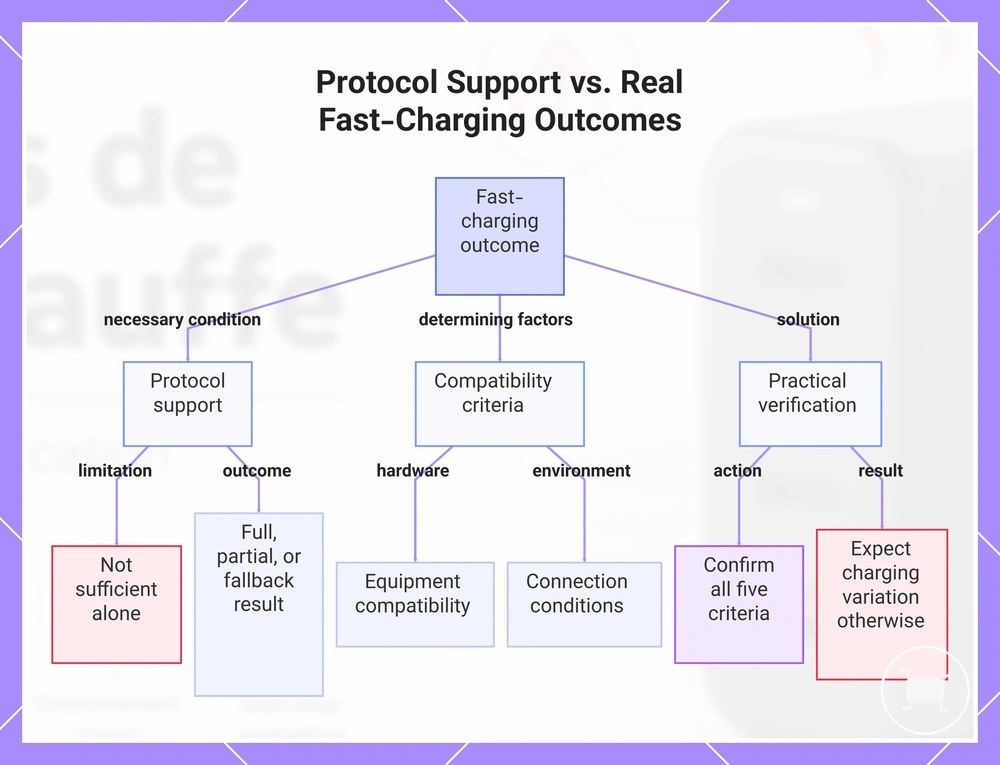
Protocol support is necessary for fast charging, but it is not sufficient on its own to produce the fastest possible charging result. The actual charging outcome depends on whether the charger, connected device, cable, selected port, and operating conditions all support the same charging mode at the same time.
A charger label can indicate supported protocols, but the charging result may still vary when device acceptance, cable capability, port state, or thermal behavior limits the available charging mode. A compatible protocol can therefore result in full, partial, or fallback charging behavior depending on the complete charging path rather than the protocol alone.
The most practical way to judge expected charging performance is to verify each compatibility criterion instead of relying on protocol names alone. Confirm charger protocol support, device acceptance, cable capability, port state, and operating conditions before expecting a higher charging mode. For broader compatibility guidance, see device compatibility checks.
Fast-charging outcomes are shaped by multiple compatibility criteria working together rather than by protocol support alone. Using these criteria provides a more reliable expectation of charging behavior across different devices and connection conditions.
Here are product examples that may make comparison easier. Before buying, always review the compatibility criteria, essential features, and product details.
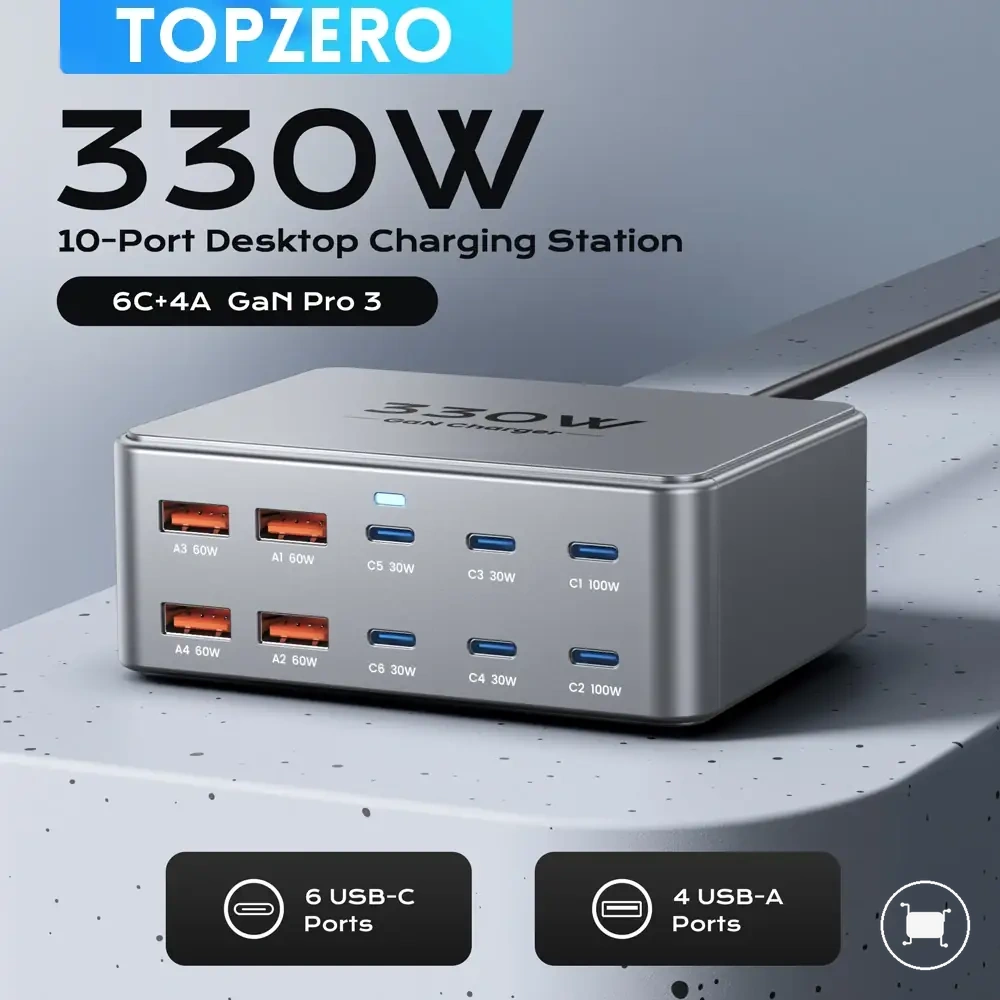
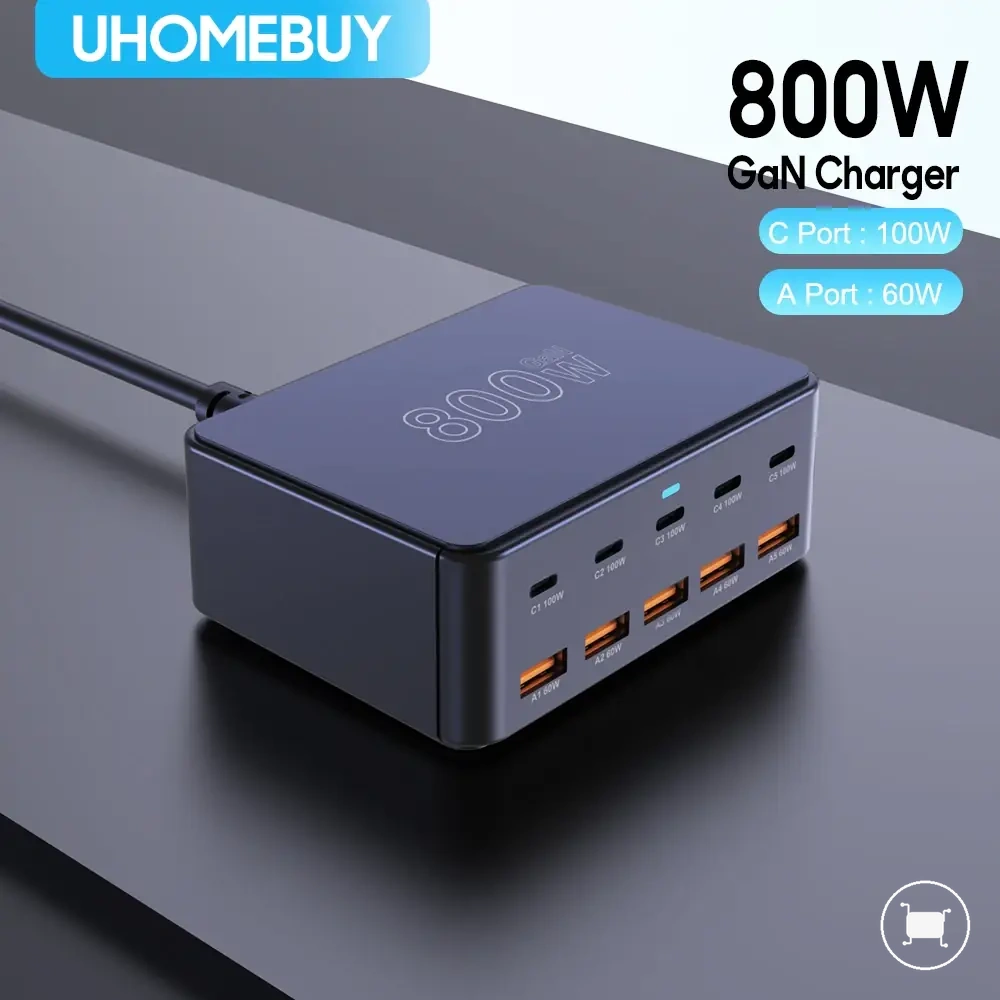
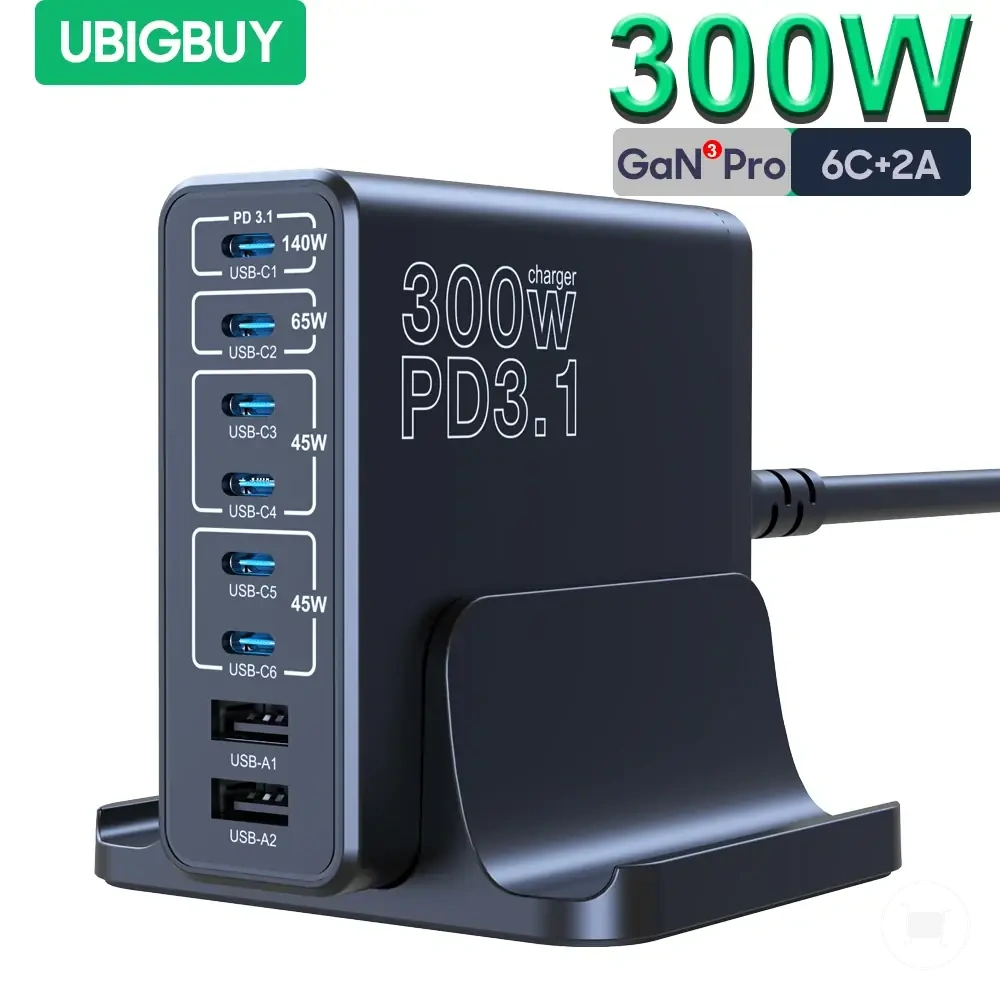
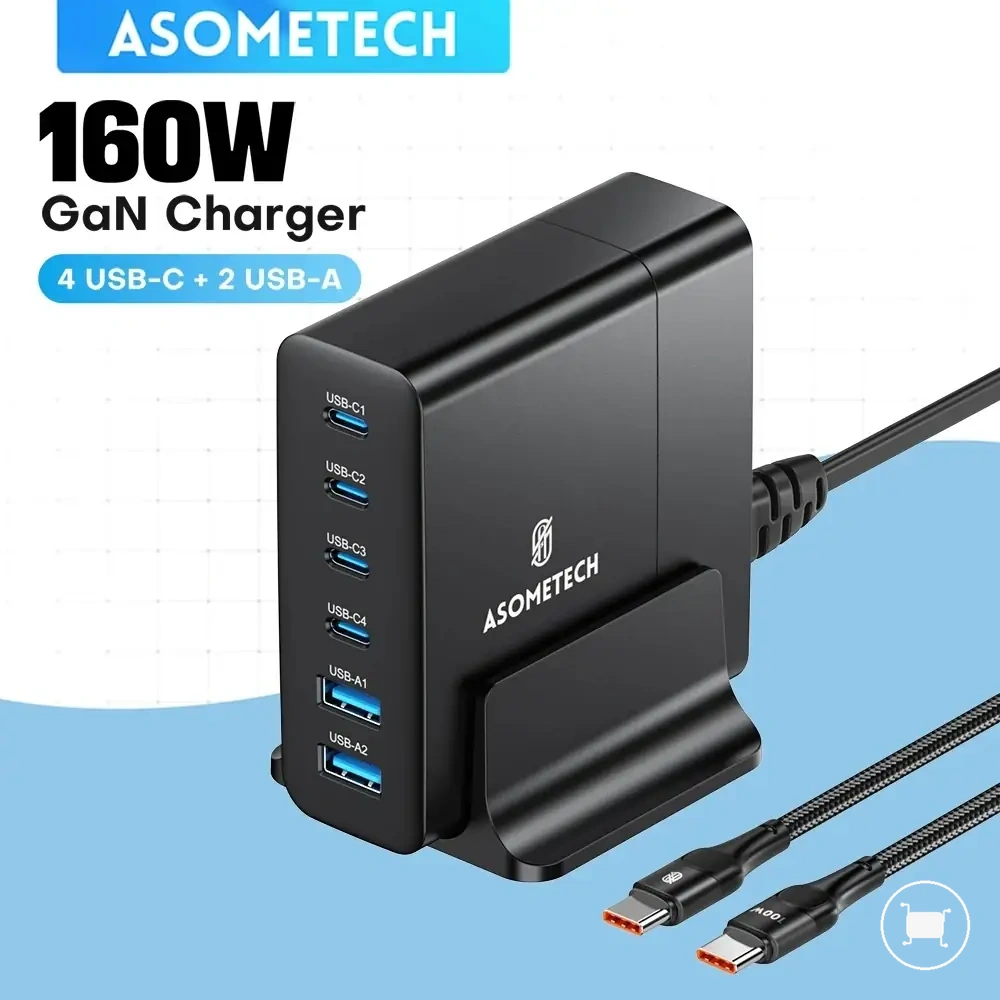
This chart explains why protocol support is necessary but not sufficient for fast charging, and what factors determine the actual charging outcome.
Protocol labels versus real device behavior
A protocol label can be accurate while a specific device still charges below the expected speed. The label shows what the charger may support, but device behavior depends on whether that device accepts the protocol, requests the matching profile, and continues to allow that charging mode under current conditions.
A device may choose a lower profile for non-fault reasons such as unsupported modes, firmware behavior, battery state, or heat management. In that case, the charger label is not necessarily false; the device may simply fall back to a supported charging state that fits its own requirements at that moment.
The label should be read as a capability signal rather than a speed guarantee. Real charging behavior can differ across devices because each device decides what it can request and accept during negotiation.
Fallback to slower charging modes
When charging falls back to a slower mode, it can be a normal safety or compatibility outcome rather than a fault. Fallback often occurs when a required fast-charging condition is unavailable, allowing the charger and device to use another compatible charging profile instead of interrupting charging.
Fallback may result from a missing protocol match, limited cable capability, multiport operating state, thermal limits, or an unsupported charging profile. These conditions can reduce the available charging mode without indicating that the charger or device is defective.
Occasional fallback is usually part of normal charging negotiation. If slower charging happens repeatedly under the same connection conditions, it may be worth checking whether the charger, cable, selected port, and connected device continue to support the expected charging mode.
Further investigation is generally appropriate only after these compatibility checks have been completed and the charging behavior remains unchanged. If repeated fallback is accompanied by persistent charging interruptions or negotiation failures, see charging negotiation issues for additional troubleshooting guidance.