
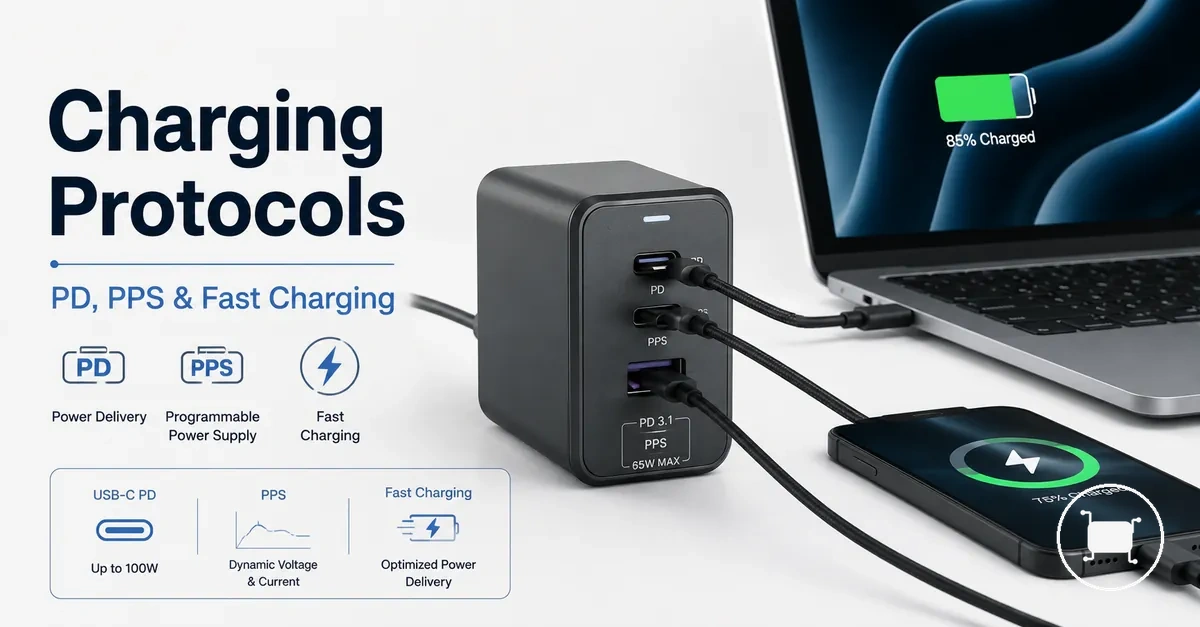
Multiport USB-C Charger Selection Checklist
A multiport USB-C charger selection checklist is a buying filter for matching one charger to the devices, cables, ports, safety signals, placement needs, and value conditions that matter before comparing partner offers. It helps separate a suitable charging setup from a charger that only looks convenient. The goal is to reduce mismatch risk.
A phone-only device mix may need a different buying frame from a laptop, tablet, phone, and earbuds charging together. Port count matters only when the USB-C and USB-A mix fits the devices and the cable rating supports the expected charging path. USB-C PD, PPS, safety features, form factor, and value also need to be checked as criteria, not treated as product labels.
The right starting point is criteria before offers. This multiport USB-C charger hub gives the broader category context before the checklist narrows the purchase decision. Start with wattage because power demand affects every later fit decision.
Partner-price or product comparison actions are useful only after the charger has passed the selection filters. A lower price may lose value when the charger model lacks clear output behavior, the included cable is not rated for the intended device, or the port layout does not match daily use. Use the checklist below as a decision screen before treating any offer as suitable.
The Multiport USB-C Charger Selection Checklist organizes selection risk by device need, charging condition, and buying risk. Each check links one criterion to a condition to verify and the decision effect it can create.
- Device mix: Verify whether the charger must support a phone, laptop, tablet, earbuds, or several devices together; this decides whether a simple charger or a higher-capacity multi-device charger is more suitable.
- Wattage: Check both the charger rating and the usable output for the highest-demand device; this can help prevent slow charging or an underpowered setup.
- Port count: Match the number of active devices to the available ports; this helps avoid relying on adapters or unplugging devices during daily use.
- USB-C and USB-A fit: Confirm whether current devices need USB-C ports and whether older accessories still need USB-A; this keeps connector fit aligned with actual use.
- Cable rating: Verify that the charging cable is rated for the intended device and charger path; this can stop the cable from becoming the limiting part of the setup.
- USB-C PD and PPS support: Check whether the charger, device, and cable path support the same charging mode; this affects whether fast charging may work or fall back.
- Shared-output behavior: Review how the charger model allocates power when more than one port is active; this can change charging speed when several devices are connected.
- Safety features: Look for clear protection claims, certification wording, manufacturer clarity, and cable quality information; this supports a safer rejection or verification decision when details are vague.
- Form factor: Match wall, desktop, or travel placement to outlet position, cable reach, and portability needs; this affects daily convenience after the technical fit is acceptable.
- Value: Compare price, stated warranty context, included cables, and specification clarity together; this keeps value tied to usable fit rather than offer appearance alone.
Device power needs and wattage fit
Device power needs and wattage fit should be checked before ports, extras, or partner offers because charger suitability starts with the actual device mix. A multiport USB-C charger must be judged by the power demand of the connected devices, the charger wattage rating, and the usable power available from the relevant port. Total wattage can describe the advertised capacity, but single-port output and shared output decide what the device may actually receive.
A phone-only setup may have lower charging demand than a laptop and phone used together. A laptop-plus-phone setup may need more usable power from one USB-C port while still leaving enough output for the second device. Several-device charging can reduce charging speed or create fallback behavior when the charger model reallocates output across active ports. The safer fit-based criterion is to compare device requirement, charger output, cable rating, and simultaneous charging condition together.
Mismatch risk appears when the charger rating looks high but the usable output does not match the highest-demand device or the combined device load. Device power needs and wattage fit should separate single-device peak demand from total simultaneous load before the checklist moves into port count or protocol support. Use wattage to check before buying as the criteria point once the actual device demand is clear.
Device power needs and wattage fit can be easier to judge when the visual labels the device demand against usable charger output.
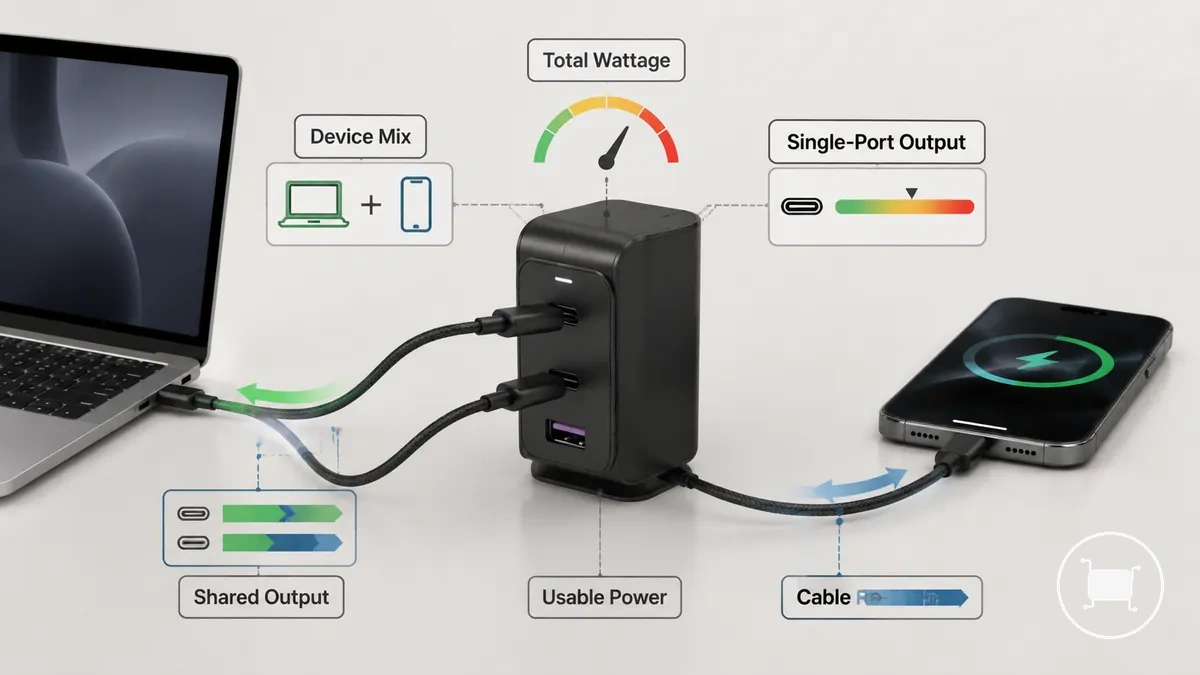
Device power needs and wattage fit checks verify whether the charger has usable power for the way the devices will be connected. Use the mini-checklist to separate single-device demand from total simultaneous load without relying on a headline wattage label alone.
- Phone-only use: Check whether the charger provides suitable usable power for the phone; this may avoid paying for output capacity that the setup does not need.
- Laptop use: Check the laptop power requirement against the charger single-port output; this helps identify whether charging may be acceptable, slow, or unsuitable.
- Laptop plus phone: Check how the charger handles simultaneous charging across active ports; this can reveal whether the laptop output may reduce when the phone is connected.
- Several-device charging: Check total wattage against the combined device load; this helps flag reduced speed or fallback behavior during multi-device use.
- Highest-demand device: Check the device with the largest power requirement first; this sets the first usable-power filter before smaller devices are considered.
- Active-port state: Check whether the charger model changes output when more ports are used; this affects the outcome more than the advertised rating alone.
- Cable path: Check that the cable rating fits the device requirement and charger output; this helps avoid a cable-limited result even when the charger appears suitable.
Peak wattage for the highest-demand device
The highest-demand device usually sets the minimum useful single-port output to check first. Peak wattage should be compared with the charger's usable single-port output rather than the total charger rating alone. Whether charging is acceptable or slow may depend on the device model and its charging requirement.
Peak wattage for the highest-demand device is easier to compare when the visual highlights how one charger port relates to one demanding device and why single-port output matters.
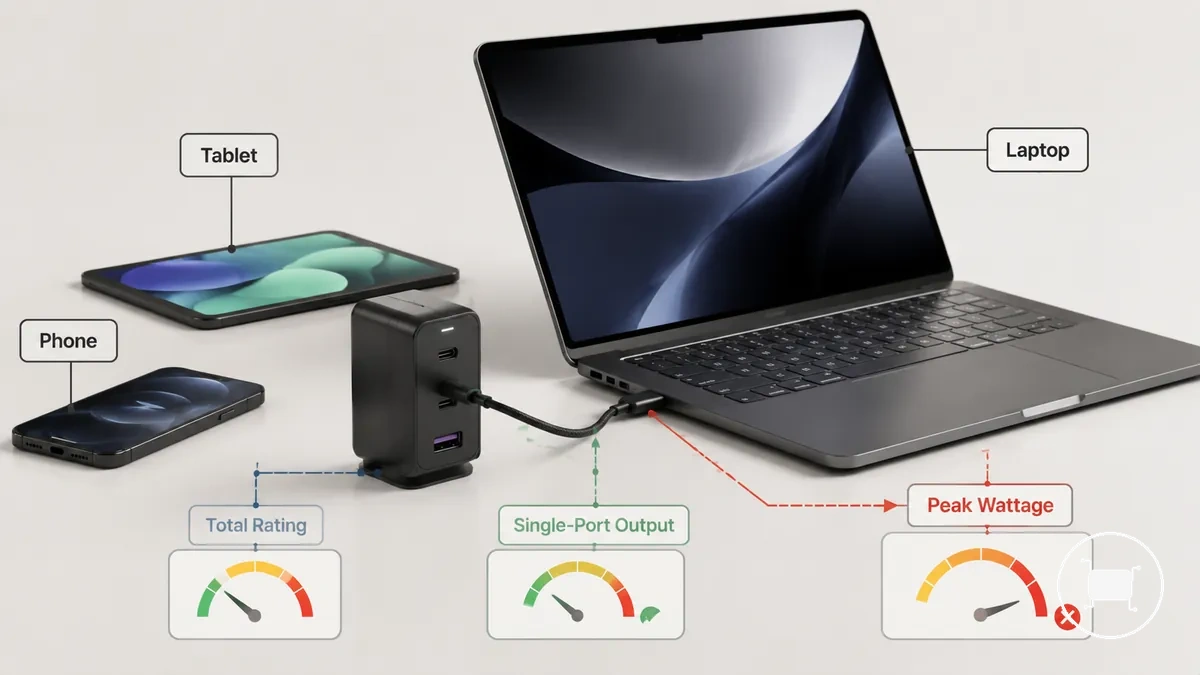
- Laptop: Usually has the highest peak wattage demand, so compare it with the charger's single-port output before judging suitability.
- Tablet: Often has a lower charging requirement than many laptops, so the available usable output may still be suitable depending on the device.
- Phone: Typically has lower peak power needs, but the charging outcome still depends on the charger rating and device requirement.
- Single-port output: Compare output per port rather than relying only on the advertised total charger rating.
A high total charger rating can still create a buying risk when the single-port output is lower than the requirement of the highest-demand device. The charger may provide slow charging for a laptop even though the overall rating appears high, while a phone or tablet may still charge acceptably. For example, a charger with a large combined output may still be unsuitable for a laptop if no individual USB-C port provides enough usable output for that device.
Total wattage for simultaneous charging
Total wattage for simultaneous charging matters only when multiple devices charge at the same time. A multiport charger should be evaluated by its combined output together with how active ports share that output. Advertised total wattage is not the same as guaranteed output on every port because active-port allocation may change as more devices are connected.
Total wattage for simultaneous charging is easier to compare when the diagram shows how active ports can change usable output across connected devices.
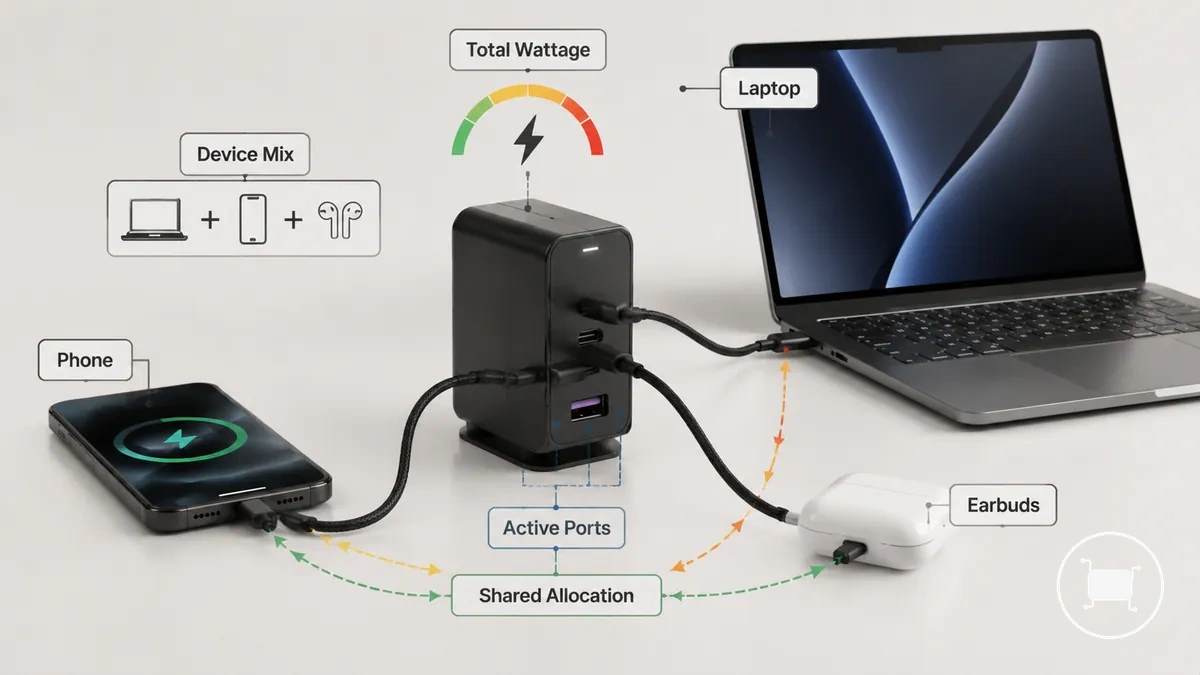
When one laptop charges alone, the charger may direct more usable output to that connection. When the same laptop charges together with a phone or earbuds, the combined load may change how output is shared across active ports. Depending on the charger design and connected device mix, charging may remain stable, slow down, or involve a priority trade-off. The table below summarizes the main conditions to compare during simultaneous charging.
| Charging condition | Active devices | Output behavior to check | Decision signal |
|---|---|---|---|
| Single-device charging | Laptop | Most usable output available to one active port | Check whether the available output matches the laptop's charging requirement |
| Multi-device charging | Laptop plus phone | Shared allocation across active ports | Allow for possible reduced speed or a priority trade-off |
| Several smaller devices | Phone, earbuds, and similar devices | Combined load shared across active ports | Compare total output with the intended connected device mix |
Port count, connector mix, and cable readiness
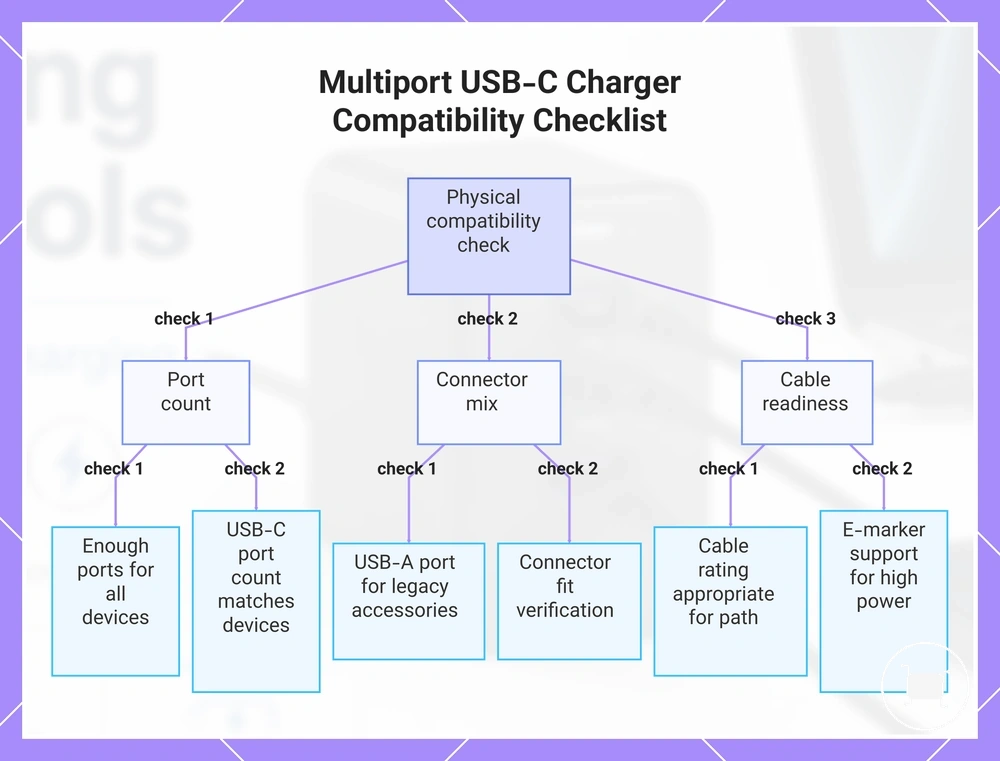
Port count, connector mix, and cable readiness depend on whether the multiport USB-C charger matches the devices and cables you plan to use. Check the number of USB-C ports, any required USB-A port, and the connector fit before comparing charging features. Fast-charging eligibility may also depend on the charger, cable rating, E-marker condition where applicable, and device supporting the same charging path.
If your current devices use USB-C, a charger with enough USB-C ports may provide broader device coverage. If you still rely on a legacy accessory, a USB-A port may help maintain connector support without extra adapters. Cable readiness should be verified alongside the charger because cable connector fit, cable rating, and any required E-marker condition can influence charging eligibility. More ports do not automatically improve suitability when the connector mix or cable readiness does not match the intended devices.
Port count, connector mix, and cable readiness work together to determine physical compatibility before charging modes are considered. Detailed port-type comparisons and cable specifications remain subordinate to this buying checklist. For a broader comparison of layouts and connector options, see the port count checklist.
Use this mini-checklist to verify that port count, connector mix, and cable readiness fit your planned device combination.
- Port availability: Confirm that the charger has enough USB ports for all planned devices.
- USB-C ports: Check that the available USB-C port count matches the devices requiring USB-C connections.
- USB-A support: Verify whether any legacy accessory still requires a USB-A port.
- Cable eligibility: Match each cable connector to both the charger port and the device connector.
- Cable rating: Confirm that the cable rating is appropriate for the intended charging path.
- E-marker: Where applicable, verify that the cable includes the required E-marker support for higher-power charging conditions.
- Device coverage: Check that the charger, connector mix, and cables work together to reduce avoidable mismatch.
This chart shows the three key areas to verify for physical compatibility between a multiport charger and your devices.
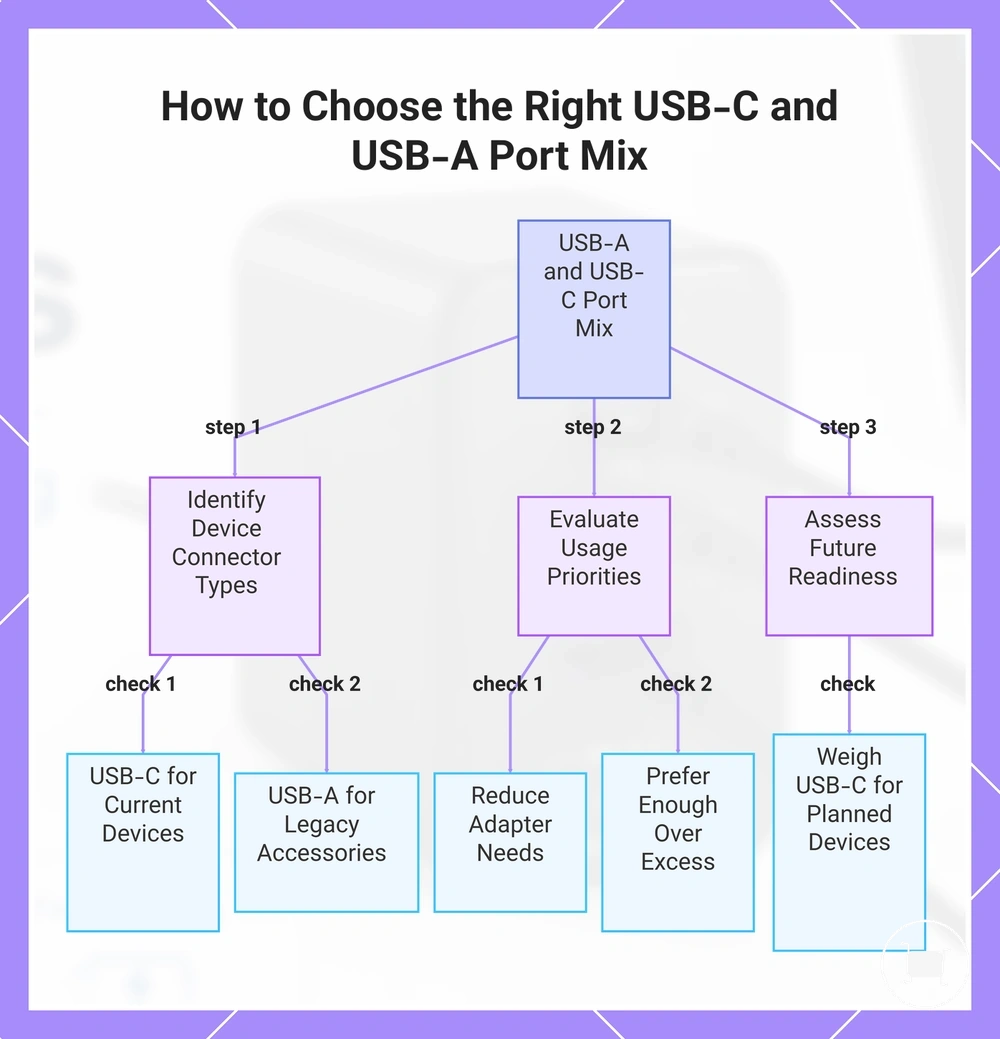
USB-C and USB-A coverage for current devices
Current devices need a port mix that matches their connector type before charging convenience can be judged. USB-C should cover devices that use USB-C connectors, while USB-A may still matter for legacy accessories that rely on older cables. The useful mix depends on device coverage, adapter avoidance, and daily use.
USB-C coverage can support direct fit for many current devices, while USB-A support can reduce adapter use for older accessories. Enough ports for daily use can be more practical than excessive ports that do not match the actual device set. Future-readiness depends on the devices you expect to keep using, not on port count alone.
Use these connector checks to map device groups to port needs without treating more ports as automatically better.
- Current phones: Match the device connector to a USB-C port when the charging cable uses USB-C.
- Tablets and laptops: Check whether the device expects USB-C charging before choosing the required port mix.
- Legacy accessories: Keep USB-A support only when older cables or accessories still need it.
- Adapter avoidance: Choose the connector mix that reduces extra adapters for the devices used most often.
- Daily coverage: Prefer enough useful USB-C and USB-A ports for the regular setup over excess ports that add little practical value.
- Future-readiness: Weigh USB-C coverage more heavily when planned devices are likely to rely on USB-C connections.
This chart shows the three-step decision process for selecting the optimal USB-C and USB-A port mix based on device types, usage priorities, and future readiness.
Cable wattage, E-marker, and connector fit
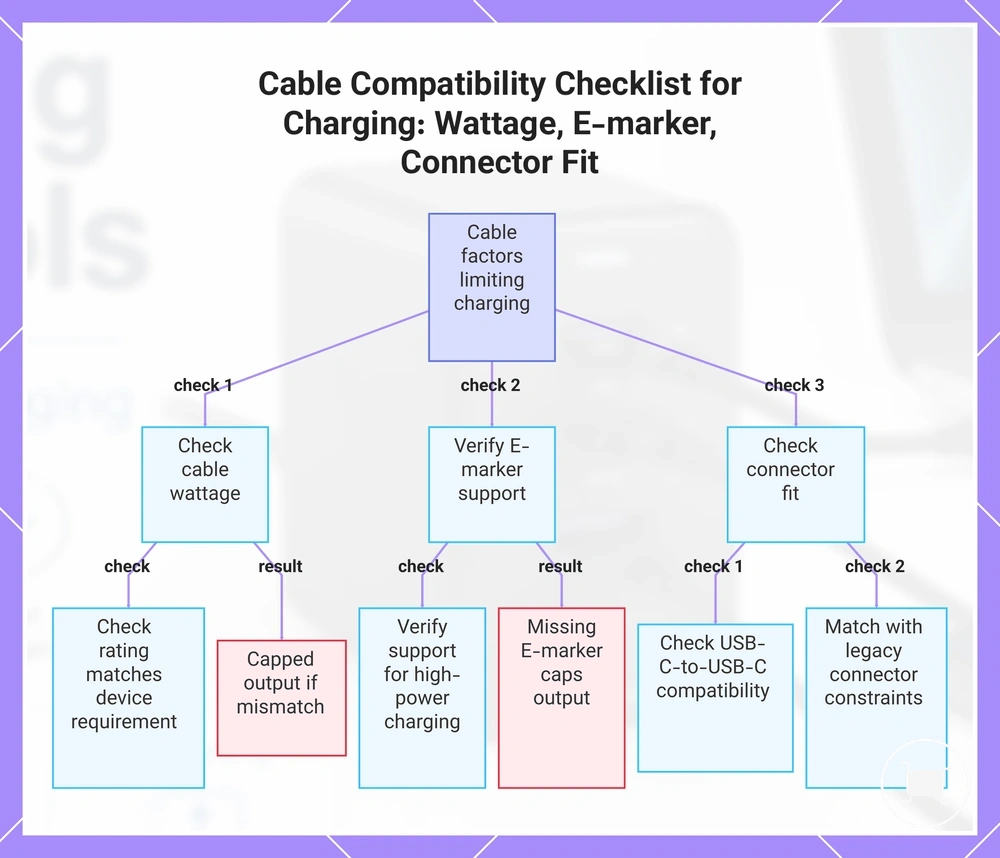
Cable wattage, E-marker, and connector fit can limit charging even when the charger has enough rated output. A cable with an unsuitable cable rating, the wrong connector type, or a missing E-marker where one is required may result in capped output or reduce fast-charging eligibility. The charging outcome depends on the cable matching both the charger and the device requirement.
Cable compatibility should be checked as a local fit test rather than assuming every charging cable performs the same. USB-C-to-USB-C connector fit, cable wattage, and E-marker status all influence charging eligibility under the appropriate conditions. Judge cable bundles by their stated cable rating rather than the number of included cables, because quantity alone does not indicate charging capability. If a cable does not clearly state its rating, treat it with caution until its suitability is confirmed.
Use this mini-checklist to verify cable wattage, E-marker, and connector fit before relying on the charger specification.
- Cable wattage: Check that the cable rating matches the device requirement and intended charging path.
- E-marker: Verify E-marker support when the charging setup requires it for higher-power USB-C charging.
- USB-C-to-USB-C: Confirm that both the charger and the device use compatible USB-C-to-USB-C connections when expected.
- Connector fit: Match the cable connector to the charger port and device to reduce avoidable compatibility issues, including legacy connector constraints where applicable.
- Capped output: If charging is slower than expected, the cable may be the limiting component even when the charger has sufficient rated output.
- Bundle warning: Compare bundled cables by their stated rating instead of assuming every included cable supports the same charging capability.
For a broader review of charging-cable selection, see cable compatibility checks.
This chart shows the three key cable factors to verify when charging is slower than expected, even if the charger has sufficient rated output.
Charging protocols and shared-output behavior
Charging protocols and shared-output behavior determine whether a charger can negotiate the charging modes your devices expect and how charging may change when more ports become active. USB-C PD, PPS, and other protocol support should be evaluated alongside shared output because charger wattage alone does not confirm compatible charging.
USB-C PD, PPS, and other fast charging modes depend on the charger, device, and cable path supporting the same protocol. If that match is incomplete, charging may fall back to a compatible speed instead of the expected fast charging mode. Two chargers with similar wattage can therefore produce different charging results when their protocol support differs.
Shared output also depends on the charger's port priority and active-port state. When multiple ports are used at the same time, output allocation may change, which can reduce charging speed or trigger charging fallback for one or more connected devices. Include protocol support checks alongside shared-output behavior when comparing chargers with similar wattage.
| Check | What to verify | Why it matters | Decision signal |
|---|---|---|---|
| Protocol support | USB-C PD, PPS, or the charging mode required by the device | Protocol negotiation depends on charger, device, and cable compatibility | Compatible speed is more likely when the charging path supports the same protocol |
| Shared output | How output changes when multiple ports are active | Active-port state can alter available charging power | Reduced speed or charging fallback may occur during simultaneous charging |
| Port priority | Whether one port receives higher output under load | Output allocation varies between charger designs | Useful for comparing chargers with similar wattage but different behavior |
| Device compatibility | Whether the charger, device, and cable support the same protocol | Protocol mismatch can affect charging negotiation | Charging may fall back to a compatible mode instead of the expected fast charging mode |
USB-C PD, PPS, and fast-charging support
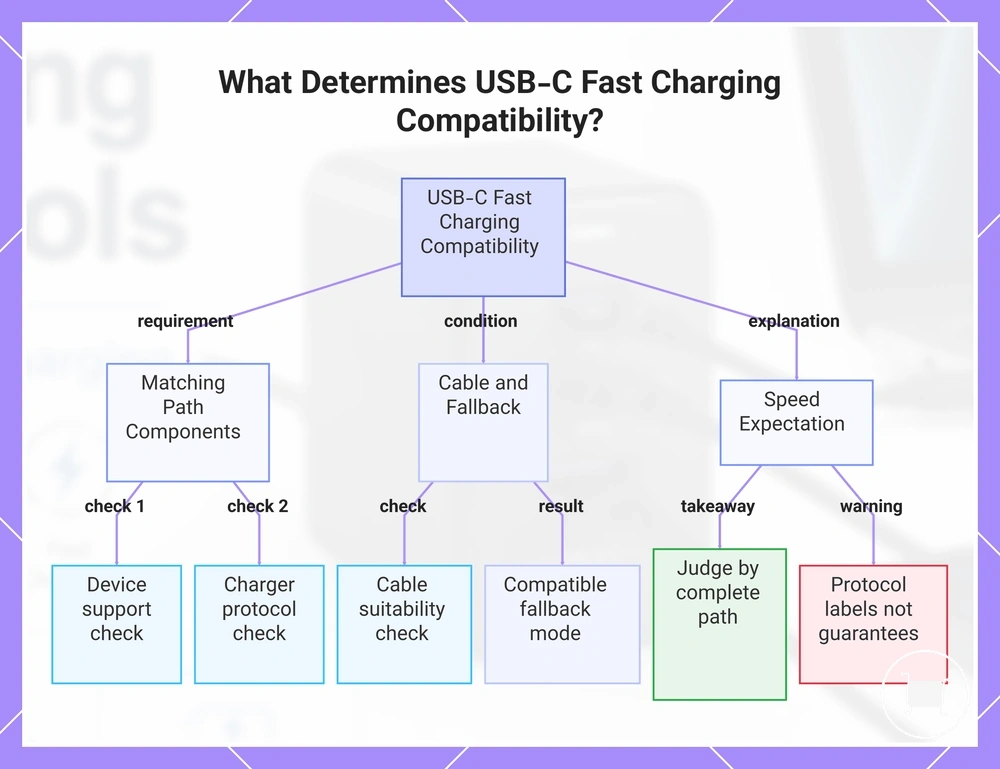
USB-C PD, PPS, and fast-charging support matter only when the device can use the same charging mode as the charger. Device support, charger support, and the cable path must match before expected charging performance can be evaluated. If any part of the charging path is incompatible, charging may fall back to a compatible mode instead of the expected fast charging mode.
Protocol labels are compatibility indicators rather than speed guarantees. USB-C PD can support a compatible charging mode when the charger, device, and cable path all support Power Delivery, while PPS may be relevant for devices that expect programmable power as part of their fast charging mode. A charger with a high power rating may still fail to provide the expected fast charging for a phone or tablet if the required charging mode is not supported.
- Device support: Check which charging mode the device is designed to use.
- Charger support: Confirm that the charger supports USB-C PD, PPS, or the required fast charging protocol.
- Cable path: Verify that the cable is suitable for the intended charging mode and power path.
- Fallback: Expect a compatible fallback when the charger, device, or cable path does not support the same charging mode.
- Speed expectation: Judge fast charging by the complete charging path rather than the protocol label alone.
This chart shows the key factors for USB-C fast charging: matching device, charger, and cable path, and understanding fallback and speed expectations.
Output changes when multiple ports are active
Output changes when multiple ports are active because many multiport chargers reallocate available power after another device is connected. Single-port output may differ from multi-port output, so the charging result depends on the active ports, device load, and the charger's published port-allocation behavior rather than the headline power rating alone.
Active-port state can influence port priority and how output is shared between connected devices. Depending on the charger design and connected-device order, one port may receive reduced output or be reprioritized when another port becomes active. Before choosing between similar chargers, check the published port allocation table to understand how output may change during simultaneous charging.
Output changes when multiple ports are active:
- Single-port output: One connected device may receive the highest available output for that charging condition.
- Multi-port output: When additional active ports are used, output may be redistributed according to the charger's port allocation table.
- Port priority: Some charger designs may prioritize one connection over another depending on device load and connected-device order.
- Buying decision: Compare the published port allocation table before purchase to identify possible reduced output during simultaneous charging.
Safety certification and protection checks
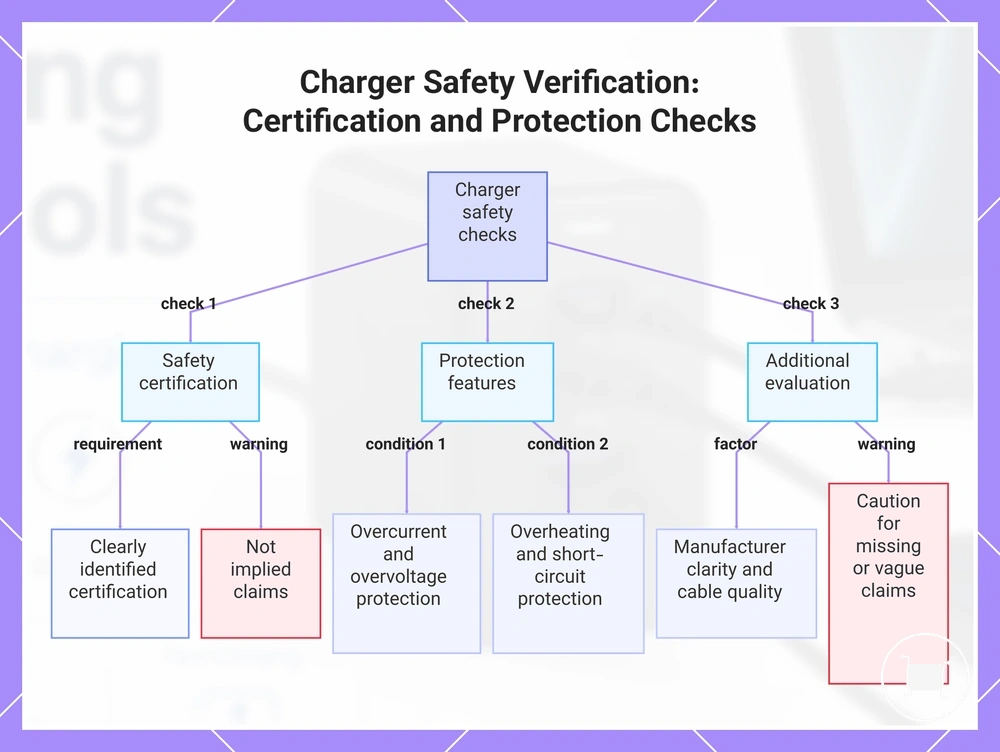
Safety certification and protection checks should be verified before trusting a charger for repeated multi-device charging. Credible safety evidence depends on clear certification claims, protection labels, cable quality, and manufacturer clarity rather than marketing language alone. These signals can help reduce selection risk, but they do not eliminate all risk.
A charger with identifiable safety certification claims, protection checks, and clear manufacturer information is generally easier to evaluate than one with vague descriptions. Look for protection features related to overcurrent, overvoltage, overheating, and short-circuit conditions while treating certification claims as evidence to verify rather than proof of risk-free operation. Cable quality also contributes to the overall charging path because both the charger and the cable influence safe charging conditions.
Compare verifiable safety evidence with generic promotional claims before making a decision. A charger that provides clear certification claims, protection labels, and manufacturer details offers a stronger basis for evaluation than one using vague safety wording. Use safety features to compare as an additional selection criterion when assessing repeated multi-device charging.
Safety certification and protection checks:
- Safety certification: Verify that any safety certification claim, including USB-IF where applicable, is clearly identified rather than implied.
- Protection checks: Look for stated protection against overcurrent, overvoltage, overheating, and short-circuit conditions.
- Manufacturer clarity: Prefer products with identifiable manufacturer information and clear technical specifications.
- Cable quality: Consider cable quality as part of the complete charging path instead of evaluating the charger alone.
- Thermal behavior: Review available information about thermal behavior when it is provided, but do not assume that a protection label alone confirms performance.
- Reason to reject: Treat missing ratings, vague marketing language, or unclear safety claims as reasons for additional verification or caution.
This chart shows the main safety checks to verify before trusting a charger for repeated multi-device charging, including certification, protection features, and additional evaluation factors.
USB-IF certification and protection labels
USB-IF certification and protection labels should be treated as verification signals rather than automatic proof of charger quality or safety. A certification claim or protection label is most useful when it can be verified and is supported by clear product information. Certification can support charger selection, but it does not replace correct cable choice or safe use.
Evaluate each certification claim and protection label by its verifiable meaning instead of relying on broad marketing language. Specific protection wording provides a clearer basis for comparison than vague safety claims, while certification should increase confidence only when it can be verified.
- USB-IF: Treat a USB-IF certification claim as a signal to verify rather than assuming certification without supporting evidence.
- Overcurrent and overvoltage: Look for protection labels that clearly identify these protection features instead of using general safety wording.
- Overheating, short-circuit, and temperature control: Prefer labels that describe these protection functions specifically rather than making broad safety claims.
- Verification: Keep certification claims and protection labels that are clear and verifiable, question vague wording, and consider rejecting products with unclear or unsupported safety claims.
Unsafe cable or no-name charger warning signs
Unsafe cable or no-name charger warning signs start with vague specifications, missing ratings, and unknown accountability. Missing information reduces confidence because the product presentation does not show enough detail to verify the charger, cable, or support path. A safer decision is to reject the listing or verify the missing details before relying on it.
A no-name charger is not unsafe by default, and an unfamiliar brand is not automatically unsafe. The risk signal appears when vague specifications, unrealistic output claims, poor cable labeling, or absent support details make the product difficult to evaluate. For example, a listing should usually be skipped when it promises high output but does not show per-port output or the included cable rating.
Unsafe cable or no-name charger warning signs:
- Missing rating: Treat absent charger output or cable wattage information as a reason for rejection or extra verification.
- Vague specifications: Question listings that describe charging power without clear port-level details.
- Poor cable labeling: Avoid assuming an included cable is suitable when the cable rating is not stated.
- Unrealistic output: Treat broad output promises without supporting details as a suspicious claim.
- Support details: Look for clear manufacturer or seller accountability before trusting the product information.
- Decision signal: Prefer listings that show verifiable specifications over unclear presentations that leave key safety or compatibility details missing.
Form factor and everyday placement fit
Form factor and everyday placement fit depend on where the multiport USB-C charger will be used after power, ports, and safety have been confirmed. Body size, plug shape, cable reach, and portability all influence whether the charger fits your daily environment without creating unnecessary clutter or placement limitations.
A wall charger may suit locations where the outlet is close to the devices, but plug shape and outlet position can affect stability and outlet blockage in shared spaces. A desktop charger may provide better cable reach and a fixed charging location for desk use, while requiring additional surface space. In hotel rooms or shared outlets, the available space and outlet layout can influence which form factor is more convenient.
Choose the charger shape according to the place where it will spend most of its time rather than assuming one design suits every situation. A compact travel charger may be easier to carry, while a desktop charger may better support permanent desk use with longer cable reach. For a broader comparison of these placement differences, see charger form factor comparison.
| Form factor | Placement condition | Potential benefit | Trade-off |
|---|---|---|---|
| Wall charger | Direct wall outlet | Compact everyday placement | Plug shape and outlet blockage may affect usability |
| Desktop charger | Desk use with available surface space | Longer cable reach and stable desk position | Occupies additional desk space |
| Travel charger | Carry-on packing or temporary accommodation | Improved portability | Placement fit depends on packed size and outlet conditions |
Choose the form factor that matches your most common environment. Desk setup, shared outlets, hotel rooms, cable reach, plug shape, and travel constraints should guide the final decision once the charger has already met your technical charging requirements.
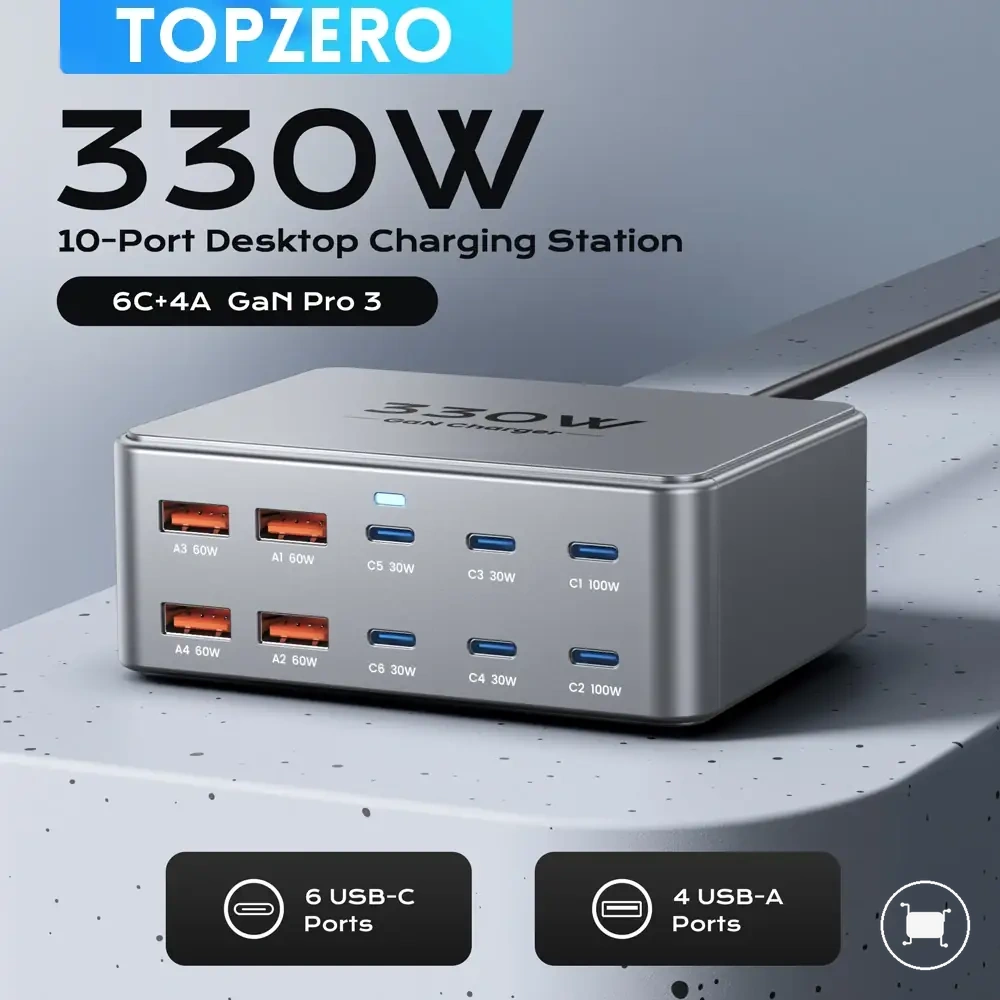
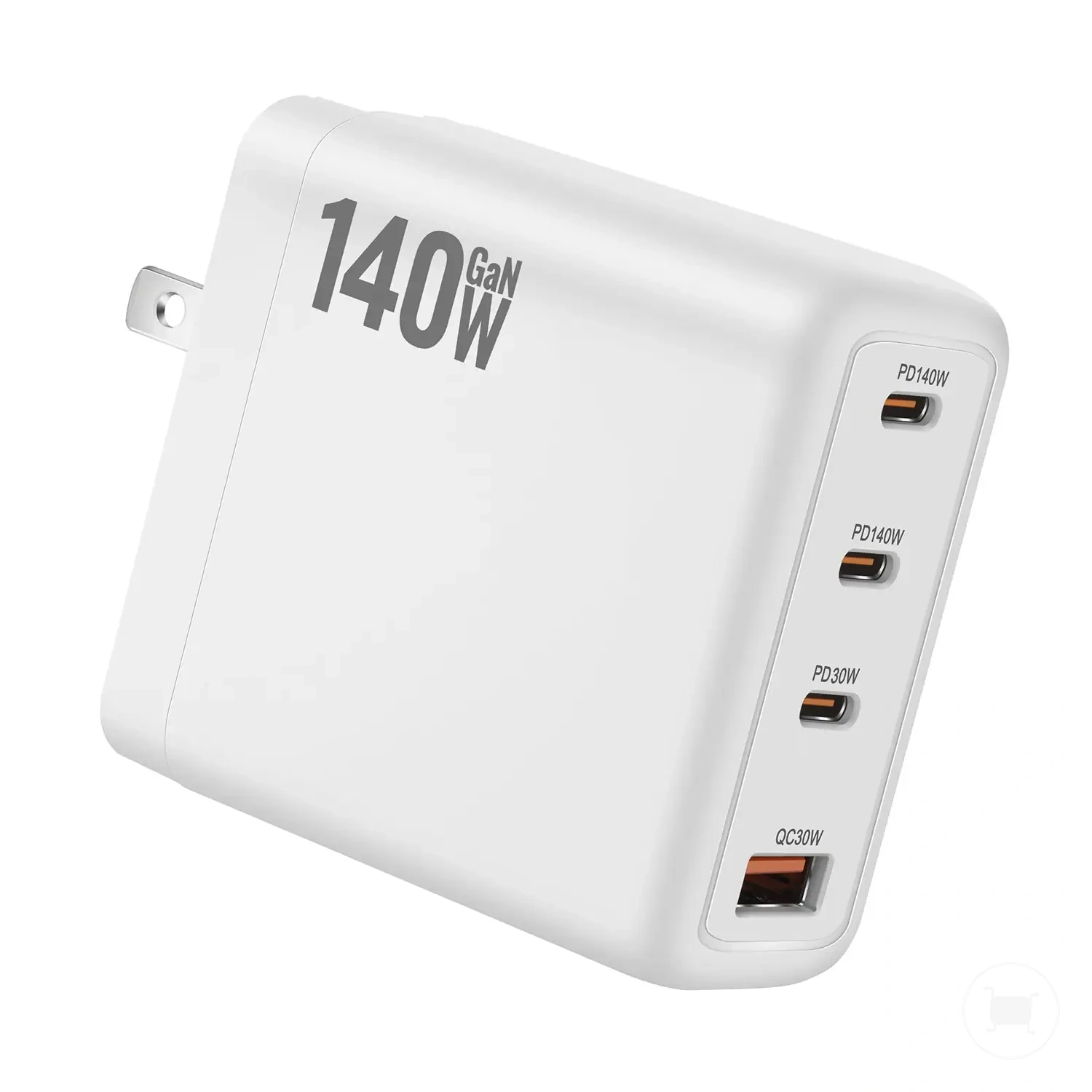
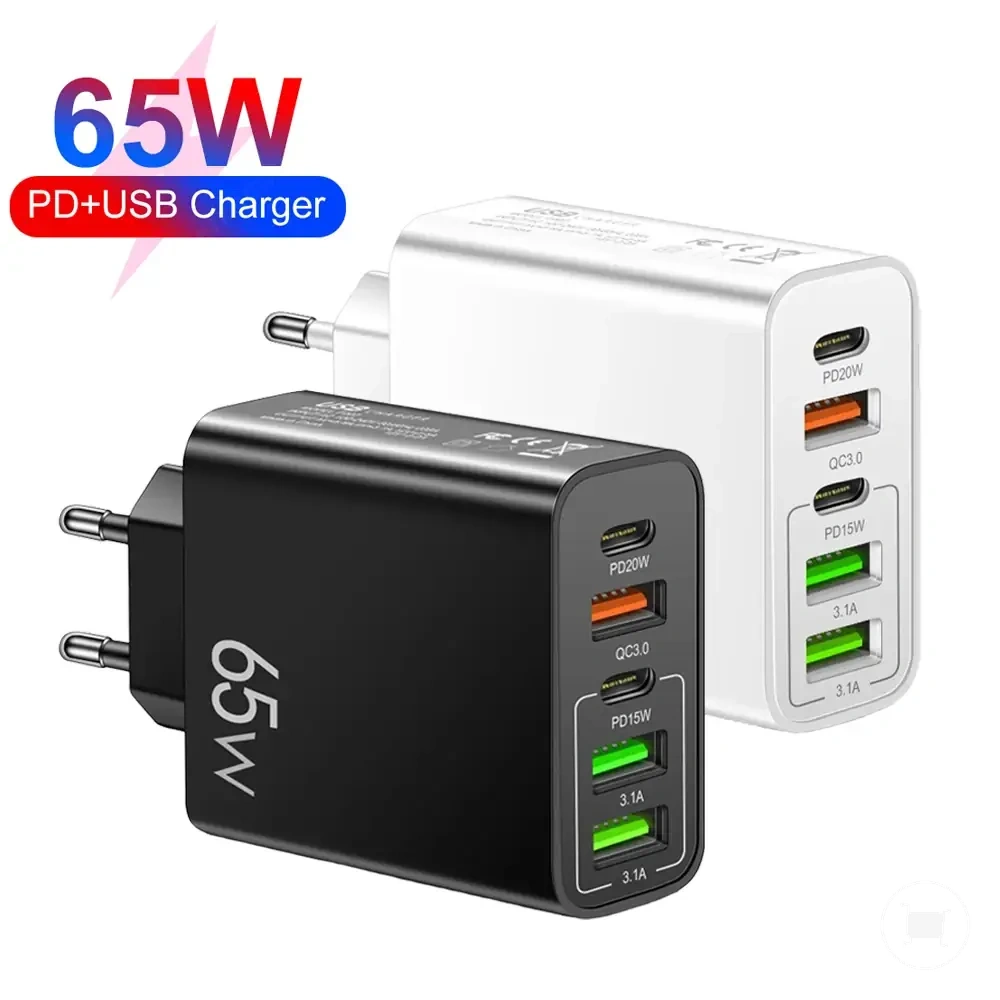
The products below are useful examples for comparing available options. Before buying, check that the compatibility criteria, key features, and product details match your needs.
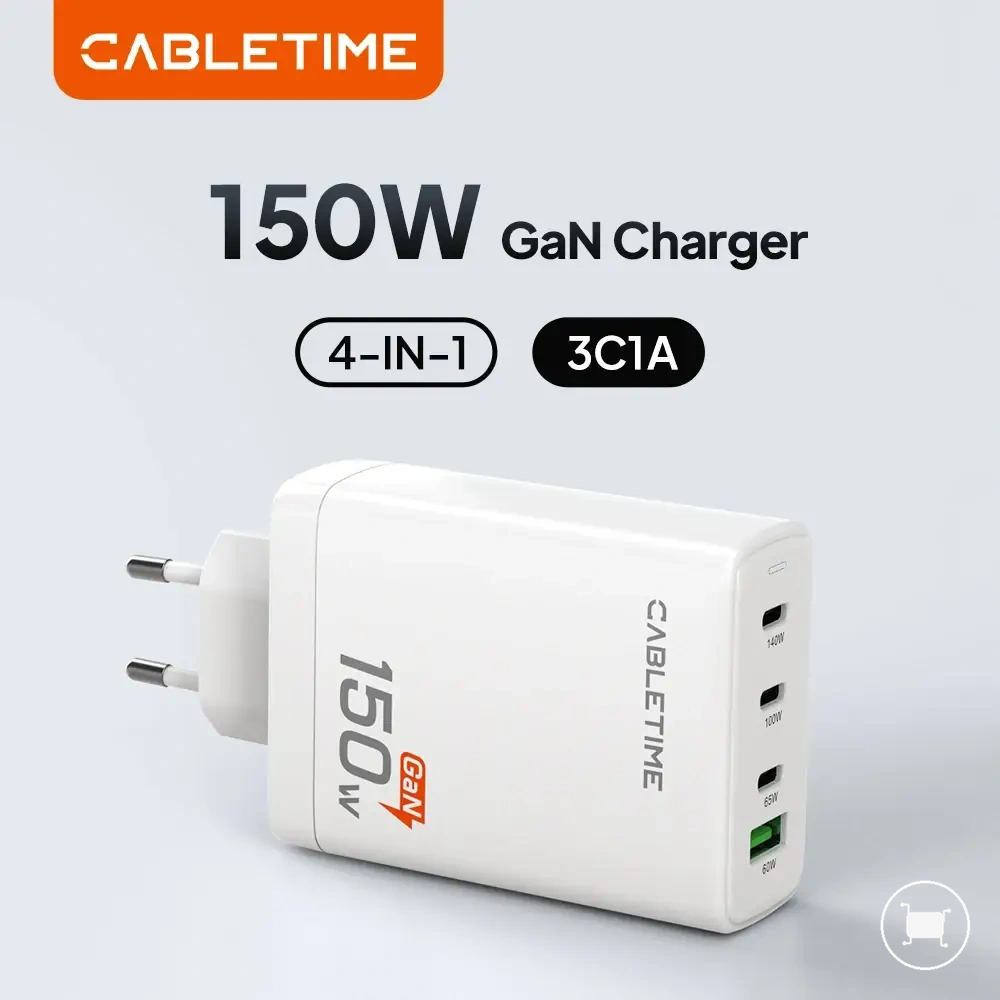
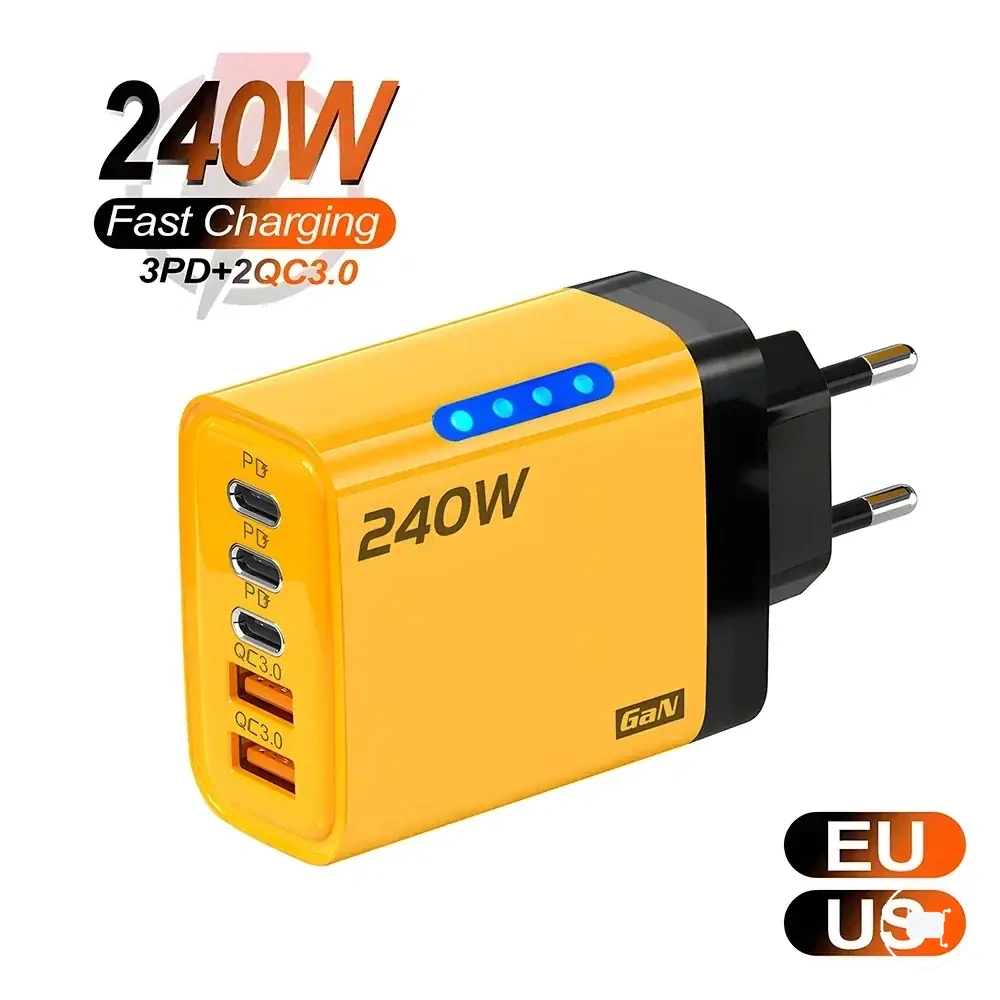
Wall, desktop, and travel constraints
Wall, desktop, and travel constraints should be compared by how the charger fits the place it will actually be used. A wall charger depends on outlet position, a desktop charger depends on corded base placement and port access, and a travel charger depends on foldable plug design and packed size.
Fixed desk charging should weigh cable reach, stability, and port access differently from frequent travel. A fixed desk may favour a desktop charger when the corded base improves reach and access, while frequent travel may favour a travel charger when packed size and plug shape matter more. Wall chargers can be convenient in direct outlets, but outlet position can create blockage or access issues.
Wall, desktop, and travel constraints:
- Wall charger: May suit an accessible outlet position, but plug shape can create outlet blockage or reduce port access.
- Desktop charger: Can improve fixed desk fit through a corded base, better reach, and stable placement, but it needs surface space.
- Travel charger: May suit frequent travel when packed size and a foldable plug reduce carry bulk, but fit still depends on outlet conditions.
- Decision signal: Choose by primary use case: fixed desk setups should prioritise reach and stability, while frequent travel should prioritise portability and packed size.
For users who mainly need charging away from a fixed desk, travel charger selection can help narrow the portable-use criteria without turning this checklist into a travel-only guide.
Size, plug shape, and cable reach
When the outlet is behind furniture, inside a power strip, or far from the device, size, plug shape, and cable reach can affect daily usability after the technical checks are satisfied. A compact wall charger may suit a clear wall outlet, while a desktop charger may suit a desk where longer reach and easier device placement matter more.
Physical dimensions, plug orientation, and reach should be checked against the actual charging spot because setups vary. The wrong fit may cause outlet blockage, tight power-strip spacing, cable tension, awkward device placement, or cable clutter.
- Outlet blockage: Check whether the charger size or plug shape may obstruct nearby sockets.
- Power-strip spacing: Confirm that the plug design fits without crowding adjacent plugs.
- Cable tension: Use enough cable reach to avoid pulling on the charger or device during charging.
- Device placement: Match cable reach to where the device will rest while connected.
- Cable clutter: Balance reach with cable management so extra length does not create unnecessary clutter.
Price, warranty, and usable capacity value
Price, warranty, and usable capacity value should be judged by what the charger can actually support for your device mix, not by the lowest price or advertised wattage alone. A charger may show a high rating, but value depends on usable wattage, port count, protocol support, included cables, and support coverage.
Usable capacity means the charging capacity available in the conditions you will actually use. Check whether the usable wattage supports the highest-demand device, whether the port count fits simultaneous charging, and whether the charger leaves enough power headroom for the intended setup. A cheaper charger can become weak value when the usable capacity does not match the device mix.
Included cables and protocol support should be treated as value factors only when they are clearly stated and relevant to your charging path. A cable bundle may improve value when the included cables have a suitable stated rating, but unclear cable details can create hidden cost or uncertainty. Protocol support can also justify a higher price when the charger, cable, and device can use the same charging mode.
Warranty and support coverage should be checked through the stated support path rather than assumed from the product listing. Clear warranty terms, manufacturer support information, and verified safety claims can increase confidence, while vague support details can make value uncertain even when the price looks attractive.
Use the table below to compare price against usable charging criteria before treating an offer as strong value.
The products below are useful examples for comparing available options. Before buying, check that the compatibility criteria, key features, and product details match your needs.
| Value factor | What to verify | Why it matters | Decision signal |
|---|---|---|---|
| Price | Price compared with usable wattage and device mix | Low cost does not confirm useful charging capacity | Strong value when the price matches real device coverage |
| Usable capacity | Usable wattage, port count, and power headroom | Advertised output may not reflect the intended charging condition | Paying more may be justified when usable capacity reduces mismatch risk |
| Protocol support | Charging modes supported by the charger, cable, and device | Protocol mismatch can reduce expected charging value | Better value when protocol support fits the actual charging path |
| Included cables | Stated cable rating and connector fit | Unclear cable bundles can add hidden replacement cost | Higher confidence when included cables are clearly rated |
| Warranty and support coverage | Warranty terms, support path, and manufacturer clarity | Unclear support can increase purchase uncertainty | Stronger value when support terms are easy to verify |
Price against usable wattage and ports
Price against usable wattage and ports should be measured by the charging capacity and useful ports the device mix can actually use, not by headline wattage alone. A charger can look powerful but still be weak value if its active-port output does not support the intended devices.
The value comparison should balance price, usable wattage, useful ports, active-port output, and device mix. A lower-wattage charger may offer fair value when it closely matches a phone, tablet, and earbuds setup, while a higher-rated charger may become overbuying if the extra capacity and ports are not needed. A charger can also become an underpowered purchase when the price is low but the active-port output cannot support the required device mix.
| Value check | What to compare | Decision signal |
|---|---|---|
| Usable wattage | Price against the output available for the devices being charged | Fair value when usable wattage matches the real device mix |
| Useful ports | Port count against the devices that will actually connect | Overbuying risk when extra ports add little practical value |
| Active-port output | Output when more than one port is used | Underpowered purchase risk when shared output cannot support needed devices |
| Current pricing uncertainty | Price-to-output value without assuming stable prices | Use conditional judgement instead of exact price-performance claims |
Included cables and support coverage
Included cables and support coverage affect total value only when the charger already meets the core power, port, protocol, and safety criteria. Cable quantity does not equal quality, so included cables should be judged by cable rating, stated rating clarity, connector fit, warranty length, claim process, and seller support.
Bundle value and warranty support are useful only when the stated terms reduce uncertainty. Unrated cables or unclear support coverage should reduce confidence even when the charger looks inexpensive, because missing details can create hidden cost after purchase.
- Included cables: Treat cable inclusion as practical value only when the cable rating and connector fit are clearly stated.
- Cable rating clarity: Question bundles that include cables without a stated rating because replacement may become a hidden cost.
- Warranty length: Compare warranty length only within the stated coverage condition, not as a guaranteed warranty outcome.
- Claim process: Check whether the support terms explain how a claim is handled before treating warranty support as strong value.
- Seller support: Prefer clearer seller support and accountability when the charger price is similar to alternatives.
- Confidence signal: Higher confidence comes from rated cables, clear support coverage, and a visible support path rather than bundle size alone.