
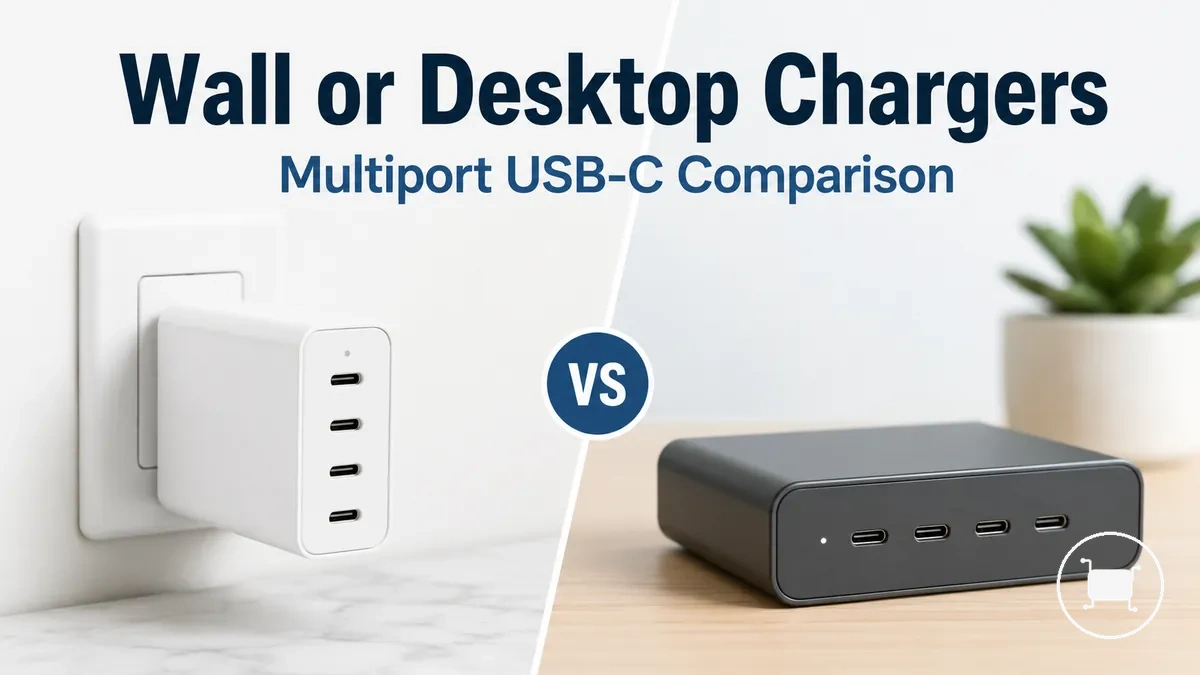
Wall vs Desktop Multiport USB-C Chargers
Wall multiport USB-C chargers and desktop multiport USB-C chargers solve the same multi-device charging need in different physical formats: a wall charger plugs directly into an outlet, while a desktop charger places the charging ports on a corded base or station near the user. The better choice depends on charging location, portability, port access, wattage needs, and the number of devices sharing the charger.
A wall multiport USB-C charger usually fits better when outlet access is open and the charger needs to move between rooms or travel bags. A desktop multiport USB-C charger usually fits better when the charging point stays on a desk, counter, or nightstand and port access matters more than packing size. Neither format is automatically faster or more capable, because charging speed and shared output depend on the charger model, cable rating, connected devices, protocol support, and port allocation.
Compact contrast: wall chargers mainly change how the charger attaches to power, while desktop chargers mainly change where the ports sit during everyday use. The form factor affects placement, reach, and handling first; wattage, port design, and power sharing shape much of the charging behaviour after devices are connected.
This comparison starts with the physical form factor before moving into placement, port layout, shared load, portability, value, and final selection logic. That order keeps the decision centered on charger format rather than treating wall or desktop design as a performance guarantee.
Wall and Desktop USB-C Charger Form Factors
Wall and Desktop USB-C Charger Form Factors describe two physical layouts for the same charging role: a wall charger plugs into an outlet as a single body, while a desktop USB-C charging station uses a corded base that places the charging ports on a desk or other surface. The form factor changes placement, reach, footprint, and port access before it changes any performance expectation.
Wall and Desktop USB-C Charger Form Factors are easiest to compare by looking at where power enters the charger and where the ports face during use. The image below labels the physical setup difference between a plug-in wall body and a corded desktop base.
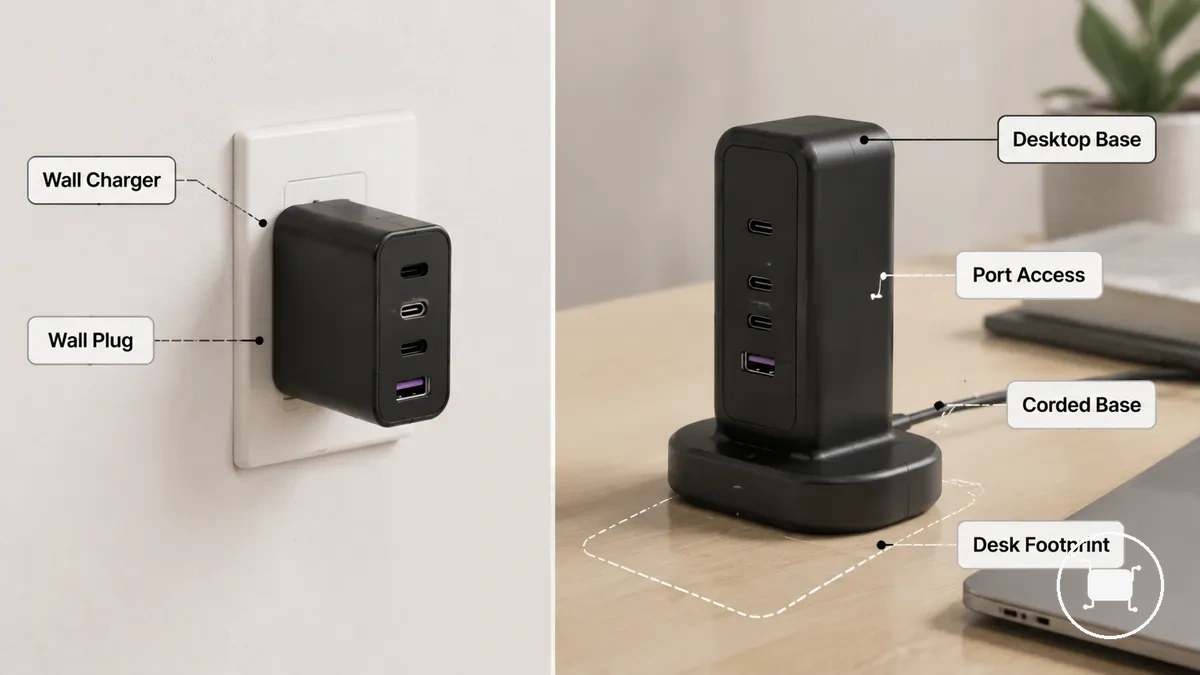
| Attribute | Wall charger | Desktop USB-C charging station |
|---|---|---|
| Charger body | Single plug-in body connected directly to the wall outlet. | Corded base placed on a desk, counter, or charging surface. |
| Plug style | Uses the outlet as the support point, with the plug built into or attached to the charger body. | Uses a power cord, so the charger body can sit away from the outlet. |
| Desk footprint | Usually keeps the charger off the desk, but connected cables may still cross the surface. | Uses surface space, but can make ports easier to reach when the charger stays in one place. |
| Port orientation | Ports face from the outlet position, so access depends on socket location and cable direction. | Ports face from the desktop base, so access depends on base placement and cable routing. |
| Typical multi-device use | Often suits portable or outlet-near charging when device count and cable reach remain manageable. | Often suits fixed multi-device charging when repeated port access matters more than packing size. |
A desktop USB-C charging station is not automatically faster than a wall charger. Charging speed, heat, and shared output depend on the charger’s power design, port allocation, cable rating, and connected devices, so physical format should be treated as the placement layer rather than the full performance answer.
Wall multiport USB-C chargers
Wall multiport USB-C chargers are plug-in chargers that connect directly to a wall outlet and provide multiple USB-C charging ports from a single body. A wall multiport USB-C charger depends on a wall outlet for placement, while its size, port count, and available power may vary by model and design. After the main term is established, it may also be described as a wall charger or wall adapter.
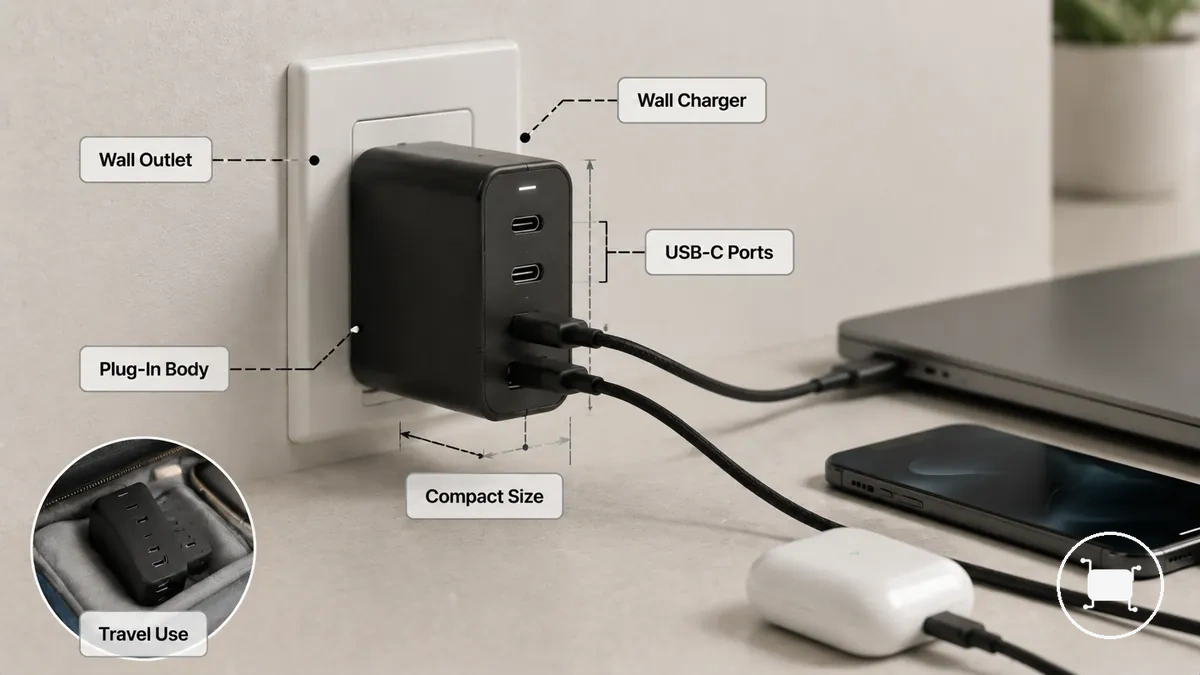
Wall multiport USB-C chargers are identified by their plug-in body and visible USB-C ports. The image highlights these physical features to distinguish the wall format rather than to indicate charging performance.
For example, a wall multiport USB-C charger can plug directly into an available wall outlet beside a desk or bedside table without requiring a separate charging base. Whether it is suitable for travel or for charging multiple devices at the same time depends on the specific charger design, available output, and connected devices.
Desktop USB-C charging stations
Desktop USB-C charging stations are corded chargers that sit on a desk, table, or other surface while providing multiple USB-C charging ports from a separate base. A desktop USB-C charging station connects to a wall outlet through a power cord, while its port layout, available power, and overall design may vary by model. After the main term is established, it may also be referred to as a desktop charger or charging station.
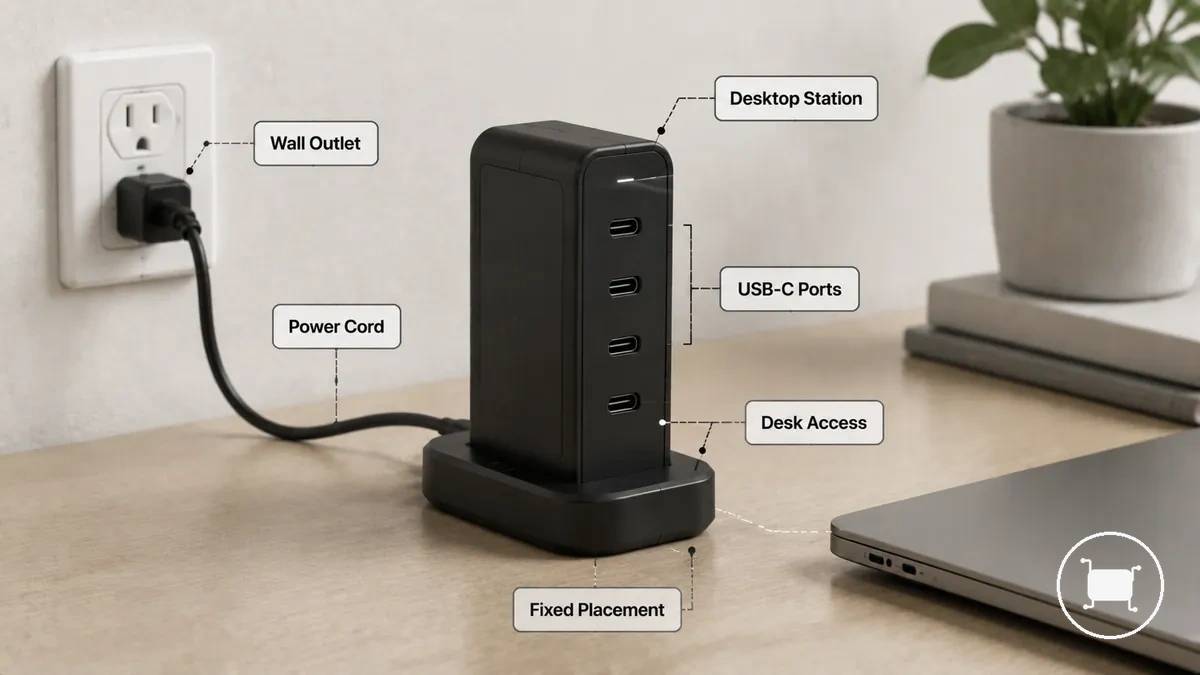
Desktop USB-C charging stations are identified by their corded desk placement and accessible USB-C charging ports. The image highlights these physical characteristics to explain the desktop format rather than to indicate charging performance.
For example, a desktop USB-C charging station can remain on a desk while a single power cord connects it to a wall outlet, keeping the charging ports within easy reach. Whether it offers higher wattage, improved cable management, greater stability, or added convenience depends on the specific charger design, port allocation, and connected devices.
What the Charger Format Changes and What It Does Not
Charger format affects physical placement and port access more directly than charging behaviour. Output, charging speed, and device behaviour usually depend more on the charger's wattage, port allocation, connected devices, supported charging protocols, and cable capabilities than on whether the charger is mounted on a wall or sits on a desk.
Use the criteria below to separate the effects of charger format from characteristics that may vary by charger design.
| Criterion | What charger format changes | What depends on the charger design |
|---|---|---|
| Format | Determines whether the charger plugs directly into a wall outlet or uses a corded desktop base. | Does not by itself determine charging capability. |
| Outlet position | Changes where the charger is physically located during use. | Does not usually determine charging speed. |
| Port reach | Affects how easily charging ports can be accessed from the charging location. | Does not determine port performance. |
| Physical stability | Depends on how the charger is supported by the outlet or desktop surface. | May vary with charger size, weight, and overall construction. |
| Total wattage | Not determined by wall or desktop format alone. | Depends on the charger's power design and rated output. |
| Per-port output | Is not defined by physical placement. | Depends on port allocation and how power is distributed. |
| Power sharing | May appear similar across either format. | Depends on charger circuitry and the number of connected devices. |
| Device compatibility | Is not determined solely by charger format. | Depends on charging protocol support, cable capability, and device requirements. |
Placement, Cable Reach, and Desk Access
Placement, cable reach, and desk access depend on where the wall outlet is located and where charging takes place. A wall charger keeps the charging point at the outlet, while a desktop charger can place the charging ports closer to the user through its power cord, which may reduce the distance between the charger and connected devices in many desk or bedside setups.
For example, when a wall outlet is hidden behind a desk, a wall charger keeps the ports in that location, while a desktop charger can place the charging station on the desktop if its power cord reaches the outlet. Cable clutter, plug strain, convenience, and stability still depend on cable length, device position, outlet location, and the charger design rather than on charger format alone.
| Situation | Wall charger | Desktop charger |
|---|---|---|
| Wall outlet location | Charging ports remain at the outlet. | Charging ports can be positioned away from the outlet using the power cord. |
| Cable reach | Device cables run directly from the outlet to the device. | The charger can be placed closer to where devices are used. |
| Plug strain | May depend on charger size, cable direction, and outlet position. | May depend on cord routing and charger placement. |
| Device visibility | Devices may remain farther from the charging ports when the outlet is hidden. | Devices can often remain within easier view on a desk or counter. |
| Port orientation | Determined by the outlet position. | Determined by where the charging station is placed. |
| Cable clutter | Depends on cable length and charging location. | Also depends on cable routing and the surrounding workspace. |
| Seated desk access | May require reaching toward the wall outlet. | Ports can often remain within easier reach on the desktop. |
If you want to organise multiple devices around a fixed workspace, the desk charging setup guide explores placement strategies beyond choosing a charger format.
Port Layout and Multi-Device Charging Capacity
Port layout and multi-device charging capacity are related but separate decision factors. Port layout determines how many USB-C and USB-A ports are available and how easy they are to access, while charging capacity depends on the charger's total wattage, per-port output, and how power is shared when multiple devices are connected.
When comparing wall and desktop chargers, look at both the physical arrangement of the ports and the expected charging demand. Wider spacing and easier cable access may improve everyday use, while charging phones, earbuds, tablets, laptops, or several small devices at the same time depends on the available output as well as the port layout differences.
| Criterion | Port layout | Charging capacity |
|---|---|---|
| USB-C and USB-A port count | Visible and fixed by the charger design. | Does not indicate how much power each port can provide. |
| Port spacing | Affects how easily multiple cables fit side by side. | Does not by itself increase charging output. |
| Cable direction | Influences cable routing and access during everyday use. | Does not determine charging performance. |
| Simultaneous-device use | More ports allow more devices to be connected. | Charging behaviour depends on available power and connected device demand. |
| Total wattage | Not shown by the port arrangement alone. | Sets the available charging capacity across connected devices. |
| Single-port output | Cannot be judged from the number of ports. | Varies by charger design and power allocation. |
| Shared-load behaviour | Not determined by port layout. | May change when additional devices are connected. See the power sharing differences for more detail. |
Charging Speed, Wattage, and Shared Load Expectations
Charging speed, wattage, and shared load expectations should be judged by charger output, protocol support, cable rating, and connected-device demand rather than by wall or desktop format alone. A wall charger may charge faster than a weaker desktop station when its output and port allocation are stronger, while a higher-output desktop unit may support more connected devices when its power design can distribute enough output across the active ports.
Use the criteria below to check whether the charger can support the devices connected at the same time without assuming that one physical format is automatically faster.
| Criterion | What to check | Why it matters |
|---|---|---|
| Total wattage | Check the charger’s total rated output. | Total wattage sets the overall power available before that power is divided across connected devices. |
| Per-port wattage | Check the output available from the port used by the main device. | A laptop or higher-demand device may need more output from one port than a phone or earbuds. |
| Power distribution | Check how output changes when more ports are used. | If more devices share output, effective charging speed may change depending on the charger’s allocation rules. |
| Device negotiation | Check whether the charger, cable, and device can agree on a compatible charging mode. | Fast charging depends on the charger model, cable capability, supported protocol, and connected device. |
| Laptop charging needs | Compare the laptop’s charging requirement with the charger’s available port output. | Laptop charging may slow down or fail to meet demand when shared output is too limited for the device. |
| Simultaneous charging | Check how many devices will charge at once. | Phones, tablets, earbuds, and laptops sharing the same charger can change the available output per device. |
A compact wall charger can be the stronger choice when its rated output and single-port behaviour match the connected device better than a lower-output desktop charger. A desktop charger can serve more devices better when its total wattage, port allocation, and cable setup support the combined device demand.
Portability, Fixed Use, and Workspace Fit
Portability, fixed use, and workspace fit depend on whether the charger needs to move often or stay in one charging zone. A compact wall charger may suit users who pack a charger for travel or move it between rooms, while a desktop charger may suit users who leave charging ports in a fixed place such as a workstation, nightstand, or shared household counter.
Use the scenarios below to separate movement needs from fixed charging needs without treating either format as automatically better.
- Travel bag fit: A wall charger can be easier to pack when its body is compact and the plug design suits travel storage; for broader selection context, see travel-friendly charger use.
- Foldable plug design: A wall charger with a foldable plug may pack more neatly, but travel convenience still depends on charger size, plug shape, and the devices being charged.
- Corded desktop bases: A desktop charger usually fits better when the charger can stay in one place and its power cord can reach the outlet without creating awkward placement.
- Shared household charging: A fixed charging zone on a counter or shelf may work well when several people charge phones, earbuds, or tablets in the same area.
- Nightstand use: A wall charger may be enough when the outlet is close, while a desktop charger may keep ports easier to reach when the outlet sits behind furniture.
- Workstation use: A desktop charger can suit a desk-first setup when repeated port access matters, while a compact wall charger can still serve a desk if the outlet and cable reach are practical.
- Outlet availability: Workspace fit depends on where outlets are located, how long the cables are, and how many devices need to charge in the same zone.
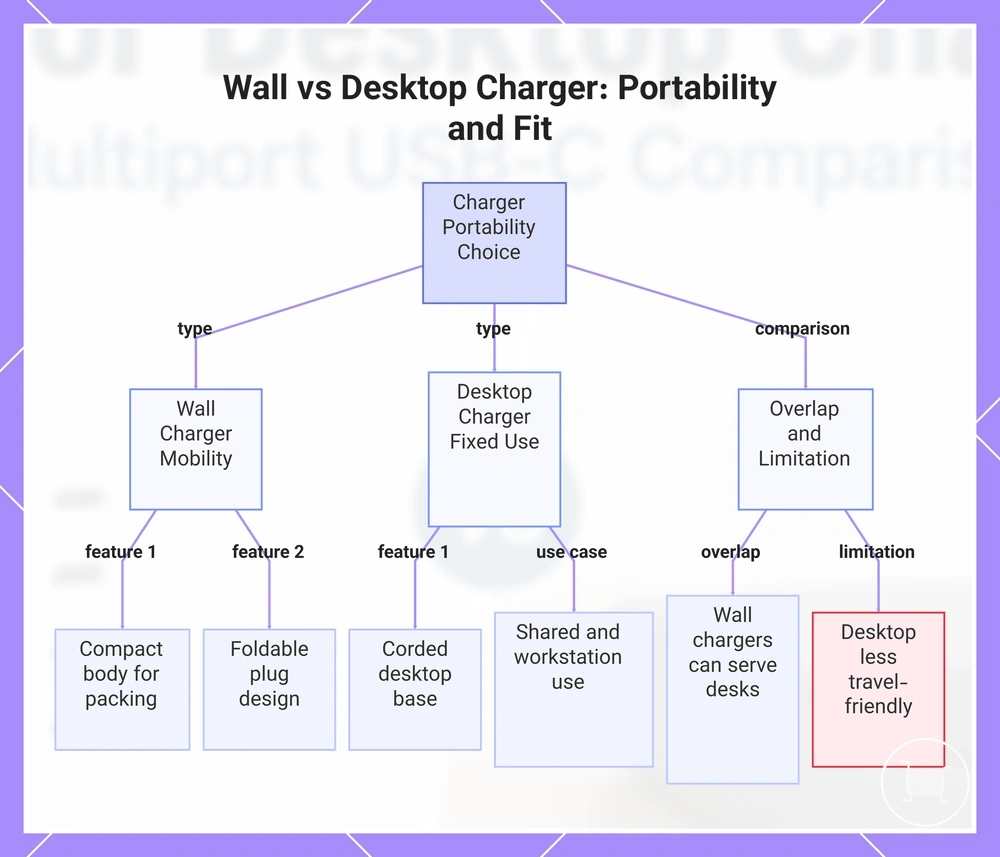
The boundary is overlap: portable wall chargers can still serve desk setups, and compact desktop chargers can still move between rooms, but corded desktop bases are usually less convenient for travel when packing space and cable handling matter.
This chart compares wall and desktop chargers based on travel mobility, fixed workspace use, and key overlapping considerations.
Cost and Value Differences by Charger Format
Cost and value differences by charger format should be judged against wattage, port count, build quality, cord inclusion, and use-case fit rather than the wall or desktop label alone. A lower-cost charger may be enough for light device charging, while a higher-cost option may make more sense when it reduces clutter or supports several devices with a suitable power design.
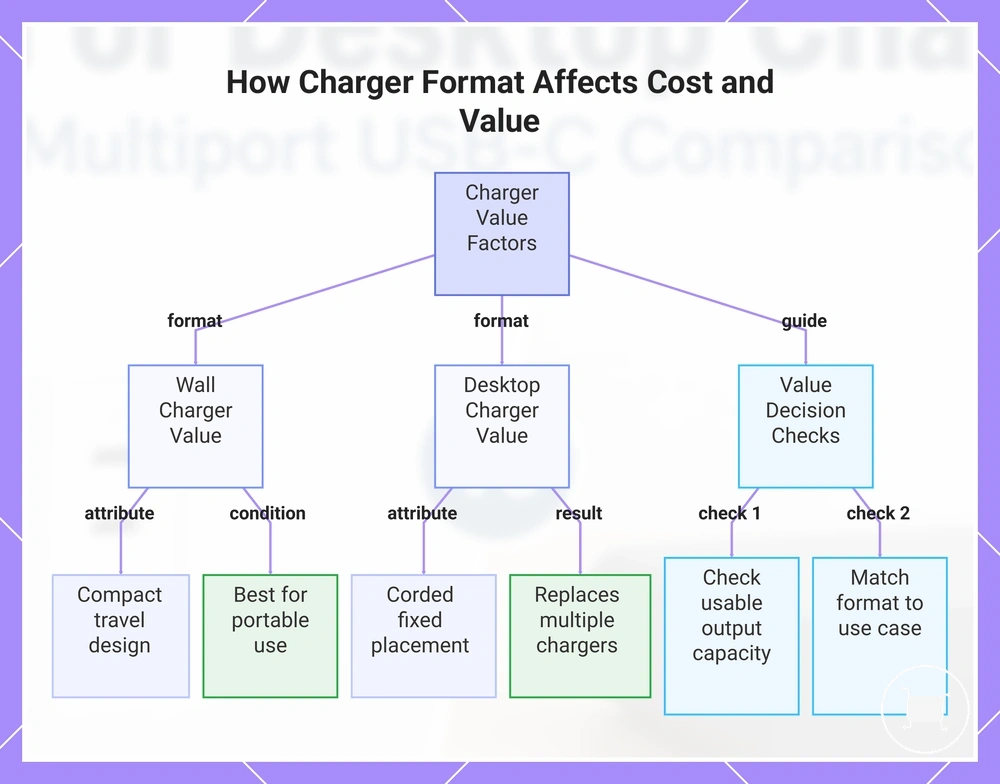
Wall chargers usually put more of the value into compact size, plug design, output capacity, and travel convenience. A wall charger can be a better-value choice when the user needs a portable unit and the connected devices do not require a larger fixed charging station.
Desktop chargers usually put more of the value into a corded base, easier port access, broader port layouts, and fixed desk use. A desktop charger may justify a higher price when the corded placement, port count, and total output help replace multiple smaller chargers in one charging zone.
GaN design, higher total wattage, more ports, included cables or a power cord, and stronger build features can all influence price signals. Value still depends on whether those attributes match the user’s device mix, workspace, travel needs, and shared charging habits rather than on the charger format by itself.
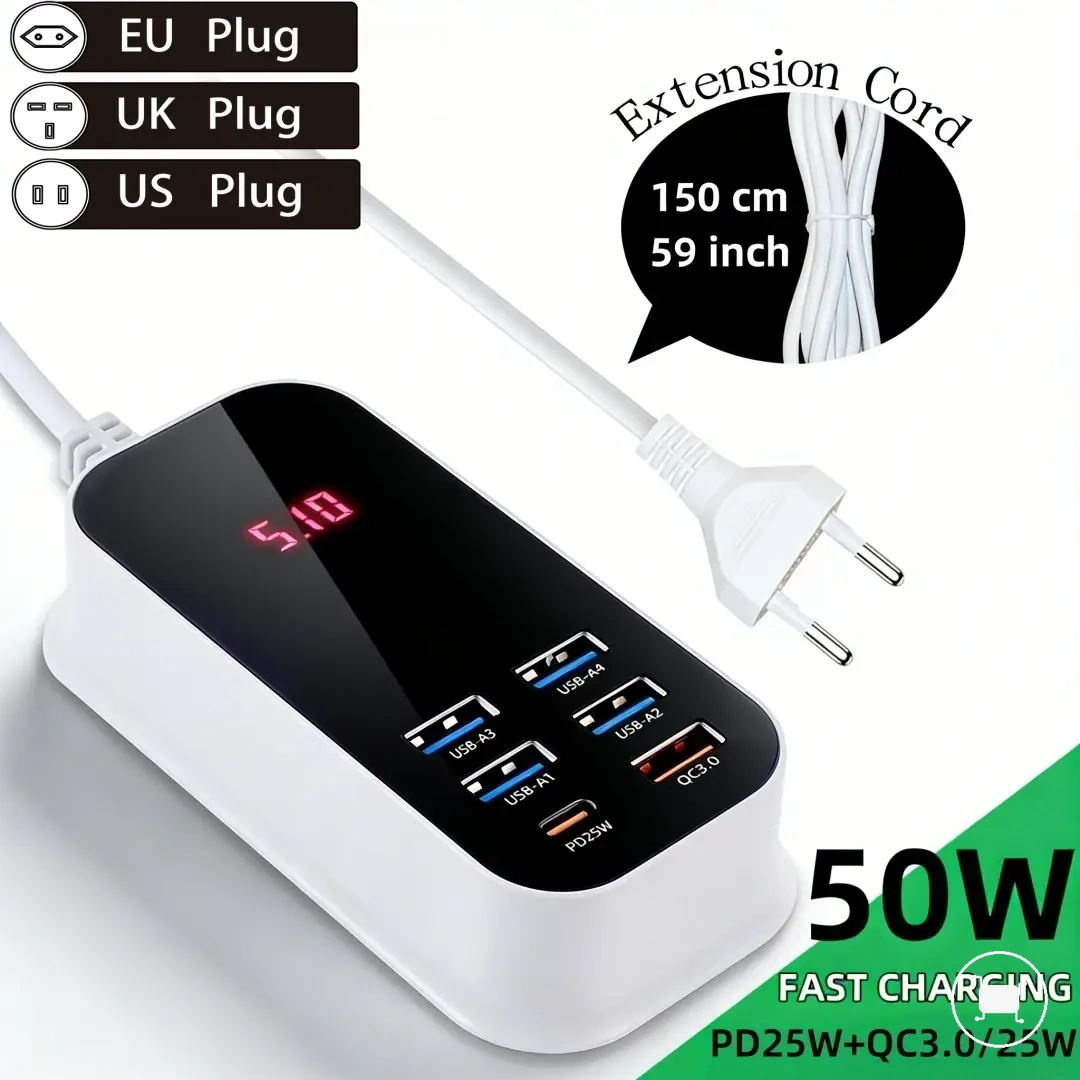
The products below are useful examples for comparing available options. Before buying, check that the compatibility criteria, key features, and product details match your needs.
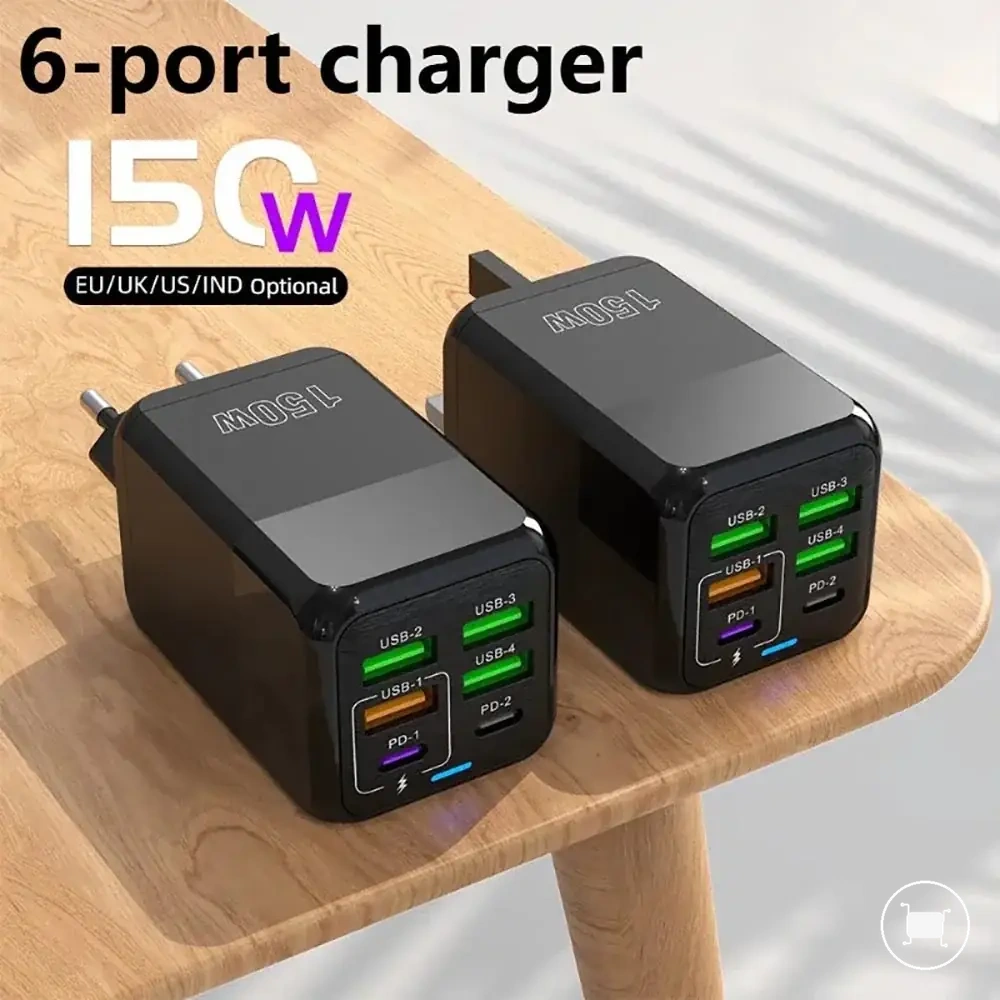
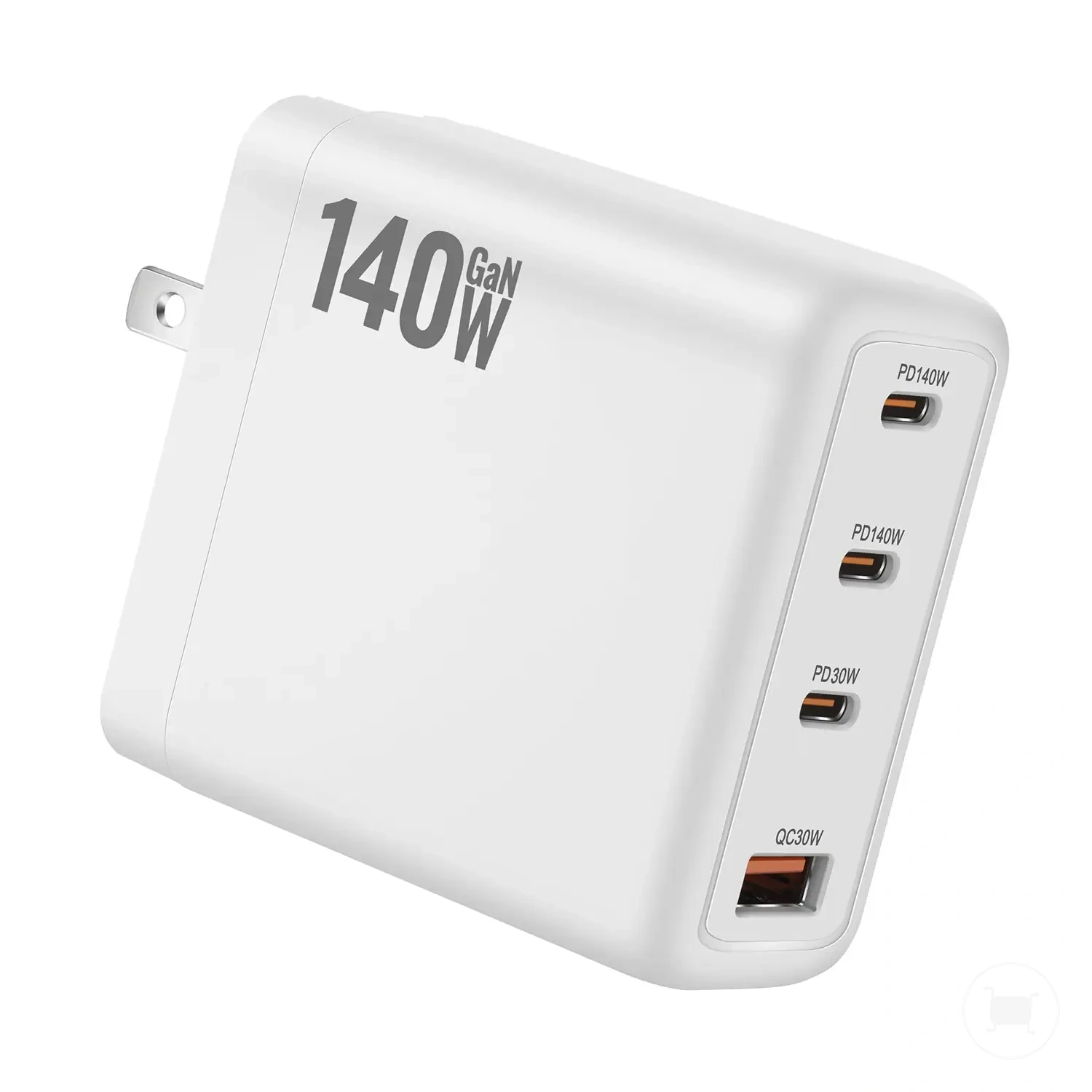
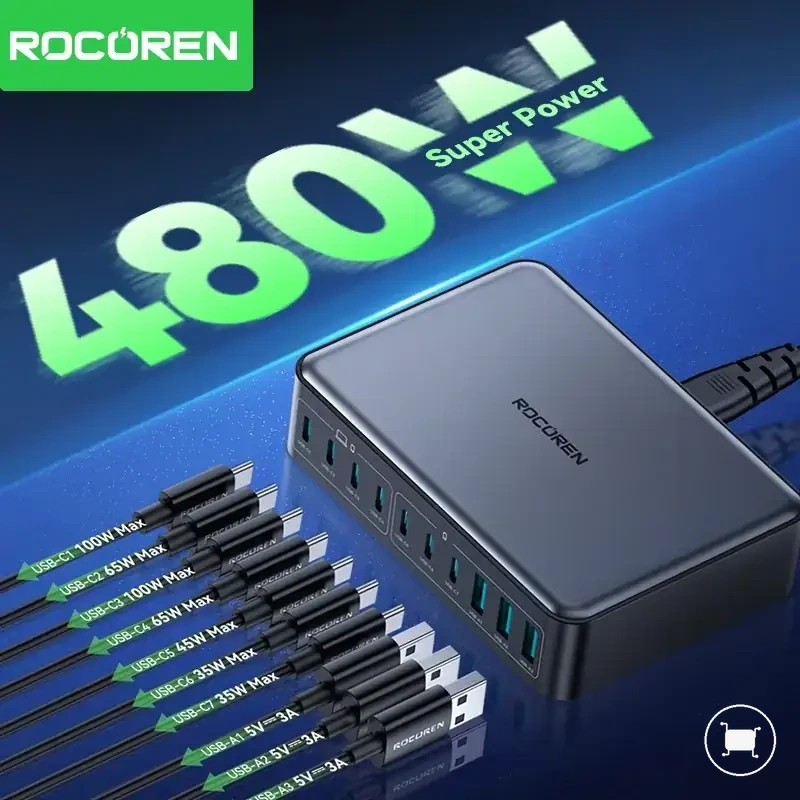

- Choose lower cost carefully: A cheaper charger may be suitable when device count is low and fast shared charging is not the main need.
- Check output before value: More ports only add value when the charger can provide enough usable power for the connected devices.
- Match format to use: Wall chargers may suit travel-first use, while desktop chargers may suit fixed desk or household charging zones.
- Consider replacement value: A higher-cost charger may be worthwhile when it can reduce the need for several separate chargers, but that depends on device demand and charger design.
This chart compares the value attributes of wall and desktop chargers and the key checks to decide which format is worthwhile.
Choosing Between a Wall Charger and a Desktop Charger
Choosing between a wall charger and a desktop charger depends on charging location, device count, wattage needs, and whether the charger must move between rooms or travel. Choose a wall charger when compact movement matters more, and choose a desktop charger when fixed port access matters more.
A wall charger usually fits travel-first users, light desk users, and people who want one charger that can move between outlets. It can also work for mixed use when outlet access is practical and the connected devices do not need a larger fixed charging zone.
A desktop charger usually fits desk-first users, shared charging areas, and setups where phones, earbuds, tablets, or a laptop may connect in the same place. It may be the clearer choice when a corded base keeps ports easier to reach and the charger’s output can support the connected device mix.
For mixed-use cases, choose by the strongest constraint: movement, outlet access, device count, or output demand. If the decision depends on multiple charger attributes beyond form factor, use the buying checklist to compare the remaining criteria.
Users who need one charger to cover both roles should prioritise the format that handles the most frequent charging location, then check whether the wattage, ports, and cable setup still support occasional secondary use. For broader context across charger types, see the multiport USB-C charger guide.
The products below are useful examples for comparing available options. Before buying, check that the compatibility criteria, key features, and product details match your needs.
| User situation | Better fit | Reason |
|---|---|---|
| Travel-first use | Wall charger | Compact wall formats are easier to move when packing space and outlet-to-device charging are the main concerns. |
| Desk-first use | Desktop charger | A corded base can keep ports closer to the user when the charger stays in one workspace. |
| Laptop plus phone | Depends on output | The better choice depends on per-port output, total wattage, and how power is shared across devices. |
| Shared household charging | Desktop charger | A fixed charging zone may suit several devices when port access and outlet placement support the setup. |
| One charger for both roles | Depends on main use | Choose the format that matches the most common location, then check portability, ports, and wattage for secondary use. |