Desk charging setup with a multiport USB-C charger
A desk charging setup with a multiport USB-C charger is a workstation charging arrangement where one charger supports the everyday charging flow for devices such as a laptop, phone, tablet, earbuds, or small USB-powered accessories. The setup works well when the charger has the right port access, cable reach, shared-output behaviour, and placement for the devices used at that desk.
The multiport USB-C charger is the charging source, not a USB-C dock, power strip, or product catalogue. A dock may handle data or display connections, and a power strip may expand AC outlets, but this page stays focused on how a multiport USB-C charger can organise desk charging without implying universal speed, compatibility, or performance for every device.
A practical desk setup depends on broad conditions before specific accessories matter: where the charger sits, how often each device moves, whether cables can reach without strain, and whether simultaneous charging changes the available output. These conditions shape convenience and clutter outcomes, while charging speed and device support still depend on the charger model, connected devices, and cable capability.
What a multiport USB-C charger should handle on a desk
A multiport USB-C charger should handle the everyday charging needs of the devices used at a desk while keeping ports accessible, cables reachable, and charging activity manageable in one location. The charger does not need to replace every power accessory, but it should support the desk devices that are regularly connected and provide enough flexibility for changing daily use.
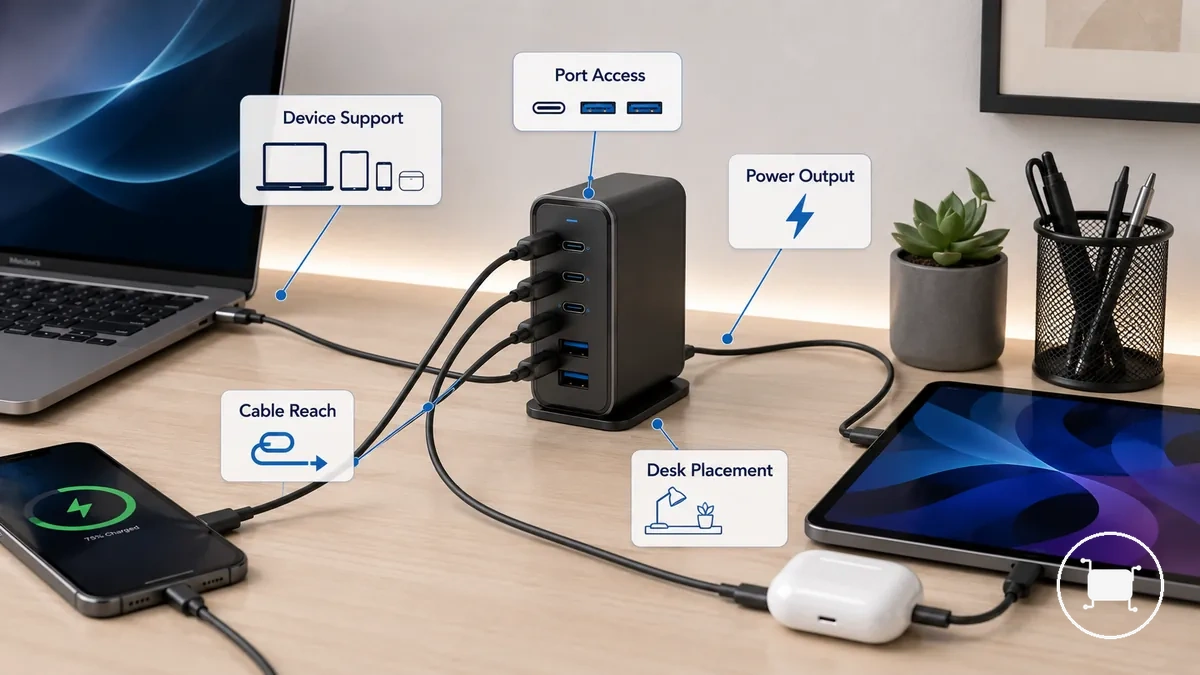
- Device support: The multiport USB-C charger should accommodate the mix of devices used on the desk because charging requirements can vary between connected devices.
- Port access: The multiport USB-C charger should provide enough available ports for regular connections so devices can remain connected as part of a normal desk routine.
- Power availability: The multiport USB-C charger should provide appropriate charging output, although charging speed and power distribution may vary by charger model, connected devices, and cable capability.
- Cable reach: The multiport USB-C charger should allow cables to reach devices comfortably because limited cable reach can reduce day-to-day usability across the workspace.
- Placement suitability: The multiport USB-C charger should fit the desk layout in a way that keeps ports accessible and supports regular charging activity.
The desk-handling role of a multiport USB-C charger is to centralise charging needs while remaining focused on power delivery rather than data connectivity, display functions, or outlet expansion. This boundary helps define the charger's purpose within a workstation environment.
For a broader explanation of charger roles and charging considerations, see the multiport USB-C charger guide. A multiport USB-C charger can support an organised desk setup, but the overall charging experience still depends on the connected devices, cable selection, and workspace arrangement.
Multiport USB-C charger scope versus docks and power strips
A multiport USB-C charger focuses on device charging, a USB-C dock focuses on data and display connectivity, and a power strip focuses on expanding access to AC outlets. These categories serve different primary purposes, although certain hybrid products may combine parts of more than one function.
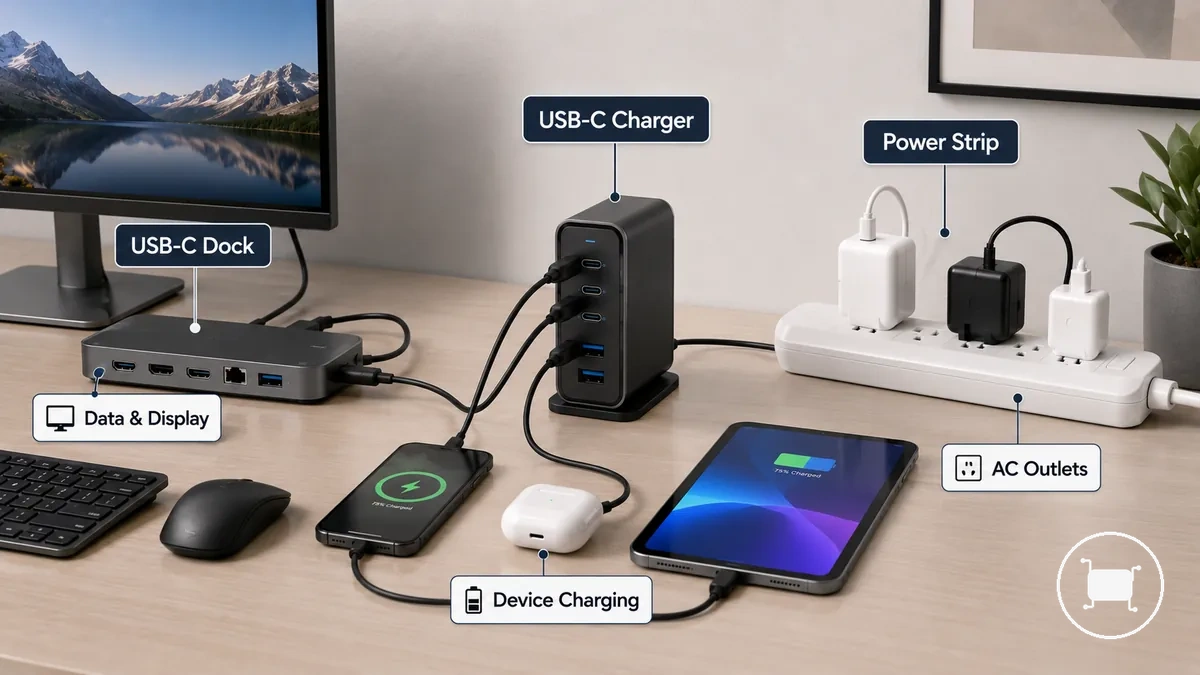
| Device Type | Primary Scope | Main Desk Function |
|---|---|---|
| Multiport USB-C charger | Device charging | Provides charging connections for multiple supported devices from a central charging point |
| USB-C dock | Data and display connectivity | Connects peripherals, displays, and other accessories while often providing charging support |
| Power strip | AC outlet expansion | Adds access to more AC-powered connections for adapters and electrical devices |
The multiport USB-C charger is the most relevant option when the main requirement is charging multiple compatible devices from one location. A USB-C dock is intended for connectivity tasks such as peripheral or display connections, while a power strip is intended for expanding outlet access.
A multiport USB-C charger does not automatically replace every dock or power strip because connectivity requirements, outlet needs, and workspace configurations can differ. Additional accessories may still be required depending on the devices used and the intended desk setup.
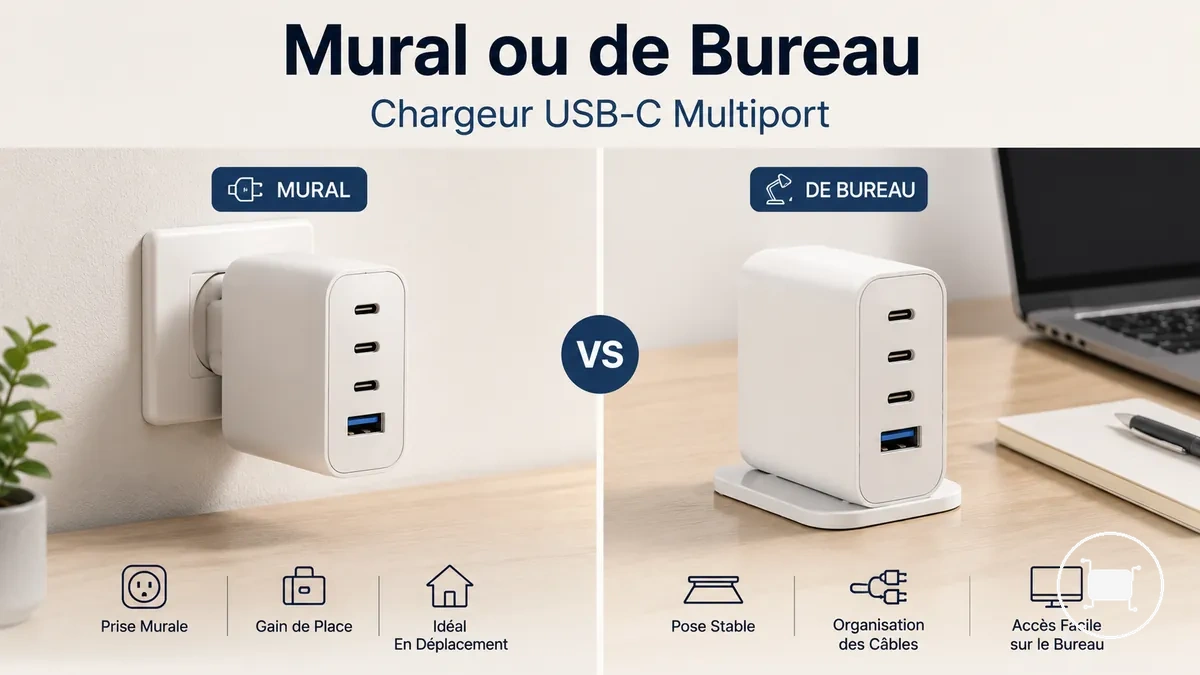
For a comparison focused on charger placement rather than accessory categories, see the desktop charger comparison. That comparison examines charger location, while this section defines the functional boundaries between a multiport USB-C charger, a USB-C dock, and a power strip.
Desk placement and daily access around the charger
Charger placement affects device reach, port access, cable routing, and available airflow around the charger during everyday use. The most suitable charger location depends on desk size, outlet location, device movement, and how often connected devices are accessed throughout the day.
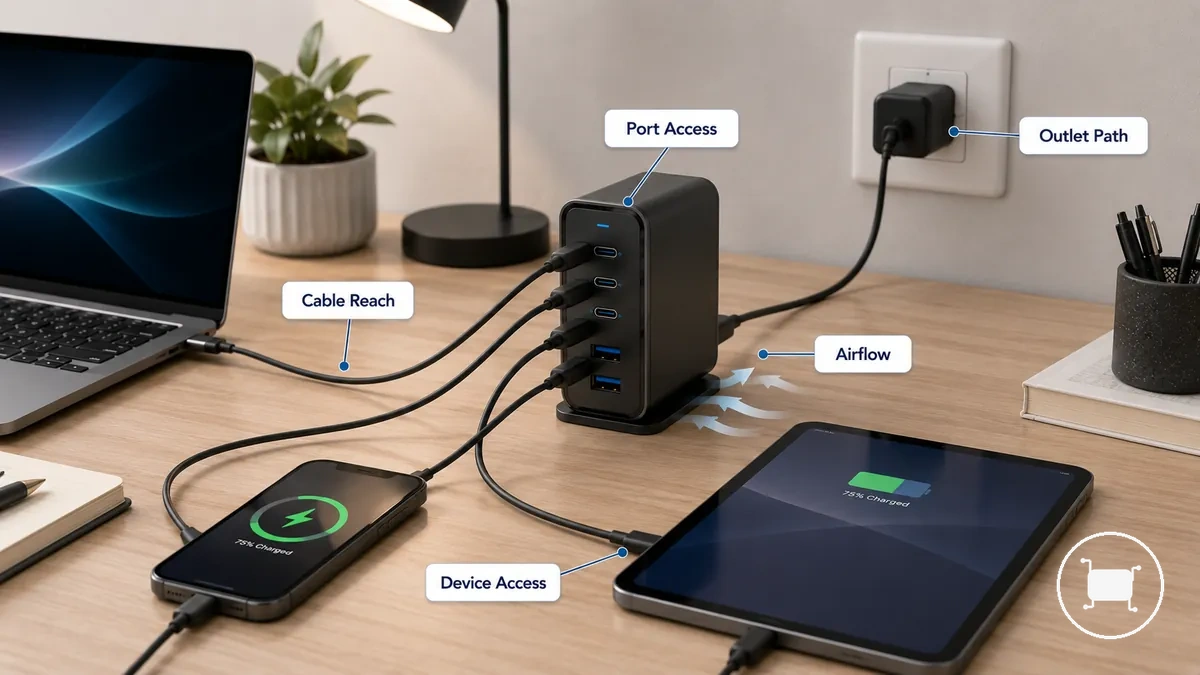
Charger location is often easier to use when the charger remains within practical reach of frequently connected devices. A charger location that is too far from active work areas may make device access less convenient, while a charger location placed directly within a busy workspace may reduce usable desk space.
Different desk layouts can benefit from different placement approaches. A charger location on the desk surface may improve port visibility and access, while a charger location under the desk may free workspace when access remains practical and cable reach is sufficient. Ventilation should also remain a consideration so the charger is not surrounded by enclosed objects that may restrict airflow.
- Access check: Frequently used ports remain easy to reach.
- Reach check: Connected devices can be charged without excessive cable tension.
- Outlet check: Charger location remains practical relative to the available outlet position.
- Ventilation check: Open space remains around the charger for airflow.
- Movement check: Daily device movement does not make charger access inconvenient.
Charger placement does not require permanent positioning. A charger location that supports access, airflow, and practical daily use is often more suitable than a location chosen without considering how devices are used throughout the workspace.
On-desk, under-desk, and stand-based placement
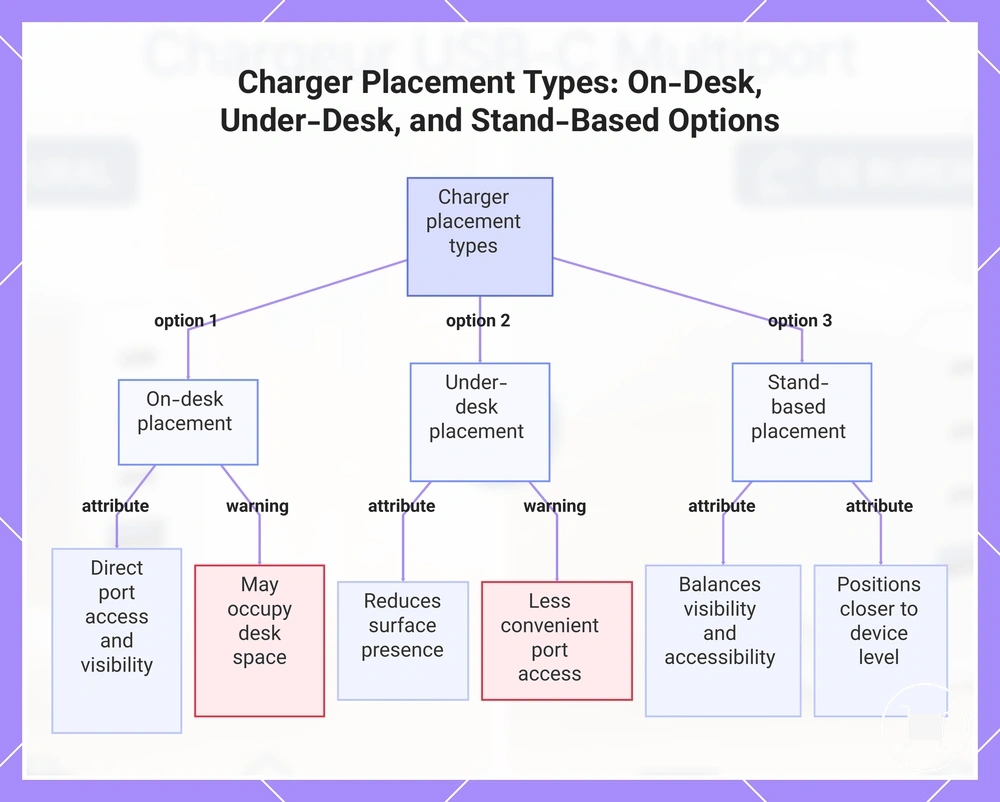
Placement type depends on whether visibility, access, or desk-surface space is the higher priority. On-desk placement keeps the charger visible and easy to reach, under-desk placement can reduce its presence on the work surface, and stand-based placement may provide a balance between visibility and accessibility depending on the desk layout.
- On-desk placement: Provides direct port access and easy visibility but may occupy more desk-surface space.
- Under-desk placement: Reduces the charger's presence on the work surface but may make port access less convenient depending on position.
- Stand-based placement: Can position the charger closer to device level when reach and accessibility are important.
On-desk placement may suit setups where devices are connected and disconnected frequently because ports remain easy to see and reach. Under-desk placement may suit layouts where preserving usable desk space is a higher priority than constant charger access.
Stand-based placement can be practical when a dedicated charger position improves accessibility without using a primary work area. The suitability of any placement type depends on desk layout, cable path, port access, and available airflow around the charger.
This chart compares three charger placement types by showing their key attributes and trade-offs.
Reach for laptop, phone, tablet, earbuds, and accessories
Device position changes reach needs because each device may sit in a different part of the desk and move at a different frequency. A laptop, phone, tablet, earbuds, or accessory may need a different cable path or port position depending on the device, cable, and desk layout.
| Device Position | Reach Consideration |
|---|---|
| Laptop | May need charger access near the main work area when connected regularly. |
| Phone | May need easier reach when picked up frequently during the day. |
| Tablet | Reach needs can vary when the device moves between desk positions. |
| Earbuds | May need only occasional access when charging happens between uses. |
| Accessories | Reach depends on how often the accessory is connected or repositioned. |
User position and device position are closely connected. Devices kept near the main workspace may be easier to charge when ports remain nearby, while devices placed farther away may require a longer or clearer cable path.
Port choice and cable reach should stay tied to the way each device is used on the desk. A charger location that supports common device positions without frequent repositioning can improve day-to-day usability when the cable and port access match the setup.
Ports and shared output for desk devices
Ports and shared output matter because a multiport USB-C charger must provide usable connections and distribute charging output across the devices connected at the desk. Port count affects what can stay plugged in, while shared output can affect charging behaviour when more than one device is active.
Port access is the physical side of the decision. A desk setup may need reachable USB-C or USB-A connections depending on the devices and cables used, but port usefulness still depends on whether each port can support the connected device in that charger model.
| Attribute | Desk Effect | Condition to Check |
|---|---|---|
| Port count | Determines how many devices can connect without frequent swapping. | Match regular desk devices to available charger ports. |
| Port position | Affects how easy ports are to reach during daily use. | Check whether the charger location keeps active ports accessible. |
| Shared output | May change charging behaviour when multiple devices are connected. | Review charger model rules, device demand, and cable capability. |
| Device priority | May influence which device receives more usable output first. | Consider which device needs charging support most often. |
Shared output should be treated as charger behaviour, not as a fixed promise across every desk setup. For a deeper explanation of shared power across desk devices, the key point is that charger model, port rules, connected devices, and cables can all affect the result.
Port count should be checked as part of desk usability rather than as a simple higher-is-better number. The port count for desk charging matters most when the available ports match the devices that stay near the workstation and the cables that connect them.
USB-C, USB-A, and fast-charging port access
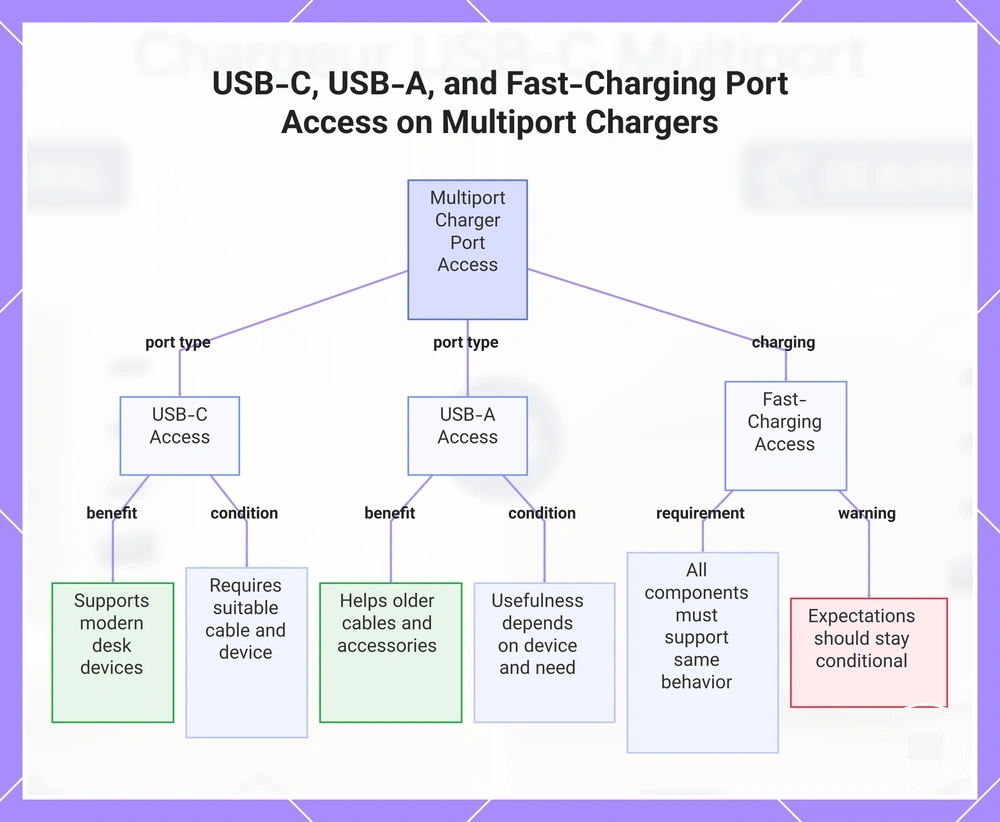
Port type affects which cable can connect to the multiport USB-C charger and how easy each device is to use at the desk. USB-C and USB-A ports have different connector shapes, while fast-charging support depends on the device, charger behaviour, and cable capability.
- USB-C access: USB-C ports can support modern desk devices when the connected device and cable are suitable for the charger.
- USB-A access: USB-A ports can help with older cables or small accessories, but usefulness depends on the device and charging need.
- Fast-charging access: Fast charging may be available only when the charger, device, and cable support compatible charging behaviour.
- Visible port access: Ports should remain easy to identify and reach so cable-device matching does not become a daily obstacle.
Fast-charging expectations should stay conditional rather than assumed from the port label alone. A visible USB-C port may be easier to match with newer cables, but charging behaviour still depends on the charger model, connected device, and cable capability.
This chart shows the key factors affecting access and usability of USB-C, USB-A, and fast-charging ports on a multiport charger.
Power sharing during simultaneous desk charging
Power sharing during simultaneous desk charging depends on how the charger allocates available output when multiple devices are connected at the same time. Simultaneous charging can change available power for each device, and the resulting charging behaviour may vary based on the charger model, port priority, cable capability, and connected devices.
Power sharing allocates output across active ports according to device demand and charger behaviour. When additional devices are connected or a device requires more output, available power may be redistributed between ports. The charging effect can differ because active device count, device demand, and port behaviour are not identical across every desk setup.
For example, a desk setup charging a laptop, phone, and earbuds at the same time may behave differently from a setup charging only a phone and earbuds. In that situation, charging speed or device priority may change depending on the charger model, connected devices, cable capability, and how power sharing allocates output across active ports.
Cable management for a multi-device desk charging setup
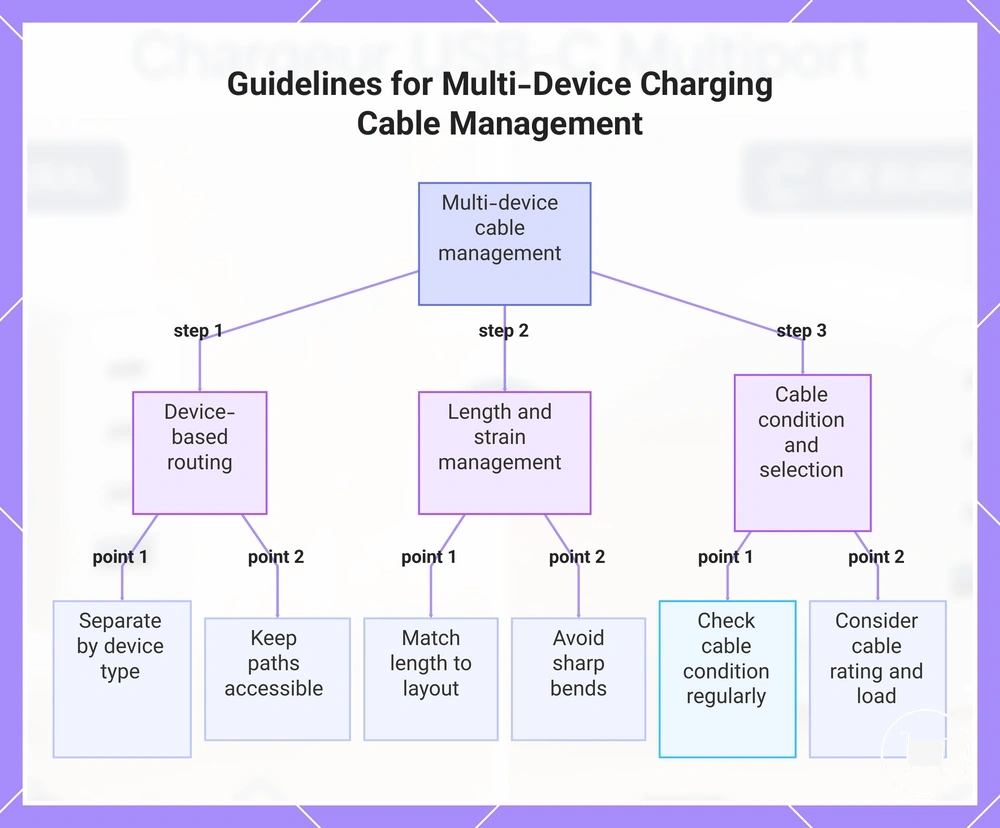
Cable management affects usability because charging cables influence device access, connection reliability, and charging safety during daily use. Charging cables that are routed clearly, protected from unnecessary strain, and separated according to device use can make connections easier to manage while reducing avoidable cable interference around the charger.
Cable management works best when charging cables follow a deliberate route between the charger and connected devices. Cable length should suit the desk layout to reduce unnecessary cable movement, while cable condition should be checked regularly because worn, twisted, or strained cables may become less practical for charging use. Charging cable routes should also leave reasonable space around the charger when ventilation depends on the surrounding desk layout.
- Route charging cables by device: Separate laptop, phone, tablet, and accessory cables so each connection remains easy to identify.
- Match cable length to the desk layout: Use a cable length that reaches the device without creating unnecessary loops or tension.
- Reduce cable strain: Avoid sharp bends or stretched cable paths because repeated movement may increase cable wear.
- Check cable condition: Replace damaged or heavily worn charging cables when cable condition may affect charging use.
- Keep charging paths accessible: Route cables so devices can connect and disconnect without disturbing other charging connections.
Cable management criteria should also include cable choice for desk setup because cable rating, charger load, connected devices, and charging requirements can influence how a multi-device charging arrangement performs in everyday use.
This chart shows the key guidelines for managing charging cables in a multi-device desk setup, covering routing, strain reduction, condition checks, and cable selection.
Cable length, routing, and visible clutter
Cable route problems often occur when cable length does not match the desk setup, creating excess slack, unnecessary bends, or restricted device movement. Cable routing directly affects visible clutter and cable strain, while the appropriate cable length depends on outlet position, charger placement, desk size, and how devices move during charging use.
Cable length can increase visible clutter when extra cable gathers around the charger or crosses active work areas. A cable route can also increase strain when cables are stretched tightly or forced around obstacles. Adjusting the cable path to follow a cleaner route may reduce unnecessary movement and make charging connections easier to manage.
- Reduce excess slack: Adjust cable routing when extra cable gathers around charging areas and interferes with device access.
- Limit unnecessary bends: Route charging cables with gradual direction changes because repeated sharp bends may increase cable strain.
- Keep cable routes clear of desk edges: Adjust the cable path when edge contact creates unnecessary tension or repeated movement.
- Allow for device movement: Leave enough cable flexibility when devices are repositioned during charging use.
- Review cable paths after layout changes: Re-route charging cables when charger location or device positions change.
Cable routing is most effective when cable length supports the charging path without creating unnecessary slack or tension. The appropriate balance depends on the desk layout, charger position, outlet location, and device movement patterns.
Clips, holders, sleeves, trays, and cable boxes
A cable-management accessory type helps organize charging cables by holding, grouping, separating, or hiding them according to the desk condition and access requirement. Clips and holders are typically used to keep charging cables accessible, while sleeves, trays, and cable boxes are generally used to group or conceal cables when reducing visible cable exposure is a higher priority.
| Accessory Type | Primary Function | Desk Condition | Access Trade-Off |
|---|---|---|---|
| Clips | Hold individual charging cables in place | Useful when cables move frequently during daily use | Improves access but may not hide cables |
| Holders | Separate and position charging cables | Useful when multiple cables share the same workspace | Improves access but keeps cables visible |
| Sleeves | Group multiple cables together | Useful when cable paths run in the same direction | Reduces cable visibility but may limit individual cable access |
| Trays | Support grouped cable storage below or behind the workspace | Useful when cables collect around a fixed charging area | Can reduce clutter but may limit direct access |
| Cable boxes | Hide grouped cables and related connections | Useful when exposed cables are concentrated in one location | Can reduce visibility but may require additional access when connections change |
Accessory usefulness depends on cable movement, access needs, and desk layout. A cable-management accessory that improves access in one setup may be less practical in another setup where charging cables move frequently or where regular access to connections is required. Ventilation conditions should also be considered when cables and charging equipment are grouped within the same area.
Choosing a desktop multiport USB-C charger for the workstation
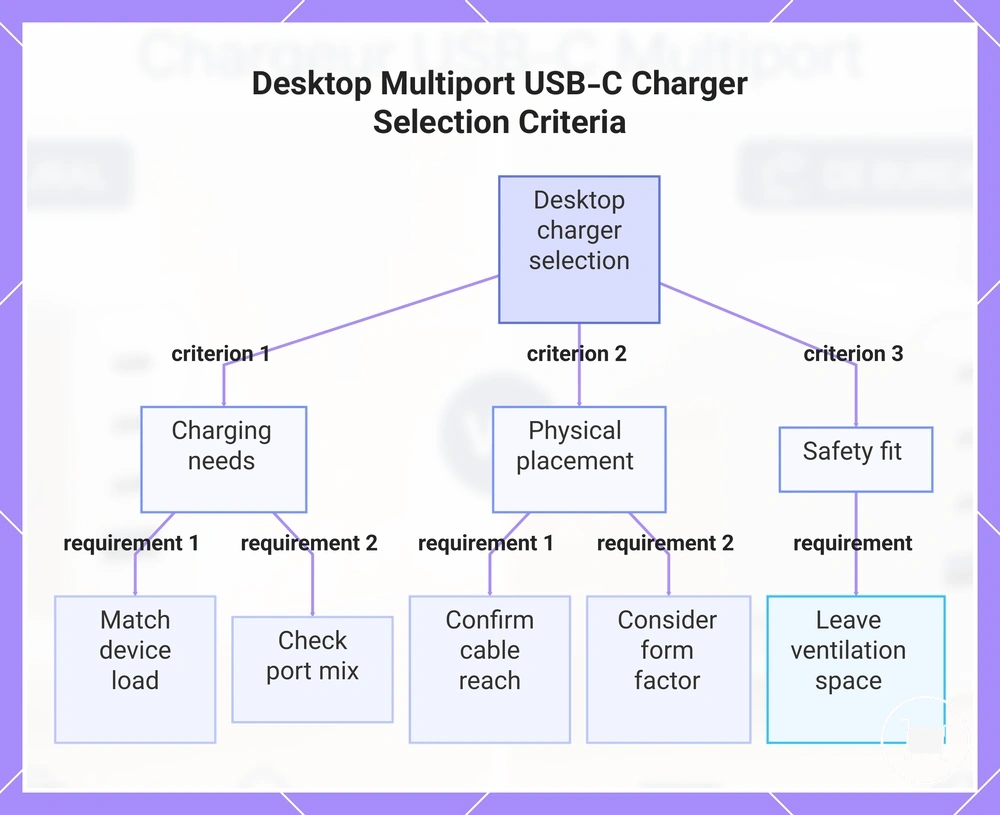
A desktop multiport USB-C charger should be selected by matching workstation need to device load, port mix, cable reach, form factor, and safety fit. Suitability depends on how the charger supports the devices used every day without creating unnecessary limits for access, cable routing, or shared charging output.
A desktop multiport USB-C charger should be evaluated by the number and type of devices that remain connected during normal workstation use. A charger that suits a laptop-and-phone setup may not suit a workstation that regularly includes additional devices, because charging demand and port requirements can differ.
Port mix is an important criterion because the available connections should match the cables and devices used at the workstation. Form factor is also relevant because charger size and layout can affect desk placement, cable access, and available workspace.
- Device load: Match the charger to the number and type of devices typically charged at the same time.
- Port mix: Check whether the available ports suit current charging cables and connected devices.
- Cable reach: Confirm that charger placement supports practical cable routing to active devices.
- Form factor: Consider whether the charger fits the available desk space without limiting access.
- Safety fit: Leave suitable space around the charger when ventilation depends on the workstation layout.
A desktop multiport USB-C charger is usually a better fit when its charging capabilities, port arrangement, and physical design align with the workstation's daily requirements.
Selection should be based on usage conditions and charging needs rather than on a single specification or feature.
The products below are useful examples for comparing available options. Before buying, check that the compatibility criteria, key features, and product details match your needs.
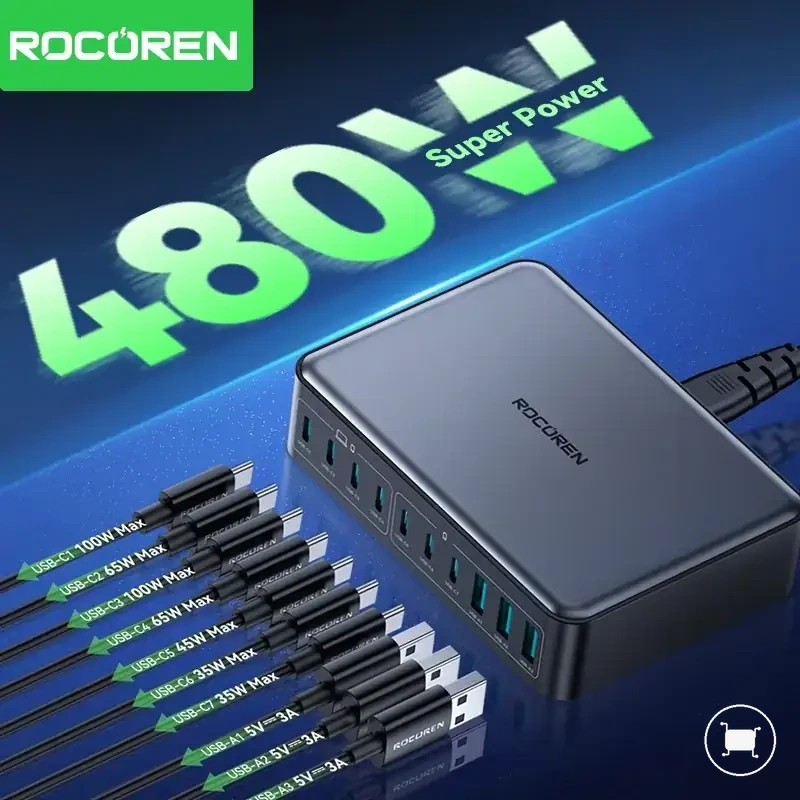
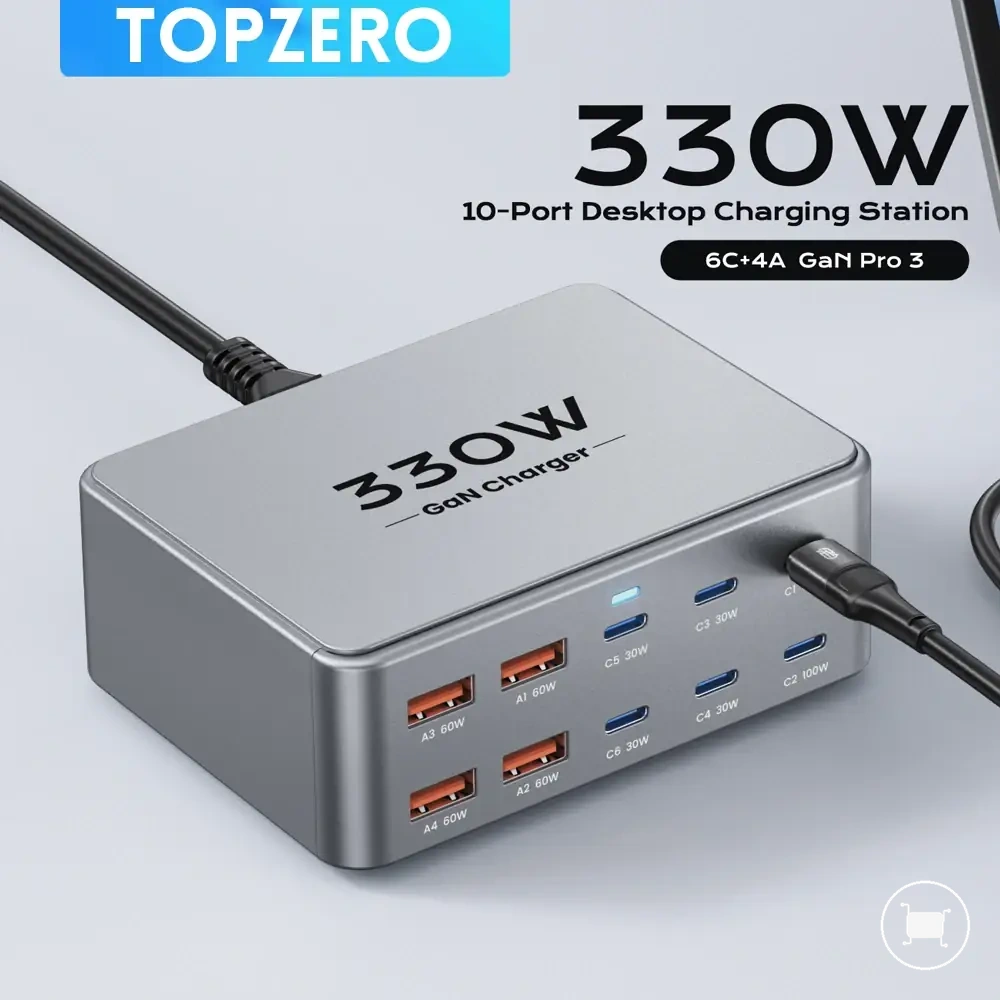

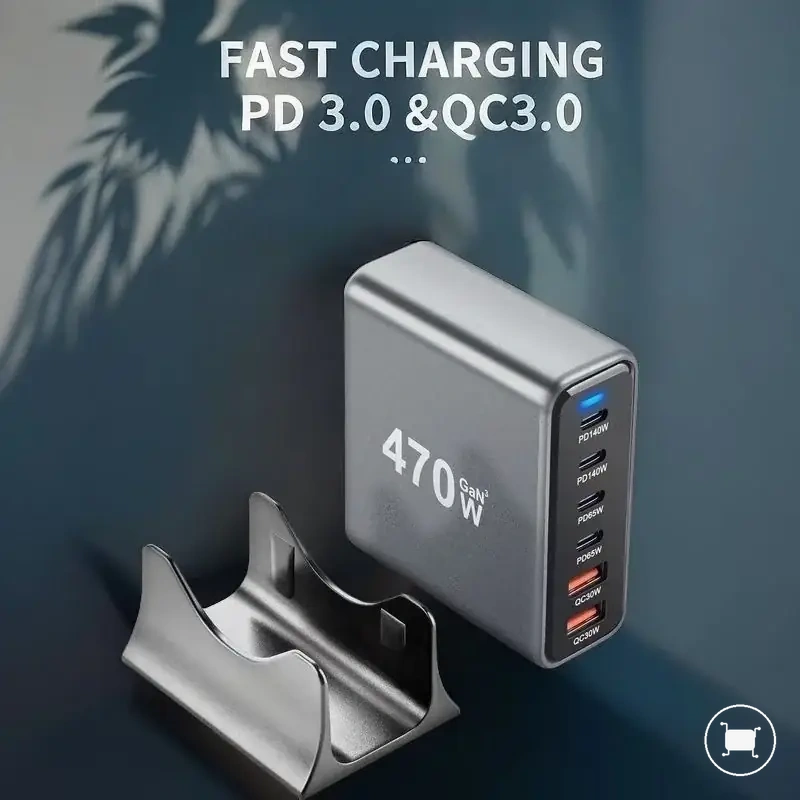
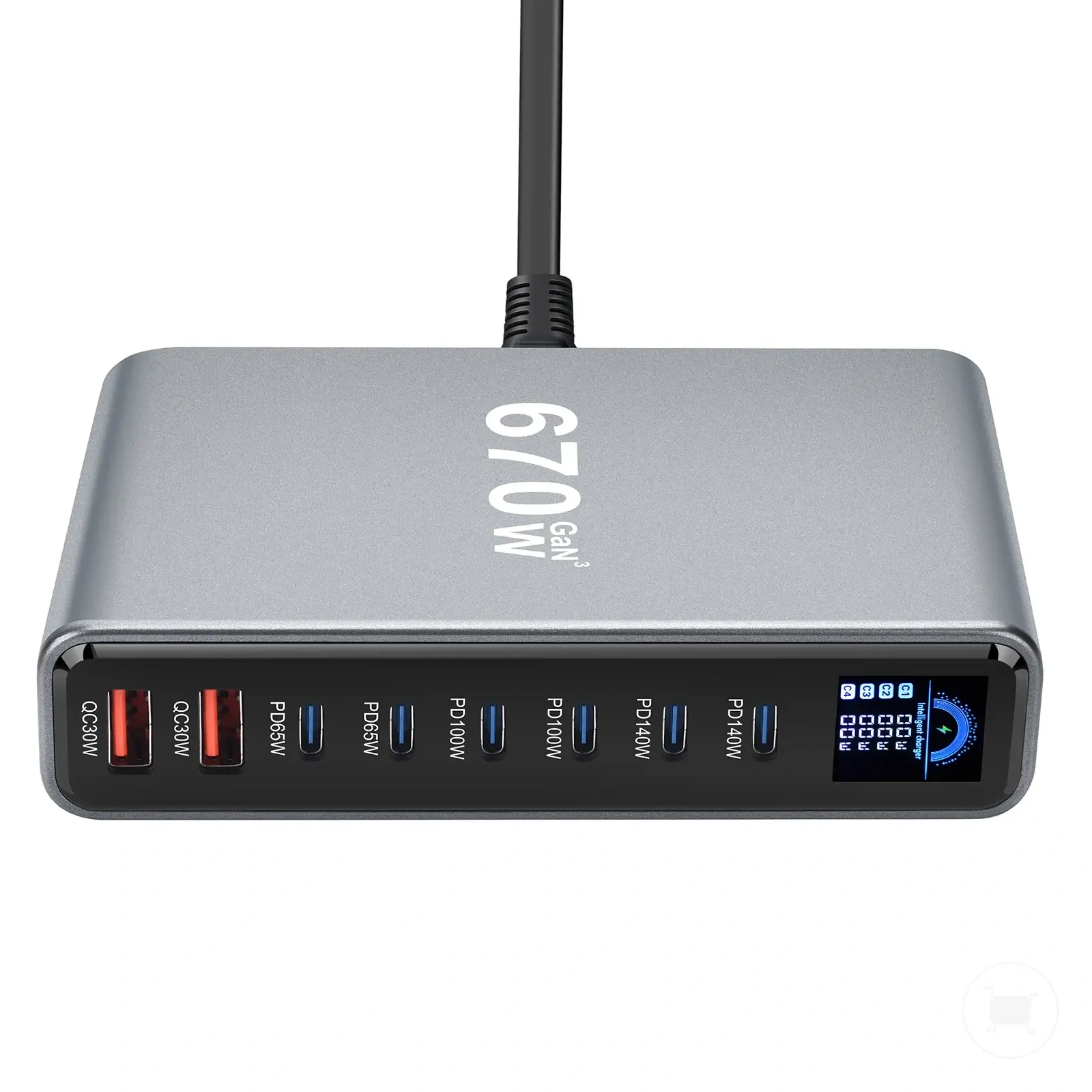
This chart shows the key criteria for selecting a desktop multiport USB-C charger that matches workstation needs.
When a higher-output desktop charger fits the desk load
Higher output fits the desk load when heavier simultaneous charging needs would otherwise limit the available power for important devices. More output is not automatically better for every workstation, because suitability depends on laptop wattage need, active device count, cable capability, shared-output behaviour, and charger design.
A laptop-centered desk load may benefit from a higher-output desktop charger when the laptop is charged alongside a phone, tablet, earbuds, or other accessories during the same work period. In that situation, the charger needs enough available output to support the main device while still allocating usable power to secondary devices, subject to port rules and cable capability.
A lighter accessory-focused desk load may not need the same output level when the setup mostly charges smaller devices or only one device at a time. The fit decision should compare the devices that are active together, the charger's shared-output behaviour, and whether the cables can support the intended charging use.
- Laptop-centered load: Higher output may fit when a laptop remains the main charging demand while other desk devices are also connected.
- Light accessory load: Moderate output may be sufficient when charging mainly phones, earbuds, tablets, or small accessories depending on device demand.
- Shared-output condition: Check how the charger allocates power when multiple ports are active because available output may change by charger design.
- Fit decision: Choose output capacity based on the devices used together, not on a higher number alone.
When a charger stand, tower, or retractable cable design helps
A charger stand, tower, or retractable cable design helps when physical usability is the main selection concern, such as limited desk space, frequent cable handling, or the need for easier port access. These designs can improve organization, storage, or accessibility, but they do not solve charging compatibility, cable capability, or shared-output behaviour.
A stand design can expose ports more clearly and improve physical access when devices are connected and disconnected throughout the day. Convenience depends on desk size, charger stability, and whether the position keeps ports easy to reach.
A tower design can reduce desk footprint by arranging ports vertically rather than across a wider surface area. This form factor may help when workspace is limited, although usability still depends on port placement, cable movement, and access around the workstation.
A retractable cable design can store excess cable length and reduce visible cable clutter when devices move regularly. The convenience benefit depends on cable movement patterns, storage access, and how often cables need to be extended or returned to storage.
- Stand design: Can expose ports and improve physical access when charger visibility is important.
- Tower design: Can reduce desk footprint when horizontal space is limited.
- Retractable cable design: Can store excess cable length and simplify cable handling in suitable desk setups.
- Selection limit: Choose form factor for physical usability benefits rather than for charging-performance expectations.
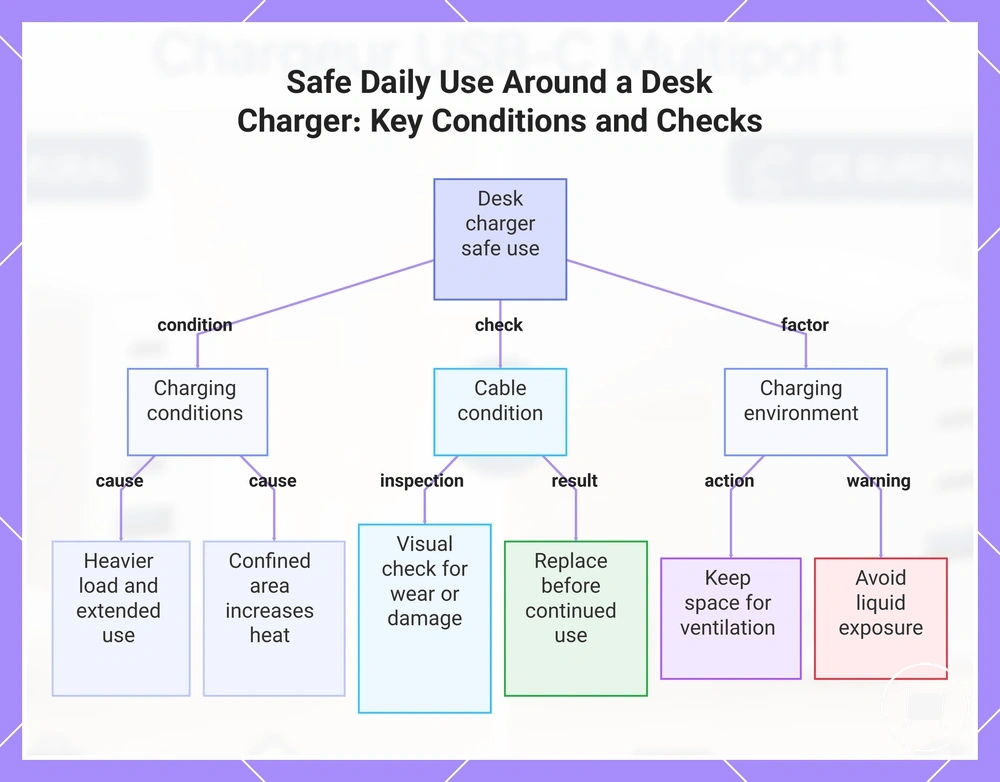
Safe daily use around a desk charger
Safe daily use around a desk charger depends on maintaining suitable charging conditions, checking cable condition regularly, and keeping the charger positioned where ventilation is not unnecessarily restricted. Daily safety is improved when the charger, cables, and connected devices are used in conditions that support normal charging operation.
A charging condition should be reviewed when the desk charger operates under a heavier load, remains connected for extended periods, or is placed in a confined area. Heat can increase under these conditions depending on charger design, placement, active devices, and surrounding airflow, so keeping vents and nearby space clear can help maintain reliable operation.
Cable condition is an important part of safe daily use because damaged, heavily worn, or strained cables may become less suitable for regular charging. A visual check for wear, loose connections, or visible cable damage can help identify situations where a cable may need replacement before continued use.
Liquid exposure should be avoided around the desk charger and connected cables because moisture can create unsuitable charging conditions. Users who want broader guidance on safe multi-device charging should also consider how charger placement, cable condition, and device load interact during everyday use.
- Ventilation: Keep suitable space around the desk charger when airflow depends on placement.
- Cable condition: Check charging cables regularly for wear, damage, or excessive strain.
- Liquid exposure: Keep drinks and other liquids away from charging equipment where practical.
- Charging load: Consider charger design and connected devices when multiple devices charge at the same time.
- Daily inspection: Review charger placement and cable condition periodically as the desk setup changes.
This chart shows the main conditions, cable checks, and environmental factors for safe daily use of a desk charger.